
COP30 concluded on 21 November 2025 amid criticism for its lack of binding commitments to tackle the climate crisis. While targets for reducing fossil fuel use remain unclear, leaders agreed on the goal of tripling global renewable energy capacity to 11 terawatts, with a particular focus on meeting Africa’s growing energy demand. This objective was reinforced at South Africa’s G20 summit, which also called for doubling the pace of energy efficiency improvements by 2030.
In support of the global renewable energy target, the World Bank Group (WBG) and the African Development Bank (AfDB) have launched the ‘Mission 300’ initiative, aiming to provide electricity access to 300 million people across Africa by 2030.
For 600 million people across Africa, access to electricity remains tragically out of reach. This denies them fundamental livelihood opportunities. It limits access to modern healthcare, communication, quality education and better job prospects. Bridging this energy gap is essential for continental development and raising the standard of living – a major global sustainability challenge.
The urgency of accelerating electrification
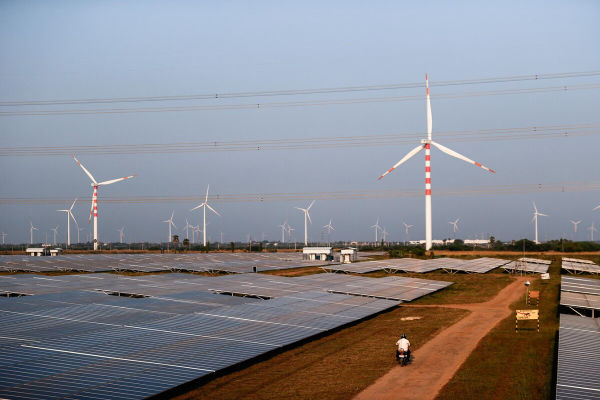
Directly mirroring the global renewable energy target, the pace of electrification in Africa must also triple to achieve universal electricity access by 2030. Without this dramatic increase, more than 300 million people in Eastern and Southern Africa will still be without power in 2030 – only a marginal improvement on today’s situation. “The continent possesses an abundance of solar resource potential. To rapidly increase energy access, utility-scale solar PV is the lowest cost long-term energy driver,” says Paul Nel, CEO of 7SecondSolar. “However, rapid, large-scale deployment is currently hindered by some crucial bottlenecks, including grid access, reliable off-take agreements and the often long and costly design phase of utility-scale solar projects. Energy engineers often rely on manual calculations and fragmented software platforms, creating numerous opportunities for error and inefficiency. This outdated approach results in long design timelines, project delays, and sub-optimal outcomes. The design process for utility-scale solar PV must rapidly accelerate to meet this immense demand.”
The power of computational design software
The continent’s energy future hinges on speed and precision in the design of utility-scale solar projects. Africa’s vast geographical scale and urgent power demand mean that a ‘business-as-usual’ approach to solar deployment is a guaranteed path to falling short of the Mission 300 targets and the global clean energy goals set at COP30. The reliance on slow, manual design methods is a constraint the industry can no longer afford.
“The solution lies in software, particularly computational design software like AutoPV, which uses advanced algorithms to automate the detailed engineering of large, complex Solar PV installations. Engineers can now generate multiple, precise design iterations in a day, replacing a process that used to take months – not only radically reducing the overall project timeline but also allowing engineers to find the best possible design solution for the specific project location and constraints. This can unlock the critical scale needed for Africa’s accelerated energy transition,” adds Nel. “This also speaks directly to a conversation at COP30 and South Africa’s G20 summit. There will be an increased reliance on technology, especially software, for derisking renewable energy through data clarity and output predictability – having the ability to bridge the funding gap for large-scale utility projects.”
De-risking investment and driving value
This shift to an automated design ecosystem is immensely valuable for investors and financiers by enabling more financial clarity. Multiple project configurations can be generated in a matter of hours, not months. Detailed comparisons of build, operational, and design costs can be instantly assessed. This gives developers and financiers a much clearer, data-driven picture of risk and return from the project’s outset. With this heightened visibility, solar projects become significantly more investable, reducing financial uncertainty and establishing solar as a more viable business proposition at the scale required for Africa’s energy targets.