

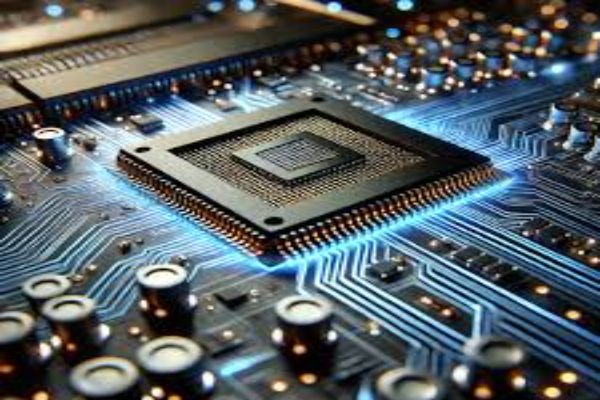
Artificial intelligence is advancing at a rapid pace, and its growth depends heavily on the capabilities of modern semiconductor technology. As AI models become more complex, they require faster processing, higher efficiency, and greater data handling capacity. This is where advanced semiconductor nodes such as 3nm are making a significant impact.
In 2026, 3nm technology is enabling a new wave of innovation in AI applications. By delivering improved performance and energy efficiency, these advanced chips are helping businesses and researchers push the boundaries of what AI can achieve.
Understanding Advanced Semiconductor Nodes
Semiconductor nodes refer to the size of the transistors used in a chip. Smaller nodes, such as 3nm, allow more transistors to fit into a smaller area. This increases computing power while reducing energy consumption.
As transistor sizes shrink, chips become faster and more efficient. This is essential for handling modern workloads that involve large volumes of data and complex algorithms.
The transition to 3nm technology represents a major step forward in semiconductor design. It allows manufacturers to build chips that can support demanding applications such as artificial intelligence and high-performance computing.
Importance of 3nm Technology for AI
Artificial intelligence relies on processing vast amounts of data to train models and make decisions. This requires high computational power and efficient energy usage.
3nm chips provide the performance needed to handle these tasks. They enable faster data processing, allowing AI systems to analyse information more quickly and accurately.
In addition, improved energy efficiency helps reduce the power consumption of AI systems. This is especially important for data centers and large-scale AI operations, where energy costs can be significant.
By combining speed and efficiency, 3nm technology is making AI more scalable and accessible.
Enhancing AI Model Training and Inference
AI applications involve two main processes: training and inference. Training requires processing large datasets to develop models, while inference involves using those models to make decisions in real time.
3nm semiconductor nodes improve both processes. Faster processing speeds reduce the time required to train AI models, enabling quicker development cycles.
During inference, low latency and high efficiency allow AI systems to respond instantly. This is critical for applications such as autonomous systems, healthcare diagnostics, and financial analysis.
These improvements are helping businesses deploy AI solutions more effectively across various industries.
Role of Semiconductor Manufacturing Equipment
The development of 3nm chips depends on advanced Semiconductor Manufacturing Equipment. These tools are used to design, fabricate, and test semiconductor devices with extreme precision.
Manufacturing at such small scales requires highly sophisticated equipment capable of handling complex processes. This includes advanced lithography systems, etching tools, and inspection technologies.
Semiconductor Manufacturing Equipment ensures that chips meet strict quality and performance standards. It also plays a key role in scaling production and improving efficiency.
Without these advanced tools, the production of 3nm chips would not be possible.
Improving Energy Efficiency and Sustainability
Energy efficiency is a major concern in modern computing. AI systems and data centers consume large amounts of power, making sustainability an important consideration.
3nm technology addresses this challenge by reducing power consumption while maintaining high performance. Smaller transistors require less energy to operate, leading to more efficient systems.
This not only lowers operational costs but also reduces environmental impact. As organizations focus on sustainability, energy efficient semiconductor technology becomes increasingly valuable.
The combination of performance and efficiency makes 3nm chips ideal for next generation AI applications.
Enabling Advanced AI Applications
The capabilities of 3nm chips are enabling a wide range of advanced AI applications. In healthcare, AI systems can analyze medical data faster and provide more accurate diagnoses.
In the automotive industry, advanced chips support real time decision making in autonomous driving systems. This improves safety and performance.
In consumer technology, devices such as smartphones and wearable gadgets benefit from faster processing and longer battery life. This enhances user experience and functionality.
These examples highlight how semiconductor innovation is driving progress across industries.
Challenges in Adoption
Despite their advantages, 3nm semiconductor nodes come with challenges. One of the main challenges is the high cost of development and manufacturing.
Producing chips at this scale requires significant investment in research, infrastructure, and Semiconductor Manufacturing Equipment. This can limit access for smaller companies.
In addition, the complexity of design and production increases as nodes become smaller. Ensuring reliability and performance requires advanced expertise and careful planning.
Addressing these challenges is essential for the continued growth of semiconductor technology.
Future Outlook
The future of semiconductor technology is focused on continuous innovation and improvement. While 3nm is currently at the forefront, research is already underway for even smaller nodes.
As these technologies evolve, they will further enhance the capabilities of AI systems. Faster processing, better efficiency, and improved scalability will enable new applications and opportunities.
The role of Semiconductor Manufacturing Equipment will continue to expand, supporting the development of next generation chips.
Businesses that adopt these advancements will be better positioned to lead in the digital era.
Conclusion
Advanced semiconductor nodes like 3nm are transforming the capabilities of artificial intelligence by delivering higher performance and improved energy efficiency. These innovations are enabling faster data processing, more accurate insights, and broader adoption of AI technologies.
The contribution of Semiconductor Manufacturing Equipment is critical in making these advancements possible. While challenges remain, the benefits of 3nm technology are driving significant progress.
As AI continues to evolve, advanced semiconductor technology will remain a key driver of innovation, shaping the future of computing and intelligent systems.