
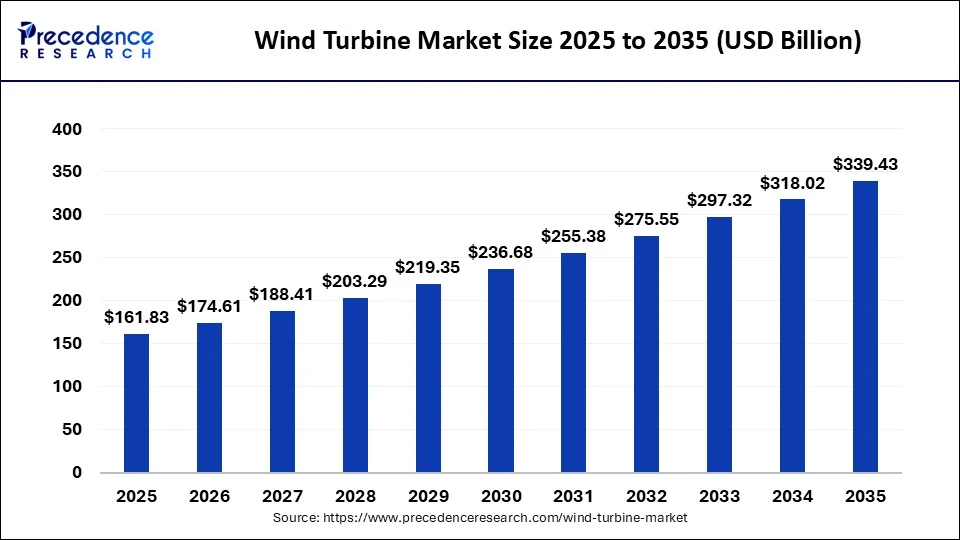
According to Precedence Research, the global wind turbine market size surpassed USD 161.83 billion in 2025 and is projected to rise from USD 174.61 billion in 2026 to approximately USD 339.43 billion by 2035, expanding at a CAGR of 7.69% during the forecast period.
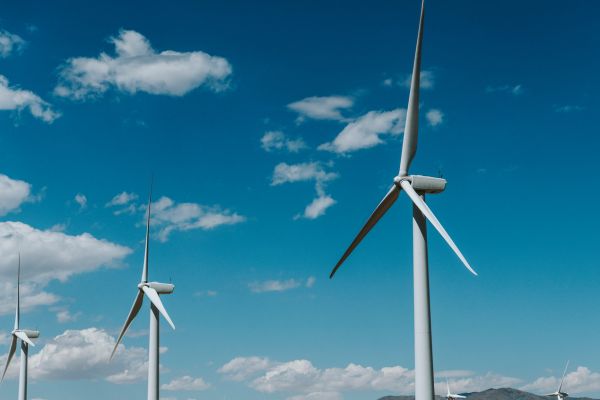
Wind turbines play a critical role in converting wind energy into electricity through aerodynamic rotor blades connected to generators. As nations pursue ambitious decarbonization goals and seek to reduce dependence on fossil fuels, wind energy continues to emerge as one of the most cost-effective and scalable renewable power sources worldwide.
Renewable Energy Policies Fuel Market Momentum
Growing global demand for renewable energy, favorable government policies, and increasing investments in clean energy infrastructure are among the key factors driving market expansion. Governments across developed and emerging economies are introducing tax incentives, subsidies, and renewable energy targets that encourage large-scale deployment of wind power projects.
The ongoing shift toward sustainable energy systems, combined with rising electricity demand and climate commitments under international frameworks such as the Paris Agreement, continues to strengthen the outlook for the wind turbine industry. Improvements in turbine efficiency and larger rotor designs are further reducing the cost of wind-generated electricity, making it increasingly competitive with conventional energy sources.
Offshore Wind Emerges as a Major Growth Opportunity
One of the most significant developments shaping the market is the rapid expansion of offshore wind installations. Offshore projects benefit from stronger and more consistent wind speeds, enabling higher energy generation and improved project economics.
Manufacturers are developing larger turbines with extended blade lengths and increased hub heights to maximize power output. These technological advancements are helping developers capture more energy while reducing operational costs. As a result, offshore wind is attracting substantial investments from governments, utilities, and private investors seeking long-term renewable energy opportunities.
Market Trends Highlight Technology and Sustainability
Several industry trends are transforming the competitive landscape of the wind turbine market:
- Rising adoption of renewable energy to reduce carbon emissions and dependence on fossil fuels.
- Technological innovations that improve turbine performance, efficiency, and reliability.
- Increased government funding and policy support for renewable power projects.
- Growing focus on sustainability, circular economy practices, and recyclable turbine components.
- Expansion of smart turbine technologies, artificial intelligence-driven monitoring systems, and advanced control mechanisms.
Manufacturers are also prioritizing environmentally responsible production methods and developing recyclable wind turbine blades to support global sustainability objectives.
Segment Insights
By installation type, the onshore segment dominated the market in 2025 and is expected to maintain strong growth due to lower installation costs and wider deployment across developed and developing economies.
Based on components, the rotor blade segment accounted for the largest market share, driven by ongoing technological improvements and increasing demand for high-capacity turbines.
By application, the utility segment led the market as governments and energy providers continue investing in large-scale renewable energy projects to meet rising electricity demand and sustainability goals.
Asia Pacific Remains the Global Leader
Asia Pacific accounted for the largest share of the global wind turbine market, capturing 59% of total revenue in 2025. The region benefits from extensive manufacturing capabilities, supportive government policies, and large-scale renewable energy investments across China, India, and Japan.
China continues to dominate regional and global wind energy development through significant investments in both onshore and offshore projects. In May 2025, China unveiled the world’s largest offshore wind turbine featuring a hub height of 185 meters and a capacity of 26 MW, capable of generating approximately 100 million kWh of renewable electricity annually.
India also remains a key growth market, supported by ambitious renewable energy targets and expanding wind power installations across several states. Increasing investments from domestic and international companies are expected to further strengthen the region’s leadership position.
North America and Europe Continue Strategic Expansion
North America remains a significant market, led by the United States, where favorable tax incentives, renewable energy investments, and policy support under the Inflation Reduction Act continue to stimulate wind power development.
Europe maintains a strong position in the global market through extensive offshore wind deployments and advanced turbine technology innovation. Countries including Germany, the United Kingdom, Denmark, and Spain continue to lead regional efforts aimed at achieving long-term net-zero emissions goals.
Meanwhile, Latin America is emerging as an attractive destination for wind energy investments, supported by abundant wind resources, competitive auction programs, and growing demand for sustainable electricity generation.
Leading Companies in the Wind Turbine Market
GE Vernova (formerly General Electric Company)
GE Vernova accounted for an estimated 6.4% share of the global wind turbine market revenue in 2025, generating approximately USD 10.9 billion from its wind business. The company offers a broad portfolio of onshore wind turbines, including its Cypress platform, along with grid integration solutions, digital asset monitoring technologies, and long-term operations and maintenance services.
Vestas Wind Systems A/S
Vestas Wind Systems A/S held an estimated 10.2% revenue share of the global wind turbine market in 2025, representing around USD 17.4 billion in wind turbine-related revenue. The company provides a comprehensive range of onshore and offshore wind turbines, including the EnVentus and V236 platforms, complemented by project development, service agreements, and lifecycle management solutions.
Nordex SE
Nordex SE captured approximately 4.7% of the global wind turbine market revenue in 2025, with estimated wind business revenue of USD 8.0 billion. Its offerings primarily include onshore wind turbines based on the Delta4000 platform, turnkey wind farm solutions, and extensive maintenance and operational support services.
Suzlon Energy Limited
Suzlon Energy Limited represented an estimated 1.7% share of the global wind turbine market revenue in 2025, generating around USD 2.9 billion from its wind operations. The company offers wind turbine generators such as the S144 and S133 series, alongside end-to-end wind farm development, project execution, and operations and maintenance services.
Siemens Gamesa Renewable Energy S.A.
Siemens Gamesa Renewable Energy S.A. accounted for approximately 9.1% of the global wind turbine market revenue in 2025, equivalent to nearly USD 15.6 billion. The company’s portfolio includes advanced offshore wind turbines, such as the SG 14-236 DD series, onshore turbine solutions, digital diagnostics, and comprehensive lifecycle service offerings.
China State Shipbuilding Corporation (CSIC) – Haizhuang Windpower
CSIC, through its Haizhuang Windpower division, held an estimated 2.4% share of the global wind turbine market revenue in 2025, generating approximately USD 4.1 billion. The company provides large-capacity onshore and offshore wind turbines, as well as integrated wind farm development and engineering solutions.
Shanghai Electric
Shanghai Electric accounted for an estimated 3.6% of global wind turbine market revenue in 2025, with wind-related revenue of approximately USD 6.2 billion. Its offerings include onshore and offshore wind turbine platforms, particularly high-capacity offshore models ranging from 8 MW to 16 MW, supported by smart operations and maintenance services.
Windey Energy Technology Group Co., Ltd.
Windey Energy Technology Group Co., Ltd. captured an estimated 4.2% share of the global wind turbine market revenue in 2025, generating roughly USD 7.1 billion from its wind business. The company offers a range of onshore and offshore wind turbines, modular high-capacity turbine platforms, wind farm engineering services, and lifecycle support solutions.
Industry Innovation and Recent Developments
The wind turbine sector continues to witness significant technological progress and strategic investments:
- ZF Wind Power launched India’s largest 13.2 MW test rig in Coimbatore in May 2025 to support advanced gearbox and powertrain validation.
- Senvion India introduced its new 3.1 M130 wind turbine designed to maximize annual energy production under Indian wind conditions.
- Haventus and Sarens developed an innovative low-cost solution for floating offshore wind turbine deployment to reduce installation costs.
- Enel launched “WinDesign,” an initiative focused on improving the integration of wind turbine projects within local landscapes.
- GE Renewable Energy announced the supply of 42 onshore wind turbines for projects across Gujarat and Karnataka, supporting industrial electricity demand.
Future Outlook
The long-term outlook for the wind turbine market remains highly positive. Rising energy consumption, increasing environmental concerns, supportive policy frameworks, and ongoing technological innovation are expected to sustain strong market growth through 2035.
As nations accelerate their transition toward low-carbon energy systems, wind power will remain a cornerstone of global renewable energy strategies. Advancements in turbine technology, offshore wind development, digital monitoring solutions, and sustainable manufacturing practices are expected to create substantial opportunities for manufacturers, investors, and project developers worldwide.