
The world’s next industrial race is underway
Every time we unlock a smartphone, drive a modern car, use digital payments or stream a movie, we rely on something we rarely see, a semiconductor chip. These tiny pieces of silicon have become the foundation of the digital economy, powering everything from artificial intelligence (AI) and electric vehicles to healthcare equipment, defense systems and communication networks.
Today, semiconductors are no longer just a technology product. They have become a strategic asset that influences economic growth, national security and global competitiveness. Countries across the world are investing billions of dollars to strengthen their semiconductor capabilities, reduce dependence on imports and secure resilient supply chains.
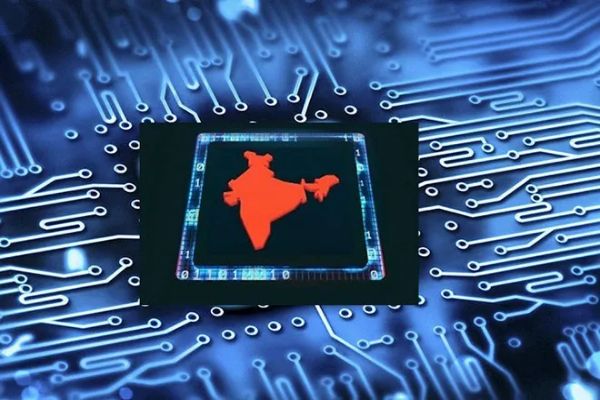
India has entered this race with confidence
For years, the country earned global recognition for its software expertise and semiconductor design talent. Now, it is taking the next step by building its own semiconductor manufacturing ecosystem. Yet, alongside this exciting opportunity lies an equally important challenge. Semiconductor manufacturing is one of the most resource-intensive industries in the world. It requires enormous quantities of electricity, ultra-pure water and specialised chemicals.
As India builds this new industry, it has an opportunity that many developed nations never had the chance to create a semiconductor ecosystem that is sustainable from the very beginning.
India’s semiconductor moment
The global semiconductor market is expected to exceed US$1.5 trillion by 2035, driven by rapid growth in artificial intelligence, cloud computing, electric mobility, advanced manufacturing and connected devices. As digital technologies become part of everyday life, the demand for semiconductor chips will continue to rise across every sector of the economy.
India is expected to be one of the largest contributors to this demand. According to the NITI Aayog‘s “Future of India’s Semiconductor Industry” roadmap, domestic semiconductor consumption is projected to reach nearly US$90 billion by 2030 and could exceed US$200 billion by 2035.
This demand presents a significant economic opportunity
The Government of India has already approved multiple semiconductor manufacturing and advanced packaging projects under the India Semiconductor Mission. Supported by production-linked incentives, infrastructure development and policy reforms, the country is gradually moving from being primarily a consumer of semiconductors to becoming a manufacturer.
According to KPMG’s report, “Shift from Emerging to Pivotal: India in the New Geoeconomic Order,” India aims to build a semiconductor value chain worth US$120-150 billion by 2035. Achieving this vision would allow the country to meet 35-50% of its domestic semiconductor demand while capturing 10-13% of the global semiconductor value chain.
However, such an ambitious transformation will require substantial investment. Estimates suggest that India will need US$135-180 billion over the next decade to develop manufacturing facilities, strengthen research and development, build supply chains and create supporting infrastructure.
India’s biggest strength is its people
Unlike many countries that first built manufacturing capacity before developing technical expertise, India already possesses one of the world’s strongest semiconductor talent pools.
Today, nearly 20% of the global semiconductor design workforce is based in India. Engineers across Bengaluru, Hyderabad, Noida, Pune and Chennai contribute to designing chips used by some of the world’s largest technology companies.
This talent advantage becomes even more valuable as artificial intelligence reshapes industries. KPMG estimates that AI could contribute approximately US$1.7 trillion to India’s economy by 2035, creating new demand for advanced chips and strengthening the country’s position in the global technology ecosystem.
Manufacturing, therefore, is not replacing India’s design leadership, it is complementing it. Together, they can create a complete semiconductor ecosystem that generates employment, attracts foreign investment and enhances technological self-reliance.
The hidden environmental cost of a tiny chip
Although semiconductor chips are remarkably small, manufacturing them is anything but. A modern semiconductor fabrication plant operates with extraordinary precision. Even microscopic particles can affect chip quality, requiring highly controlled cleanroom environments that operate continuously. This process consumes large amounts of electricity and water while relying on specialised chemicals and gases.
One of the most critical resources is water.
According to Deloitte’s semiconductor sustainability research, producing 1,000 litres of ultra-pure water, essential for cleaning silicon wafers can require approximately 1,400 to 1,600 litres of municipal water. In regions already facing water stress, efficient recycling and conservation become essential rather than optional.
Electricity consumption is equally significant
The semiconductor industry accounts for roughly 0.3% of global electricity consumption, and advanced manufacturing facilities consume billions of kilowatt-hours annually. As demand for more powerful chips continues to grow, energy requirements will increase further.
These realities make sustainability an integral part of semiconductor manufacturing. Environmental responsibility is no longer limited to regulatory compliance; it has become a key factor influencing investment decisions, operational efficiency and long-term competitiveness.
Sustainability is becoming good business
Indian industries increasingly recognise that sustainable manufacturing is not a cost but an investment.
According to PwC India’s Industry 5.0 report (October 2024), 93% of Indian manufacturers are adopting Industry 5.0 practices that combine advanced technology with sustainable business operations. More than half are prioritising investments in renewable energy, energy-efficient equipment and environmentally responsible manufacturing processes.
Importantly, companies do not view sustainability solely through an environmental lens. PwC’s research indicates that these investments could increase revenues by an average of 6.42% over the next two years through improved operational efficiency, reduced resource consumption and enhanced competitiveness. This demonstrates that profitability and sustainability are increasingly moving in the same direction.
Climate change is now a supply chain challenge
Environmental sustainability is no longer confined to factory gates.
Climate change is beginning to affect the availability of raw materials essential for semiconductor manufacturing. According to PwC Global’s “Climate Risks to the Semiconductor Supply Chain” (2025), approximately 32% of global semiconductor production, valued at nearly US$1 trillion, could depend on copper supplies exposed to climate-related drought risks by 2035. Without stronger climate adaptation measures, this exposure could increase to 58% by 2050.
Such findings underline an important reality: building resilient semiconductor supply chains requires not only advanced manufacturing facilities but also sustainable management of natural resources across mining, transportation and industrial operations.
India’s opportunity to lead differently
India enters the semiconductor manufacturing era at a time when sustainability has become central to industrial development.
Unlike countries that are now retrofitting decades-old manufacturing facilities to reduce emissions, India can integrate environmental considerations from the planning stage. New semiconductor plants can incorporate renewable energy, advanced water recycling systems, efficient waste management and low-carbon manufacturing technologies from day one.
The country’s progress in renewable energy provides additional momentum
By June 2025, India had achieved 50% of its installed electricity capacity from non-fossil fuel sources, reaching its national target years ahead of schedule. This growing clean energy capacity strengthens India’s ability to support energy-intensive industries while advancing its climate commitments.
At the same time, global semiconductor companies are setting ambitious environmental goals. Intel has announced its target of achieving net-zero greenhouse gas emissions by 2040, while TSMC aims to achieve net zero by 2050. These commitments reflect a broader industry shift in which environmental performance has become an important measure of business excellence.
Looking beyond factories
Building a globally competitive semiconductor industry requires more than constructing manufacturing plants. It demands investment in research, innovation, skilled talent, specialised suppliers, logistics, clean energy, water security and environmental governance. Universities, research institutions, start-ups and industry must work together to create an ecosystem capable of sustaining long-term growth. Public policy will also play a defining role. Continued support for research and development, faster infrastructure creation, simplified regulatory processes and strong industry-academia partnerships will be essential if India is to realise its semiconductor ambitions.
Most importantly, sustainability must remain embedded in every stage of this journey.
The road ahead
The semiconductor industry represents one of the greatest economic opportunities of the twenty-first century. For India, it is not merely about producing chips, it is about shaping the country’s future in advanced manufacturing, technology leadership and global competitiveness. The choices made today will determine whether India simply becomes another manufacturing destination or emerges as a global benchmark for responsible industrial growth.
If economic ambition is matched by environmental responsibility, India has the potential to demonstrate that manufacturing excellence and sustainability are not competing priorities, they are complementary strengths. The future of semiconductors will not be defined solely by smaller chips or faster processors. It will also be measured by how responsibly they are made.
As India stands at the threshold of this transformation, it has an opportunity to prove that the industries of tomorrow can be built without compromising the needs of future generations.
(Author – Devika Raj Batra, Tech Innovator, Founder Project Amrit, Data Sources Internet, Views are Personal)
References
- KPMG (2026). Shift from Emerging to Pivotal: India in the New Geoeconomic Order.
- NITI Aayog (2026). Future of India’s Semiconductor Industry.
- PwC India (2024). 93% of Indian Manufacturers Target Sustainability with 2–3x Profitable Growth through Industry 5.0.
- Deloitte. Next-generation Semiconductor Sustainability Strategies.
- PwC Global (2025). Climate Risks to the Semiconductor Supply Chain.
- Ministry of New and Renewable Energy (MNRE), Government of India.