
What’s new
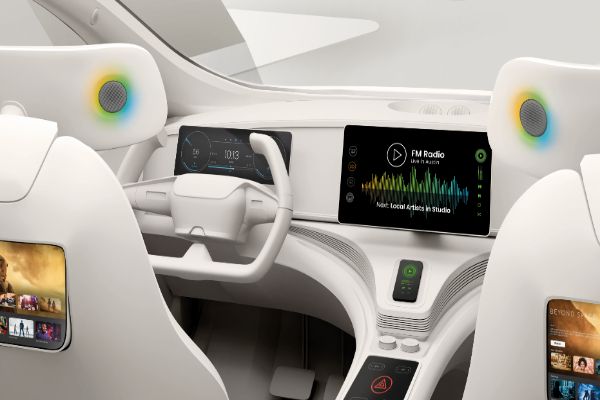
NXP Semiconductors announced the SAF9800, a new automotive audio and radio processor designed to simplify infotainment architectures. To achieve this, NXP has integrated analog radio (AM and FM) and AI/ML-enabled audio processing into a highly flexible single-chip solution that meets the needs of a vast range of next generation vehicles. The solution enables automakers to reduce system complexity and scale features across global vehicle platforms.
SAF9800 combines analog radio reception and high-performance audio processing into a single integrated solution. This innovative approach empowers OEMs to consolidate functions that have traditionally required multiple discrete radio and audio components into a single, scalable device.
Furthermore, SAF9800 leverages AI-driven acoustic source separation technology that transforms in-cabin microphone data by isolating critical sounds like vocal commands, mechanical failures, or emergency sirens from overwhelming background noise. Traditional filtering often fails in complex acoustic environments like vehicle cabins, making machine learning the premier solution for dynamic, real-time audio extraction.
“The industry is moving away from fragmented, hardware-driven infotainment systems toward more integrated, software-defined architectures,” said John van den Braak, Senior Vice President and General Manager of the Infotainment and Audio Systems product line at NXP Semiconductors. “With SAF9800, we are combining the long-lifecycle building blocks of infotainment—such as broadcast radio and digital audio—with new AI/ML-powered audio capabilities that enhance the in-car experience, enable in-cabin audio sensing, and support functional audio use-cases. By delivering these capabilities in a flexible, single-chip solution that meets stringent global RF and audio requirements, we help automakers simplify development and scale their platforms to meet evolving market needs.”
SAF9800 integrates a HiFi 5 audio DSP with integrated neural-network processing capabilities together with NXP’s hardware-based biquad accelerators, delivering more than 10x audio processing performance compared to previous generations. This enables advanced audio use cases such as real-time noise reduction, voice and sound classification, and more adaptive in-cabin listening experiences—using data-driven algorithms rather than fixed signal processing
Designed for software-defined architectures, the solution supports feature scalability through software – allowing automakers to configure, upgrade, and differentiate radio and audio capabilities without changing hardware.
Why it matters
Automakers are navigating a shifting landscape of radio policy considerations, evolving consumer expectations and technical challenges for in-vehicle radio. For example, in the U.S., proposed legislation aims to preserve in vehicle access to broadcast radio, including AM. At the same time, electrification is introducing new signal interference challenges, intensifying industry debate over the role and implementation of analog broadcast in next-generation vehicles. These issues require flexible solutions that can give automakers options.
SAF9800 addresses these challenges by consolidating radio and audio processing into a single, scalable chip-level solution and providing key support offerings. The reduced system footprint and simplified integration enable automakers to adapt to changing global requirements. NXP also offers support, like its latest generation of AM denoising technology (EVAM-lite) on the new SAF9800 product series to address signal interference challenges come primarily from EVs into the AM frequency band.
Availability
The SAF9800 automotive radio and audio processor is available as of May 2026, with development support and software enablement tools available to accelerate customer designs.