
Article Summary
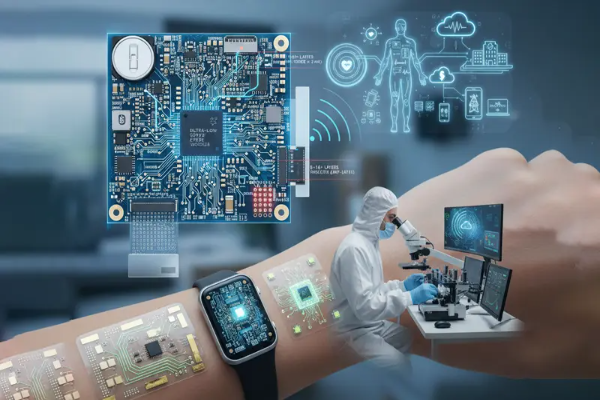
The healthcare industry is witnessing a remarkable transformation driven by the rapid adoption of, remote patient monitoring systems, and portable medical equipment. Behind every intelligent healthcare device lies a critical component that determines its performance, reliability, and longevity—the Printed Circuit Board (PCB). As medical devices become smaller, smarter, and more connected, PCB technology has evolved to meet increasingly demanding design and manufacturing requirements.
Unlike conventional consumer electronics, medical-grade devices require PCBs that deliver exceptional precision, durability, and long-term reliability. Applications such as wearable ECG monitors, smart insulin pumps, patient monitoring systems, portable diagnostic equipment, hearing aids, and implantable medical devices demand compact circuit designs capable of operating flawlessly under stringent regulatory and environmental conditions.
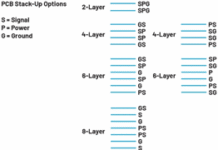
Modern medical PCBs are designed to accommodate high-density electronic components while maintaining excellent signal integrity, thermal performance, and electromagnetic compatibility (EMI/EMC). Technologies such as High-Density Interconnect (HDI), multilayer PCBs, flexible PCBs, and rigid-flex PCBs have become essential in enabling compact, lightweight, and highly reliable medical devices without compromising performance.
As wearable healthcare solutions continue to evolve, miniaturization has become one of the industry’s primary challenges. PCB manufacturers are increasingly adopting advanced fabrication techniques, microvias, fine-pitch routing, and precision assembly processes to support increasingly compact electronic designs. These innovations enable manufacturers to integrate more functionality into smaller form factors while maintaining the reliability expected in critical healthcare applications.
Material selection is another crucial aspect of medical PCB manufacturing. High-performance laminates, copper finishes, and biocompatible materials contribute to long-term durability, mechanical stability, and resistance to temperature, humidity, and repeated sterilization processes. Choosing the appropriate PCB materials ensures consistent performance throughout the product lifecycle.
Power efficiency also plays a significant role in wearable medical devices. Battery-powered equipment often needs to operate continuously for extended periods. Efficient PCB layouts, optimized trace routing, reduced power losses, and effective thermal management contribute to maximizing battery life while ensuring stable device operation.
As connectivity becomes an integral part of modern healthcare, PCBs must support wireless communication technologies such as Bluetooth Low Energy (BLE), Wi-Fi, NFC, and cellular connectivity. Proper PCB design minimizes signal interference while ensuring reliable communication between medical devices, cloud platforms, and healthcare providers.
The increasing integration of Artificial Intelligence (AI) and edge computing within medical devices places additional demands on PCB performance. Advanced processors, memory components, sensors, and communication modules require carefully engineered PCB layouts that provide stable power delivery, high-speed signal transmission, and efficient heat dissipation. High-quality PCB manufacturing plays a critical role in enabling these intelligent healthcare solutions.
Reliability remains the defining characteristic of medical electronics. PCB manufacturers must comply with internationally recognized quality standards, including IPC manufacturing guidelines and rigorous inspection processes. Automated Optical Inspection (AOI), X-ray inspection, electrical testing, and comprehensive quality assurance procedures ensure that every PCB meets the stringent reliability requirements expected in medical applications.
Another important consideration is Design for Manufacturability (DFM) and Design for Assembly (DFA). Early collaboration between PCB manufacturers and product designers helps optimize board layouts, improve production efficiency, reduce manufacturing defects, and accelerate time-to-market. This collaborative approach enables healthcare technology companies to develop innovative products while maintaining cost efficiency and product quality.
Looking ahead, advancements in flexible electronics, embedded components, advanced substrate materials, and ultra-miniaturized PCB technologies will continue to shape the future of wearable healthcare devices. As medical technologies become increasingly connected and intelligent, PCB manufacturing will remain a cornerstone of innovation, supporting the development of safer, smarter, and more reliable healthcare solutions.
The future of intelligent healthcare depends not only on sophisticated software and embedded processors but also on precision-engineered PCBs that provide the electrical foundation for every connected medical device. By combining advanced manufacturing technologies with stringent quality standards, PCB manufacturers are enabling the next generation of wearable and medical-grade innovations that improve patient outcomes and redefine modern healthcare.
About Sanjay Technologies
Sanjay Technologies is a leading PCB manufacturing company committed to delivering high-quality Printed Circuit Board solutions for diverse industries, including healthcare, industrial automation, automotive, telecommunications, and consumer electronics. With expertise in precision PCB fabrication, multilayer boards, HDI technology, flexible and rigid-flex PCBs, and advanced quality assurance processes, the company supports customers in developing reliable, high-performance electronic products. By focusing on manufacturing excellence, innovation, and international quality standards, Sanjay Technologies continues to contribute to the advancement of next-generation electronic and medical technologies.