
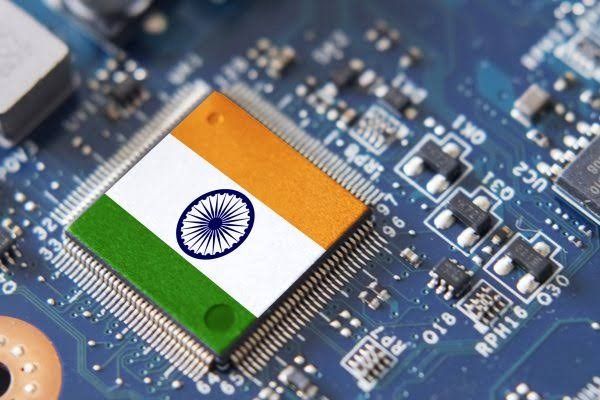
India is rapidly positioning itself as an emerging destination in the global semiconductor industry, supported by increasing electronics consumption, government incentives, international technology partnerships and investments in domestic chip manufacturing. Semiconductors have become essential components across industries, including artificial intelligence (AI), automotive, telecommunications, consumer electronics, defence, healthcare and industrial automation. As global companies seek to diversify semiconductor supply chains, India is gaining attention as a potential manufacturing, packaging and semiconductor design hub.
The India semiconductor market size was reached at USD 43.14 billion in 2025 and is anticipated to exceed around USD 126.54 billion by 2035, growing at a compound annual growth rate (CAGR) of 11.36% from 2026 to 2035. This expansion reflects rising domestic demand for advanced electronics, increasing digital infrastructure investments and the country’s ambition to reduce dependence on imported semiconductor products.
The government’s semiconductor strategy is also moving beyond traditional electronics assembly towards establishing an integrated ecosystem covering chip design, wafer fabrication, assembly, testing, packaging, semiconductor equipment and materials.
Government Initiatives Accelerating India’s Semiconductor Industry
Government support has emerged as one of the most important catalysts for India’s semiconductor ambitions. The Semicon India Programme, initially approved with an outlay of INR 76,000 crore, was designed to attract investments across semiconductor fabrication, compound semiconductors, assembly, testing and packaging, and chip design.
Building on the initial programme, the government introduced India Semiconductor Mission (ISM) 2.0, with a broader focus on developing domestic semiconductor capabilities.
In July 2026, the Union Cabinet approved Semicon 2.0 with a total outlay of INR 1,27,500 crore. The initiative focuses on six strategic areas:
- Semiconductor chip design and domestic intellectual property development.
- Manufacturing of semiconductor equipment and materials.
- Establishment of additional semiconductor fabrication facilities.
- Strengthening assembly, testing, marking and packaging (ATMP) and outsourced semiconductor assembly and test (OSAT) capabilities.
- Research and development across semiconductor technologies.
- Development of a skilled semiconductor workforce.
The programme is expected to strengthen India’s position in the global semiconductor value chain while encouraging domestic and international companies to establish manufacturing operations in the country.
As of October 2026, 12 semiconductor manufacturing projects had received approval under the first phase, with cumulative investment commitments exceeding INR 1.64 lakh crore. Five projects had commenced commercial production, demonstrating progress towards building domestic manufacturing capabilities.
Major Semiconductor Manufacturing Investments in India
India is witnessing significant investment activity across semiconductor fabrication, packaging, compound semiconductors and specialised chip manufacturing. Several global and domestic companies are establishing facilities to serve India’s growing electronics industry and international customers.
Some major projects include:
1. Tata Electronics
Tata Electronics is developing a semiconductor fabrication facility in Dholera, Gujarat, in partnership with Taiwan-based Powerchip Semiconductor Manufacturing Corporation (PSMC). The project involves an investment commitment of approximately INR 91,526 crore and is designed for a production capacity of around 50,000 wafer starts per month.
The company is also developing a semiconductor packaging facility in Assam, strengthening India’s capabilities in advanced packaging and chip manufacturing.
2. Micron Technology
Micron Technology is establishing a semiconductor assembly and testing facility in Sanand, Gujarat, with an announced investment of approximately INR 22,516 crore. The facility will support DRAM and NAND memory products, serving both domestic and international markets.
Its planned production capacity is approximately 14 million units per week, positioning the project as an important step in developing India’s semiconductor memory ecosystem.
3. CG Power and Industrial Solutions
CG Power, in partnership with Renesas Electronics and Stars Microelectronics, is developing an outsourced semiconductor assembly and testing facility in Gujarat.
The project represents an investment of approximately INR 7,584 crore and is expected to support demand from automotive, industrial electronics, power management and other semiconductor-consuming industries.
4. Kaynes Technology
Kaynes Technology is expanding its semiconductor manufacturing presence through Kaynes Semicon’s facility in Sanand, Gujarat. The project involves an investment commitment of approximately INR 3,307 crore.
The facility is designed to produce more than 6.33 million chips per day, supporting India’s growing requirements for semiconductor packaging and specialised electronic components.
5. SiCSem
SiCSem is developing a silicon carbide semiconductor manufacturing facility in Odisha. With an investment of approximately INR 2,066 crore, the project is expected to strengthen India’s capabilities in compound semiconductors.
Silicon carbide technology is particularly important for electric vehicles, renewable energy systems, industrial power electronics and high-efficiency power conversion applications.
These investments demonstrate that India’s semiconductor ecosystem is expanding across multiple technology categories rather than focusing exclusively on conventional silicon chip manufacturing.
Key Growth Drivers of the India Semiconductor Market
Increasing Demand for Artificial Intelligence and Data Centres
- The rapid development of artificial intelligence is creating significant demand for high-performance processors, GPUs, memory chips, networking semiconductors and power management components. India’s expanding data centre infrastructure and AI adoption are expected to generate additional demand for advanced semiconductor technologies.
Expansion of Electric Vehicle Manufacturing
- Electric vehicles require a growing range of semiconductor components, including power management ICs, microcontrollers, battery management systems, sensors, inverters and automotive-grade chips.
- The increasing adoption of EVs in India is creating opportunities for semiconductor manufacturers specialising in silicon carbide, gallium nitride and advanced power electronics.
Growth of Consumer Electronics
- India’s expanding smartphone, laptop, television, wearable device and smart appliance industries are increasing demand for semiconductor components. Domestic electronics manufacturing initiatives are also encouraging suppliers to establish local production capabilities.
Government Incentives and Manufacturing Support
- Financial incentives, infrastructure development, international partnerships and policy support are encouraging semiconductor companies to invest in India. The development of dedicated semiconductor manufacturing clusters is expected to improve supply chain integration and operational efficiency.
Supply Chain Diversification
- Global semiconductor companies are exploring alternative manufacturing locations to reduce geographical concentration risks. India’s skilled engineering workforce, large domestic market and improving manufacturing ecosystem create opportunities to attract international investments.
Emerging Opportunities Across the Semiconductor Value Chain
The India semiconductor market offers opportunities beyond wafer fabrication. Companies operating in different parts of the semiconductor value chain can benefit from the development of domestic manufacturing infrastructure.
- Semiconductor fabrication: Opportunities in silicon wafers, compound semiconductor wafers, fabrication facilities and specialised chip production.
- Advanced packaging: Growing demand for wafer-level packaging, system-in-package, chiplets, 2.5D and 3D integration technologies.
- Semiconductor equipment: Opportunities in wafer processing, lithography-related equipment, deposition, etching, inspection and testing systems.
- Semiconductor materials: Demand for silicon wafers, photoresists, specialty gases, high-purity chemicals, substrates and packaging materials.
- Power semiconductors: Opportunities in silicon carbide and gallium nitride devices for EVs, renewable energy and industrial power applications.
- Memory semiconductors: Increasing requirements for DRAM, NAND flash and high-bandwidth memory solutions.
- Chip design: Opportunities in application-specific integrated circuits (ASICs), microcontrollers, AI processors, automotive chips and communication ICs.
- Testing and validation: Growing requirements for semiconductor testing, reliability assessment, failure analysis and quality assurance.
These opportunities are expected to encourage participation from global semiconductor suppliers, Indian technology companies, equipment manufacturers, material suppliers and specialised engineering service providers.
Challenges Facing India’s Semiconductor Industry
Despite the positive outlook, India faces several challenges in developing a globally competitive semiconductor ecosystem.
- High capital expenditure requirements for establishing advanced semiconductor fabrication facilities.
- Dependence on imported semiconductor manufacturing equipment, specialty chemicals and critical materials.
- Limited domestic availability of highly specialised semiconductor manufacturing expertise.
- Requirements for reliable electricity, ultra-pure water and advanced industrial infrastructure.
- Strong competition from established semiconductor manufacturing countries such as Taiwan, South Korea, Japan and China.
- Technology transfer requirements and dependence on international manufacturing partnerships.
- Long project development timelines and the need to achieve globally competitive production yields.
Addressing these challenges will be essential for India to move from an emerging semiconductor destination to a major global manufacturing and technology hub.
Future Outlook: India Moving Towards a Stronger Semiconductor Ecosystem
India’s semiconductor industry is entering an important development phase. The combination of government support, private-sector investment, international partnerships and increasing domestic electronics consumption is creating a favourable environment for long-term growth.
The next phase of development is expected to focus on establishing additional fabrication facilities, strengthening advanced packaging capabilities, developing semiconductor materials and equipment manufacturing, and expanding domestic chip design capabilities.
Artificial intelligence, electric mobility, 5G and future 6G networks, renewable energy, defence electronics and industrial automation are expected to remain important demand-generating sectors.
With the implementation of Semicon 2.0 and the development of manufacturing facilities across multiple states, India has an opportunity to become an important participant in global semiconductor supply chains.
For semiconductor manufacturers, equipment suppliers, material companies, technology developers and investors, understanding market demand, investment patterns, competitive positioning and emerging technology requirements will be essential to identifying opportunities in India’s rapidly evolving semiconductor industry.