
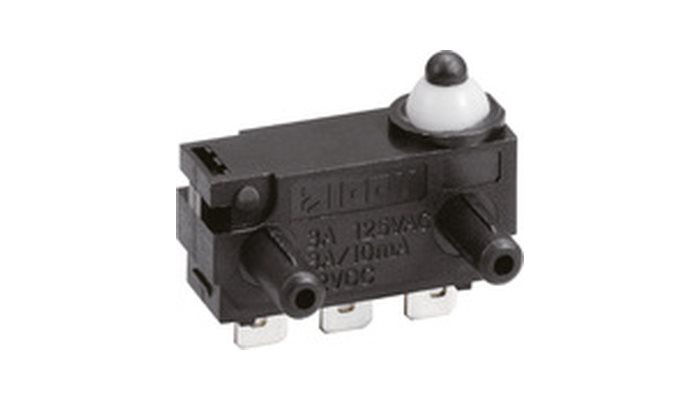
Micro switches are small, highly sensitive switches that respond quickly to very small amounts of physical force. They are also known as snap-action switches because of the way they instantly change states when triggered. Despite their compact size, micro switches play a vital role in various applications. From home appliances to industrial machinery, these components help devices operate safely and accurately. Their reliability, long lifespan, and ease of integration make them essential to both consumer electronics and industrial control systems.
Working Principle of Micro Switches
The operation of a micro switch is based on a simple but effective mechanism. When pressure is applied to a small actuator button on the switch, it causes internal contacts to snap into a different position. This change completes or breaks an electrical circuit. The speed and accuracy of the snapping action allow the switch to function with great consistency, even under repeated use.
What makes micro switches particularly effective is that they can operate with minimal force and still provide precise performance. Once triggered, the switch remains in that state until the actuator is released or moved again. This makes them ideal for systems where frequent and quick switching is necessary.
Role in Consumer Electronics
Micro switches are widely used in everyday consumer electronics due to their durability and precision. In many household appliances like microwave ovens, washing machines, and refrigerators, micro switches are used to detect door positions. For instance, when you open a microwave door, the micro switch cuts off power to the magnetron for safety. Similarly, washing machines rely on micro switches to ensure the door is securely closed before the spin cycle begins.
In printers and scanners, micro switches detect the position of paper trays and moving parts to ensure smooth operation. In game controllers and computer mice, micro switches are used to register clicks and button presses with high accuracy and low latency. This enhances the responsiveness of the device and improves the overall user experience.
The use of micro switches in smart home devices is also growing. They are often embedded in smart locks, remote controls, and sensor-based lighting systems, where they help detect user interaction or environmental changes.
Importance in Industrial Control Systems
In industrial environments, precision and reliability are critical. Micro switches serve many purposes in control systems, helping to monitor processes and ensure safety. They are often installed in machinery to detect position limits or motion endpoints. For example, they can stop a robotic arm from moving beyond its designated range or signal when a conveyor belt reaches a particular location.
Micro switches are also used in elevators to monitor door closure and floor position, and in HVAC systems to detect air flow or filter changes. Their ability to withstand harsh conditions such as vibration, dust, and temperature fluctuations makes them suitable for heavy-duty applications.
In automation systems, micro switches act as feedback devices, sending signals to controllers when certain actions are complete. This real-time feedback is essential for maintaining proper timing and sequence in automated production lines.
Durability and Design Flexibility
One of the main reasons micro switches are used in so many sectors is their durability. Many switches are rated for millions of cycles, which means they can last for years without failure. This reliability reduces maintenance costs and downtime in both consumer and industrial applications.
Micro switches also come in a wide variety of designs. Some are sealed to protect against moisture and dust, while others are designed to handle higher currents or voltages. The flexibility in design makes them adaptable to different environments and use cases.
In addition to their physical durability, micro switches can be customized in terms of operating force, terminal types, and mounting options. This allows manufacturers to select or design switches that fit perfectly within their product specifications.
Safety and Regulatory Compliance
Micro switches play a key role in safety mechanisms. In both household and industrial settings, they act as fail-safes by ensuring certain conditions are met before operations proceed. For example, in industrial presses, a micro switch can be used to detect whether a guard is in place before the machine is allowed to start.
They also help manufacturers meet safety regulations and quality standards. Many micro switches are designed and tested to comply with international certifications, ensuring they meet rigorous safety and performance benchmarks. This is particularly important in industries such as automotive, medical devices, and heavy equipment manufacturing.
Evolving Applications and Future Trends
As devices become more compact and intelligent, the demand for reliable and miniaturized components like micro switches continues to grow. In the age of smart electronics and the Internet of Things (IoT), these switches are being integrated into more complex systems to deliver real-time feedback and enhance automation.
New developments are also focusing on integrating sensors and wireless capabilities with micro switch technology. This will enable more advanced features such as remote monitoring, predictive maintenance, and seamless connectivity in industrial systems.
In consumer electronics, the push for ergonomic design and energy efficiency is driving innovation in micro switch materials and actuation methods. Low-profile and touch-sensitive models are increasingly replacing traditional designs, offering improved user experience and reduced energy consumption.
Conclusion
Micro switches may be small in size, but their role in electronics and industrial systems is substantial. Their reliability, fast response, and adaptability make them critical to the smooth and safe operation of countless devices and machines. As technology evolves and systems become smarter, micro switches will continue to be an essential part of both simple mechanisms and advanced control networks.