

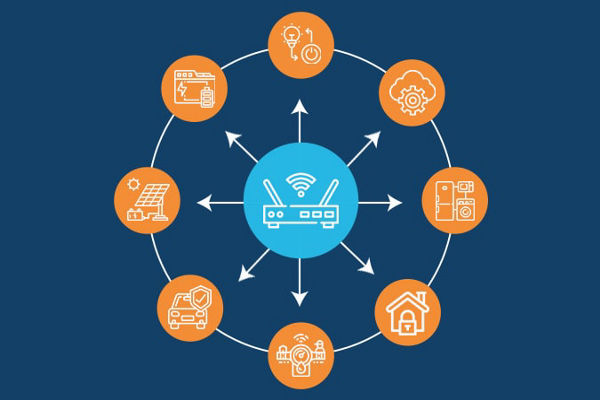
The rise of Industrial Internet of Things (IIoT) applications has transformed how industries monitor, control, and optimize their operations. From manufacturing and logistics to energy and agriculture, IIoT systems rely on interconnected sensors, actuators, and controllers to gather and process data in real time. However, the efficiency and reliability of these systems depend heavily on how power is managed. Without effective power management solutions, even the most advanced IIoT applications can suffer from downtime, data loss, or inefficiency. Therefore, managing power consumption, distribution, and supply is critical to the success of modern industrial automation.
Challenges of Power Supply in Industrial IoT Environments
Unlike consumer IoT devices that operate in controlled environments with easy access to stable power, IIoT systems often function in harsh and remote industrial settings. These locations may experience fluctuations in voltage, temperature extremes, or limited access to power infrastructure. Moreover, many IIoT nodes are deployed across wide areas or on moving machinery, making wired power sources impractical.
In such cases, ensuring that each device operates continuously without power-related failures becomes complex. Battery-powered systems must balance long life with performance, while grid-powered systems need to handle energy spikes and losses. Additionally, every device in the network must consume as little energy as possible without sacrificing performance or responsiveness.
The Role of Efficient Power Management Systems
Efficient power management in IIoT starts with designing systems that consume less power while delivering high performance. This involves optimizing hardware and software components to minimize energy use during idle states and maximize efficiency during active operations. Key elements include low-power microcontrollers, intelligent power converters, and energy-harvesting technologies.
Advanced power management solutions enable IIoT devices to shift between active, sleep, and deep sleep modes based on real-time usage. By intelligently managing these modes, devices can extend battery life and reduce the load on central power sources. Furthermore, adaptive voltage scaling and dynamic frequency adjustments help systems optimize energy usage based on workload requirements.
Energy Harvesting for Remote IIoT Nodes
One of the most promising advancements in IIoT power solutions is energy harvesting. In remote or inaccessible locations, energy harvesting allows devices to generate power from environmental sources like sunlight, vibrations, heat, or electromagnetic fields. This reduces the need for battery replacements and enables long-term deployments with minimal maintenance.
For example, sensors attached to industrial machines can harness energy from vibrations to power themselves. Solar-powered modules placed in agricultural fields can collect data and transmit it without needing traditional electrical lines. These self-sustaining systems are vital for scalable and cost-effective IIoT networks.
Centralized vs. Distributed Power Architecture
Power architecture also plays a vital role in IIoT system design. A centralized architecture powers all devices from a single source, which simplifies design but poses a risk of total system failure if the central source fails. On the other hand, a distributed power architecture assigns each device or cluster its own local power source. This approach increases reliability, as a failure in one segment doesn’t affect the whole network.
Distributed systems also allow localized energy optimization and better load balancing. For industries with critical operations, this model ensures higher uptime, safer operations, and improved fault tolerance. Intelligent power modules with built-in diagnostics can also report energy usage and fault conditions, aiding in predictive maintenance and energy management.
Smart Power Monitoring and Analytics
Beyond just supplying power, IIoT systems benefit greatly from intelligent power monitoring tools. These tools track real-time energy consumption across devices and locations. Data collected can be used for performance optimization, fault detection, and predictive maintenance.
For instance, if a motor is using more power than usual, it could be a sign of wear or malfunction. Early detection of such anomalies prevents breakdowns and reduces energy waste. AI-powered analytics tools can even predict future power needs and suggest adjustments to system operations for better energy use. This leads to cost savings and improved efficiency across the entire industrial process.
Security and Safety in Power Management
Power systems in industrial settings must also meet safety and security standards. Poorly managed power can lead to overheating, fires, or data corruption. Power management solutions for IIoT must include features such as surge protection, temperature monitoring, and secure power access control. Systems must also be designed to recover gracefully from unexpected power losses, preserving data and maintaining safe shutdown procedures.
With cyber threats on the rise, power management components must be protected from unauthorized access or manipulation. Tamper-proof hardware, encrypted communications, and secure firmware updates are essential to ensure safe and uninterrupted operations.
Future Outlook: Smarter, Greener Power Solutions
As the demand for connected industrial systems continues to grow, the need for smarter and greener power solutions will also rise. Future IIoT devices will rely on ultra-efficient chips, AI-driven power regulation, and even more advanced energy harvesting methods. The shift toward renewable energy integration and sustainable technologies will push industries to adopt cleaner power management approaches.
Power management will no longer be a supporting element but a central part of IIoT system design. With intelligent control and real-time visibility into energy use, industries can reduce operational costs, improve system longevity, and meet sustainability goals more effectively.
Conclusion
Power management is a foundational part of any successful Industrial IoT deployment. Whether through low-power design, energy harvesting, or smart analytics, having the right power strategy ensures reliable, efficient, and long-lasting system performance. As IIoT continues to evolve, so will the technologies that keep these systems powered quietly driving productivity, safety, and sustainability in the background.











 applications has transformed how industries monitor, control, and optimize their operations.)