
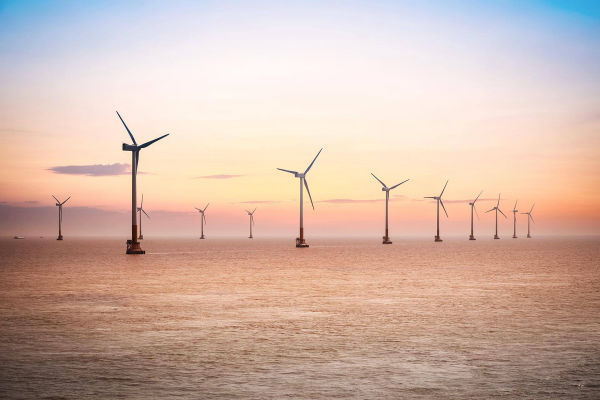
Offshore wind has shifted from horizon-line curiosity to center-stage solution. As coastal nations race to decarbonize grids and insulate energy systems from geopolitical shocks, turbines at sea are becoming taller, smarter, and more cost-competitive. With the global offshore wind energy market projected to exceed USD 298.8 billion by 2034, the sector is entering a decisive decade—one defined by scale, grid integration, digital intelligence, and new geographies.
Why Offshore Wind, and Why Now?
Three converging forces are propelling offshore wind from niche to necessity:
- Net-zero commitments and policy momentum: Ambitious national targets, contract-for-difference (CfD) auctions, tax credits, and fast-tracking measures are unlocking investment. Governments see offshore wind as a high-yield lever to cut emissions while creating skilled jobs and revitalizing coastal economies.
- Technology breakthroughs: Taller towers, longer blades, and advanced materials are capturing stronger, steadier winds. Digital twins, predictive analytics, and AI-driven O&M are extending asset life and squeezing more output from every megawatt.
- Grid resilience and energy security: Offshore wind’s scale—especially in clusters and hubs—offers reliable, high-capacity clean power near demand centers, reducing dependence on imported fuels and price volatility.
Fixed-Bottom Dominates—But Floating Is the Frontier
Today’s market is led by fixed-bottom turbines anchored in shallow to medium-depth waters. This subsegment will continue to attract the largest slice of capital through 2034 due to its maturity, robust supply chains, and bankable performance records. However, the growth narrative increasingly points to floating offshore wind. By enabling projects in deeper waters with stronger wind resources, floating foundations open vast new territories—think steep continental shelves and regions previously out of reach. Pilot farms are graduating to pre-commercial arrays, and once serial manufacturing scales up, floating projects could accelerate rapidly in the early 2030s.
Regional Leaders and Emerging Hotspots
- Europe remains the bellwether. The North Sea and Baltic continue to set the pace with integrated transmission planning, cross-border cooperation, and sophisticated auction frameworks. Expect repowering waves and hybrid projects that blend offshore wind with interconnectors.
- Asia-Pacific is the growth engine. China is already commissioning capacity at breathtaking speed, while Taiwan, Japan, South Korea, and Vietnam build policy scaffolding and port infrastructure. APAC’s blend of industrial depth and policy ambition positions it as the market’s volume driver.
- North America is transitioning from promise to build-out. The U.S. Atlantic coast has the resource, load centers, and policy tailwinds to scale, while the West Coast and Gulf of Mexico are poised for floating and hybrid opportunities as supply chains mature.
- Emerging markets—from Brazil and Colombia to Australia and South Africa—are drafting frameworks, surveying wind resources, and courting developers. Expect select early movers to catalyze regional ecosystems by the early 2030s.
The New Economics: Beyond LCOE
Levelized cost of energy (LCOE) remains crucial, but investors are widening the lens:
- System value: Offshore wind near coastal demand reduces transmission losses and can anchor energy islands—hubs that bundle wind generation, power-to-X, and cross-border links.
- Revenue stacking: Co-location with green hydrogen electrolyzers, participation in capacity markets, and ancillary services create diversified income streams.
- Supply chain localization: Ports, vessels, blade factories, and nacelle assembly lines generate durable regional value, influencing auction design and permitting outcomes.
When bid frameworks recognize full system value—not just lowest price—projects can remain investable despite inflation, commodity volatility, or interest rate headwinds.
Key Market Drivers Through 2034
- Gigawatt-scale auctions: Larger, coordinated procurement schedules give developers and OEMs the visibility needed to invest in tooling, vessels, and workforce at scale.
- Next-gen turbines: 15–20+ MW machines reduce project footprints and installation time, driving down balance-of-plant costs.
- Digital operations: Data-driven condition monitoring and AI-assisted maintenance cut downtime and extend asset life, improving project IRR.
- Hybridization and storage: Pairing offshore wind with grid-scale batteries, hydrogen, or interconnectors smooths variability and enhances dispatchability.
- Power-to-X: Offshore wind-to-hydrogen-to-ammonia pathways create new industrial demand and export potential, especially for resource-rich nations.
Bottlenecks and How the Industry Is Solving Them
- Permitting timelines: Multi-agency coordination and environmental reviews can delay projects. Solutions include standardized procedures, digitalized impact assessments, and clear timelines baked into statute.
- Grid connection and offshore transmission: Onshore substations and cable corridors are pinched. Expect shared offshore grids, anticipatory investment, and seabed planning to speed integration.
- Vessels and installation capacity: Heavy-lift and cable-lay vessels are in short supply. Long-term charters and joint ventures are expanding fleets, while modular installation strategies and robotics increase productivity.
- Supply chain fragility: Blade and tower manufacturing is consolidating near demand centers. Governments are tying auction awards to local content and workforce development, reducing logistics risk and creating resilient regional networks.
- Financing in a higher-rate world: Indexed CfDs, inflation-adjusted PPAs, and blended finance (public–private) are mitigating macro risks and keeping projects bankable.
Competitive Landscape: Partnerships Over Silos
Major utilities, independent power producers, and oil & gas companies are all-in on offshore wind. The most successful players form consortia that combine development prowess, maritime capabilities, grid know-how, and digital services. OEMs are standardizing platforms to cut complexity while investing in recyclability and circularity—designing blades and nacelles for repair, reuse, and materials recovery.
Service providers are also climbing the value chain: from survey and geotechnical specialists to AI-driven O&M platforms and blade repair innovators, a vibrant ecosystem is forming around lifecycle excellence. Expect M&A to continue as firms assemble end-to-end capabilities and geographic reach.
Sustainability and Community: License to Operate
Responsible development is now a competitive advantage. Projects that engage early with fishing communities, respect shipping lanes, and safeguard biodiversity move faster and face fewer legal challenges. Innovations such as bubble curtains to protect marine life during piling, wildlife-aware curtailment strategies, and robust decommissioning plans are becoming standard practice. The social dimension—local jobs, training programs, and port revitalization—cements community support.
Outlook: From Megawatts to Market-Making Infrastructure
By 2034, offshore wind will be more than a generation source—it will be market-making infrastructure that anchors clean industrial clusters, stabilizes grids, and fuels green molecules. The march past USD 298.8 billion reflects not only installed capacity but also the build-out of ports, vessels, factories, and digital platforms that make the sector self-reinforcing.
Bottom line: The next decade will reward scale, systems thinking, and credible delivery. Developers and investors who align projects with grid needs, community priorities, and multi-vector revenues will lead. Those who cling to single-variable bidding and siloed execution will find the waters choppier.
Source: https://www.gminsights.com/industry-analysis/offshore-wind-energy-market