
Higher power demand is increasing, and the trend toward cleaner sources is accelerating. Also, the more stable flow is in demand. Long-distance transmission and grid stability depend on robust systems that do not fail under heavy loads. This makes the HVDC capacitor quite crucial in keeping modern power networks stable and efficient.
What is HVDC Capacitor?
Capacitors in HVDC systems are significant energy storage and control devices, crucial for voltage management and power flow smoothing. This addresses the key issue of transmission stability and is designed to withstand far higher voltages than the supporting long-distance power lines, renewable installations, and smart electrical grids.
How an HVDC Capacitor Works
The operation of an HVDC capacitor is simple, yet the reliability requirement is very high. Inside the capacitor, thin metal foils and insulating sheets are stacked. These are then either rolled or stacked to form the core. When a voltage is applied, an electric field builds up between the layers. This field stores energy, enabling the capacitor to hold and release charge as needed.
This capacitor operates in a controlled charging and discharging mode within the HVDC system. The capacitor rapidly responds to fluctuations in voltage and current, helping stabilize power flow. Since HVDC operates at very high voltages, the capacitor design requires robust insulation and effective thermal management. High voltage generates heat within the device, and good cooling, along with a robust design, enables the capacitor to last longer safely.
Which Factors are Driving Demand for HVDC Capacitors?
- According to Polaris Market Research, the global HVDC capacitor market was valued at USD 7.04 billion in 2024 and is expected to grow at a CAGR of 13.6% from 2025 to 2034.
- Government initiatives for clean energy and better transmission efficiency also boost the usage of HVDC capacitors.
- Other factors contributing to the high demand for HVDC capacitors include increasing urbanization and demand for high-capacity power transmission.
Why HVDC Systems Need Capacitors
HVDC systems need capacitors for several reasons. All of these reasons relate to stability, safety, and control of the electrical power.
Smoothing Voltage
In HVDC stations, converters convert AC power into DC power. In this process, ripples may be developed in the DC voltages. The ripples are small disturbances that can affect the system. HVDC capacitors help smooth the voltage by absorbing and reducing these voltage ripples. This results in a cleaner and more stable DC output.
Supporting Reactive Power
HVDC systems use converters, which require reactive power. In AC systems, capacitors support reactive power. Even though HVDC runs on DC, the converter stations use AC on one side. Capacitors provide the reactive power required for converter operation.
Protecting System
Capacitors also protect HVDC equipment by limiting sudden voltage spikes caused by switching, faults, or load changes. The capacitor absorbs the sudden energy and prevents damage to sensitive parts.
Improving Power Quality
HVDC lines over long distances raise issues of power quality. Capacitors are used in order to maintain good power quality, especially by reducing harmonics. Harmonics are unwanted signals that can destroy equipment and cause power losses.
Types of Capacitors Used in HVDC Systems
Several types of capacitors are used in HVDC systems. The choice depends upon the function needed.
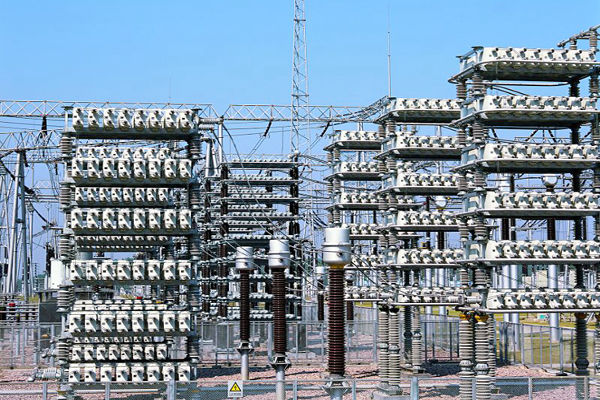
Smoothing Capacitors: These are used to reduce the DC voltage ripple in converter stations. They are located near the converters and form part of the DC filter.
AC Filter Capacitors: These capacitors are used in the AC side of converter stations. They reduce harmonics and support reactive power.
Surge Capacitors: These protect the system from sudden voltage spikes. They serve as shock absorbers for electrical surges.
Coupling Capacitors: These serve for measurement and communication. They let high-frequency signals pass while blocking high-voltage power.
What are Benefits of HVDC Capacitors?
HVDC capacitors are essential for achieving stability and efficiency in modern power systems. They smooth the flow of electricity, maintain steady voltage levels, and dampen unwanted signals that can interfere with system performance. These capacitors protect sensitive equipment from surges and help cut energy losses during transmission. Improving the system’s reliability by reducing component wear prolongs the life of the entire HVDC setup.
In Conclusion
HVDC capacitors ensure stability, safety, and efficiency during power transmission, thereby smoothing voltage and protecting equipment for long-distance, clean-energy transmission. As people need more power and grids keep on expanding, their need for reliable HVDC capacitors will grow; thus, they become indispensable units for any modern electrical system.