


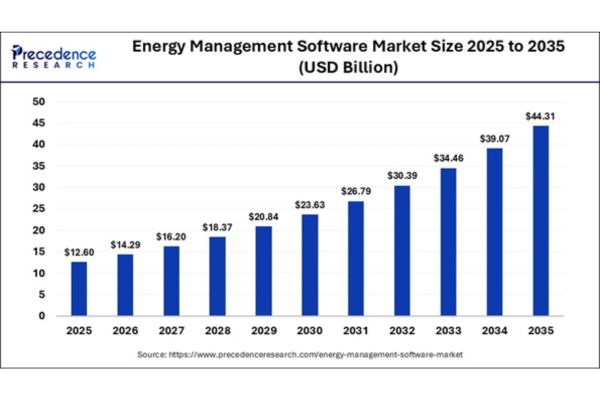
The global energy management software market is entering a high-growth phase, driven by increasing energy efficiency mandates, decarbonization goals, and the rapid digitalization of infrastructure. According to recent industry insights, the market is projected to grow from USD 14.29 billion in 2026 to approximately USD 44.31 billion by 2035, expanding at a CAGR of 13.4%.
From Monitoring to Intelligent Energy Optimization
Energy management software has evolved far beyond simple monitoring tools. Today’s solutions integrate Internet of Things (IoT), cloud computing, and artificial intelligence (AI) to deliver real-time insights and automated energy optimization.
Organizations are increasingly leveraging these platforms to reduce operational costs, improve efficiency, and meet sustainability targets. By enabling granular visibility into energy usage at the equipment and facility level, businesses can identify inefficiencies and implement data-driven improvements.
AI Transforming the Energy Landscape
Artificial intelligence is playing a pivotal role in reshaping the energy management software ecosystem. AI-powered platforms enable predictive analytics, demand forecasting, and automated decision-making, helping organizations optimize energy consumption dynamically.
Machine learning models analyze historical and real-time data to predict energy demand patterns, detect anomalies, and recommend corrective actions. This shift is transforming energy management from a reactive process into a proactive and strategic function.
Key Growth Drivers
Rising Focus on Energy Efficiency
Enterprises across industries are prioritizing energy optimization to reduce costs and comply with regulatory requirements. Increasing energy prices and sustainability mandates are accelerating adoption.
Decarbonization and Sustainability Goals
Global initiatives aimed at reducing carbon emissions are driving demand for software solutions that track and manage energy usage and emissions effectively.
Digitalization of Energy Systems
The integration of digital technologies into power infrastructure is enabling real-time monitoring, automation, and advanced analytics, fueling market growth.
Emerging Trends Shaping the Market
Growth of Carbon and Sustainability Management
Carbon tracking and sustainability software is expected to witness the fastest growth, driven by ESG mandates and corporate net-zero commitments.
Cloud-Based Deployment Dominates
Cloud-based solutions account for the largest market share, offering scalability, flexibility, and seamless integration with enterprise systems.
Rise of Distributed Energy Resource (DER) Management
The increasing adoption of renewable energy sources and electric vehicles is driving demand for software that can manage distributed energy systems efficiently.
Integration with Smart Grids and IoT
Advanced energy platforms are increasingly integrated with smart grids and IoT devices, enabling real-time energy balancing and improved grid stability.
Segment Insights: Analytics Leads, Sustainability Gains Traction
Energy monitoring and analytics software dominates the market, accounting for around 30% of the share in 2025, as organizations seek real-time visibility into energy consumption.
Meanwhile, carbon and sustainability management software is expected to grow at the fastest pace, driven by increasing regulatory pressure and environmental commitments.
In terms of applications, energy consumption optimization leads the market, highlighting the strong focus on efficiency and cost reduction across industries.
Regional Outlook: Asia Pacific Emerges as a Growth Hub
North America currently leads the energy management software market, holding approximately 35% of the share in 2025, supported by advanced infrastructure and early adoption of digital technologies.
However, Asia Pacific is expected to witness the fastest growth, driven by rapid industrialization, urbanization, and increasing investments in smart energy infrastructure.
Countries such as India and China are playing a crucial role in this expansion, supported by government initiatives and rising demand for sustainable energy solutions.
Challenges: High Implementation Costs and Integration Issues
Despite strong growth prospects, the market faces challenges related to high initial investment costs and integration complexities with legacy systems.
Organizations often need to align energy management platforms with existing IT and operational technologies, which can be resource-intensive. Additionally, concerns around data security and system interoperability remain key barriers to adoption.
Opportunities: AI Innovation and Smart Infrastructure
The integration of AI, IoT, and cloud technologies presents significant opportunities for market expansion.
Emerging applications such as predictive maintenance, automated demand response, and real-time grid management are unlocking new value for organizations. As smart cities and digital infrastructure initiatives gain traction globally, the demand for advanced energy management solutions is expected to surge.
Competitive Landscape and Industry Developments
The market is becoming increasingly competitive, with technology providers focusing on AI-driven innovation, cloud-native architectures, and sustainability-focused solutions.
Recent industry developments highlight the growing importance of software in the energy sector. Companies are investing heavily in grid software and digital energy solutions to address rising electricity demand and improve infrastructure efficiency.
At the same time, startups are leveraging AI to disrupt traditional energy markets, offering solutions that significantly reduce costs and improve efficiency.
Conclusion
Energy management software is rapidly evolving into a strategic enabler of sustainable and efficient energy ecosystems.
As organizations worldwide prioritize decarbonization, cost optimization, and digital transformation, these platforms will play a central role in shaping the future of energy management. With strong growth projections and continuous technological advancements, the market is poised to become a cornerstone of the global digital energy landscape.