

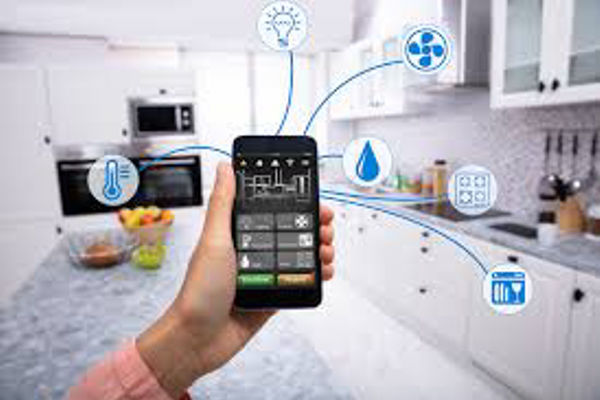
A few years ago, the idea of a “smart home” felt futuristic — something you saw in concept videos or high-end tech showcases. Today, it’s far more subtle and far more common. A light that turns on as you walk in. A washing machine that tells you when it’s done. A thermostat that quietly learns your routine.
Smart homes aren’t about flashy gadgets anymore. They’re about invisible intelligence woven into everyday living.
At the center of this transformation are connected appliances — devices that don’t just perform tasks, but communicate, adapt, and improve how homes function.
From Automation to Intelligence: How Homes Got Smarter
Early home automation was rule-based and rigid. Timers, remote controls, and pre-programmed actions gave users convenience, but little flexibility. If something changed — a schedule, a habit, a preference — the system didn’t adapt.
The modern smart home is different. It responds to context.
Connectivity, sensors, and cloud intelligence have allowed homes to evolve from “automated” to aware. Appliances no longer operate in isolation. They share information, learn from usage, and integrate with broader ecosystems.
This shift has turned everyday appliances into participants in a larger conversation about comfort, efficiency, and sustainability.
What Makes an Appliance “Connected”?
A connected appliance is more than just a device with Wi-Fi.
At its core, it combines sensing, connectivity, and intelligence. Sensors capture real-world conditions. Connectivity allows data to move between the appliance, the home network, and external services. Intelligence — often powered by software or AI — turns that data into action.
This is why a modern refrigerator can monitor temperature fluctuations, a dishwasher can optimize water usage based on load, and an air conditioner can adjust itself before the room feels uncomfortable.
The appliance doesn’t just respond — it anticipates.
The Smart Home as an Ecosystem, Not a Collection of Devices
One of the most important ideas behind smart homes is interoperability.
A truly smart home isn’t built from disconnected gadgets. It’s an ecosystem where devices work together. Lighting responds to occupancy. Climate systems align with weather forecasts. Appliances coordinate energy usage to avoid peak tariffs.
This coordination transforms the home from a set of individual tools into a responsive environment.
Connected appliances play a crucial role here because they are used daily. Unlike novelty gadgets, appliances like refrigerators, washing machines, ovens, and air purifiers sit at the heart of household routines.
Everyday Convenience, Redefined
The most visible benefit of connected appliances is convenience — but not in the way it’s often marketed.
It’s not about controlling everything from your phone. It’s about reducing mental load.
A washing machine that recommends the right cycle based on fabric type. An oven that preheats at the right time. A vacuum that cleans while you’re away without being told.
These small moments add up. They free users from constant decision-making and allow technology to fade into the background — which is exactly where good technology belongs.
Energy Awareness and Sustainable Living
Smart homes are also changing how we think about energy.
Connected appliances provide visibility into consumption patterns that were previously invisible. Users can see how much energy a device uses, when it uses it, and how behavior affects bills and environmental impact.
More importantly, appliances can act on this information automatically. They can run during off-peak hours, adjust performance based on demand, or integrate with solar panels and energy storage systems.
Sustainability stops being an abstract goal and becomes a series of small, automated choices made every day.
Intelligence at the Edge of the Home
Not all smart home intelligence lives in the cloud.
Many connected appliances process data locally, making decisions in real time. This approach reduces latency, improves reliability, and enhances privacy. A thermostat doesn’t need to send data across the internet to know when to turn off the heating. A smoke detector shouldn’t depend on connectivity to sound an alarm.
This balance between local intelligence and cloud support is what makes modern smart homes resilient and trustworthy.
Security, Privacy, and Trust Inside the Home
As homes become more connected, concerns around privacy and security naturally grow.
Connected appliances collect sensitive data — usage patterns, presence information, even behavioral insights. This makes secure design essential.
Modern smart home systems increasingly focus on encryption, local processing, and transparent data policies. Users are also becoming more aware, demanding control over what data is collected and how it’s used.
Trust, in many ways, is becoming just as important as functionality.
Real-World Use Cases That Feel Personal
Smart homes don’t look the same for everyone.
For working professionals, they reduce friction in busy schedules. For families, they provide safety and structure. For elderly users, connected appliances enable independence and peace of mind through monitoring and alerts.
This adaptability is one of the strongest arguments for smart home technology. It doesn’t impose a single way of living — it supports many.
Challenges That Still Exist
Despite the progress, smart homes are not without challenges
Fragmented ecosystems can make setup complex. Devices from different manufacturers don’t always work well together. Software updates and long-term support remain concerns, especially for appliances expected to last years.
There’s also the challenge of accessibility — ensuring smart homes are inclusive, affordable, and easy to use for non-technical users.
These challenges are being actively addressed, but they remind us that smart homes are still evolving.
The Future: Homes That Understand, Not Just Respond
The future of smart homes lies in contextual intelligence.
Instead of reacting to commands, homes will understand intent. They will adapt to life changes, anticipate needs, and support well-being in subtle ways.
Connected appliances will play an even larger role — quietly learning, optimizing, and collaborating behind the scenes.
The smartest homes won’t feel like technology at all. They’ll simply feel comfortable, efficient, and human.
Final Thoughts
Smart homes and connected appliances represent a shift in how we interact with our living spaces.
They move technology out of our hands and into our environment. They turn everyday routines into seamless experiences. And they remind us that the best innovations are the ones we stop noticing because they work so well.
The future of living isn’t about smarter devices — it’s about smarter living.