
The manufacturing sector is undergoing a major digital transformation in 2026. Companies are adopting advanced technologies to improve productivity, reduce costs, and respond faster to changing market demands. Among these technologies, Industrial Internet of Things (IOT) is playing a central role in reshaping production environments.
Industrial IoT connects machines, sensors, devices, and software systems across factories. This network allows businesses to collect and analyze real time data, improving decision making and operational efficiency. As industries aim for greater automation and flexibility, Industrial IoT has become a foundation of Smart Manufacturing.
Understanding Industrial IoT
Industrial IoT refers to the use of connected devices and sensors in industrial environments. These devices gather data from machines, production lines, warehouses, and other operational areas. The information is then shared through secure networks and analyzed for insights.
Unlike traditional manufacturing systems that rely on manual monitoring, Industrial IoT provides continuous visibility into factory operations. Managers can track machine performance, production speed, energy use, and maintenance needs in real time.
This level of connectivity allows businesses to move from reactive operations to proactive and data driven management.
Driving Smart Manufacturing in 2026
Smart Manufacturing is the use of digital technologies to create more intelligent, efficient, and adaptable production systems. Industrial IoT is one of the key technologies making this possible in 2026.
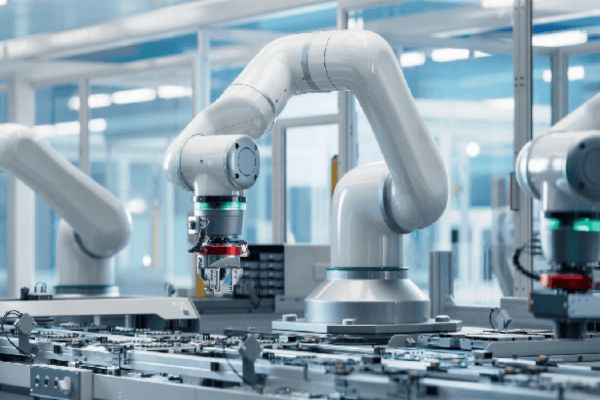
Connected machines can communicate with each other and adjust production settings automatically. For example, if demand increases, systems can optimize workflows to increase output. If a machine begins to show signs of wear, maintenance teams can be alerted before a breakdown occurs.
Industrial IoT also supports customization. Manufacturers can adjust production lines quickly to meet changing customer preferences without major delays. This flexibility is essential in today’s competitive market.
Real Time Data Monitoring and Visibility
One of the biggest advantages of Industrial IoT is real time data monitoring. Factories generate large amounts of data every second, and IoT systems make it possible to capture and analyze this information instantly.
Managers can view dashboards that show production output, machine health, quality levels, and inventory status. If a problem occurs, alerts can be sent immediately so teams can respond quickly.
Real time visibility reduces delays and improves control over operations. Instead of waiting for end of day reports, decision makers can act in the moment. This leads to faster problem solving and more efficient production.
Predictive Maintenance and Reduced Downtime
Machine downtime can be expensive for manufacturers. Unexpected equipment failures can stop production, delay deliveries, and increase repair costs. Industrial IoT helps solve this issue through predictive maintenance.
Sensors monitor temperature, vibration, pressure, and other machine conditions. By analyzing this data, systems can detect warning signs of future failure. Maintenance can then be scheduled before the issue becomes serious.
This approach reduces unplanned downtime and extends the life of equipment. It also lowers maintenance costs by focusing service efforts only where needed. Predictive maintenance has become a major benefit of Smart Manufacturing strategies.
Improving Quality Control
Maintaining consistent product quality is essential in manufacturing. Industrial IoT improves quality control by tracking production data throughout the manufacturing process.
Sensors can detect variations in dimensions, temperature, speed, or material usage. If values move outside acceptable limits, the system can alert operators or automatically correct settings.
This reduces defects, waste, and customer complaints. It also helps businesses meet strict quality standards. In industries such as electronics, automotive, and pharmaceuticals, real time quality monitoring is especially valuable.
Energy Efficiency and Sustainability
Manufacturers are under growing pressure to reduce energy use and environmental impact. Industrial IoT supports sustainability goals by monitoring power consumption and identifying waste.
Connected systems can track how much energy each machine uses and recommend more efficient operating schedules. Equipment can be powered down automatically when not in use.
These improvements lower operating costs while supporting environmental targets. As more businesses focus on sustainable production, Industrial IoT is becoming an important tool for responsible Smart Manufacturing.
Supply Chain Integration
Manufacturing does not operate in isolation. It depends on suppliers, warehouses, and logistics networks. Industrial IoT improves coordination by connecting factory operations with the wider supply chain.
Inventory sensors can track raw material levels and automatically trigger replenishment orders. Production data can be shared with logistics teams to improve delivery planning.
This creates a smoother flow of goods from suppliers to customers. Better coordination reduces delays, lowers inventory costs, and improves customer satisfaction.
Challenges in Adoption
Despite its advantages, Industrial IoT implementation comes with challenges. One major concern is cybersecurity, as connected systems can become targets for attacks. Strong security measures are essential.
Another challenge is integration with older equipment. Many factories still use legacy machines that were not designed for digital connectivity. Upgrading these systems can require investment and planning.
There is also a need for skilled workers who understand data analytics, automation, and connected technologies. Training employees is important for successful adoption.
Future Outlook
The future of Industrial IoT looks strong as more manufacturers invest in digital transformation. In the coming years, artificial intelligence, robotics, and edge computing will work alongside IoT to create even smarter factories.
Smart Manufacturing environments will become more autonomous, efficient, and responsive. Real time data monitoring will continue to improve speed, quality, and resilience across operations.
Businesses that adopt Industrial IoT early will be better positioned to compete in a rapidly changing market.
Conclusion
Industrial IoT is transforming manufacturing in 2026 by enabling connected operations, real time data monitoring, and smarter decision making. It improves efficiency, quality, maintenance, and sustainability across production environments.
As the backbone of Smart Manufacturing, Industrial IoT helps businesses become more agile and competitive. While challenges such as security and integration remain, the long-term benefits are substantial.
Companies that embrace Industrial IoT today are building the intelligent factories of tomorrow.