

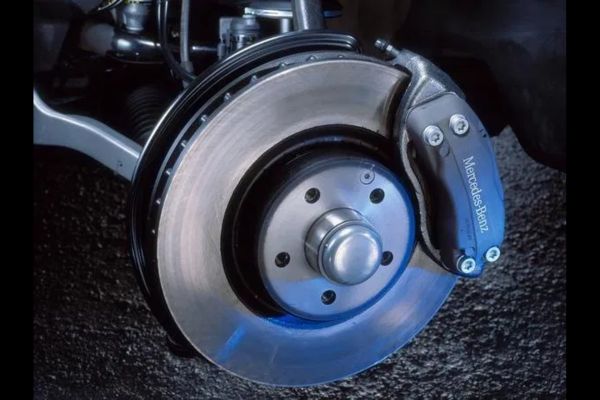
The Global Automotive Electro-Hydraulic Brake (EHB) Market is an evolving segment within advanced automotive braking technologies. As vehicles transition toward electrification, automation, and enhanced safety systems, electro-hydraulic brakes are becoming a critical solution that bridges traditional hydraulic braking with electronic control.
Understanding Automotive Electro-Hydraulic Brake Systems
Electro-hydraulic braking systems combine electronic control units (ECUs) with conventional hydraulic braking mechanisms. Instead of relying solely on mechanical force from the driver, these systems use electronic signals to control hydraulic pressure more precisely.
Key advantages include:
- Faster braking response and improved control
- Integration with Advanced Driver Assistance Systems (ADAS)
- Enhanced safety and stability
- Compatibility with regenerative braking in electric vehicles
EHB systems are widely used in:
- Passenger vehicles
- Electric and hybrid vehicles
- Autonomous and semi-autonomous vehicles
Market Outlook and Growth Trajectory
The global automotive electro-hydraulic brake market is experiencing steady growth:
- Valued at around USD 7.3 billion in 2024
- Expected to reach ~USD 12.4 billion by 2035
- Growing at a CAGR of ~4.9%
Other estimates indicate:
- Market size of ~USD 2.1 billion in 2024, projected to reach ~USD 4.0 billion by 2033 (CAGR ~7.5%)
Additionally, broader electric hydraulic brake technologies are projected to grow from USD 3.5 billion (2024) to USD 8.2 billion by 2034
This growth reflects increasing adoption of advanced braking systems in modern vehicles.
Key Growth Drivers
Rising Adoption of ADAS and Safety Features
EHB systems are essential for features like:
- Automatic Emergency Braking (AEB)
- Electronic Stability Control (ESC)
- Adaptive Cruise Control (ACC)
These features are becoming standard in modern vehicles, driving demand for advanced braking systems.
Growth of Electric and Hybrid Vehicles
EHB systems integrate efficiently with regenerative braking, helping improve energy efficiency and vehicle range.
Increasing Focus on Vehicle Safety
Stringent safety regulations worldwide are encouraging automakers to adopt electronically controlled braking technologies.
Transition Toward Autonomous Vehicles
Autonomous driving systems require precise and responsive braking, making EHB systems a critical component.
Emerging Industry Trends
Brake-by-Wire Technology Evolution
EHB systems are a stepping stone toward fully electronic “brake-by-wire” systems, eliminating traditional mechanical linkages.
Integration with Vehicle Electronics
Modern braking systems are increasingly integrated with vehicle control systems, enabling better coordination with steering and powertrain.
Lightweight and Compact Designs
Manufacturers are focusing on reducing system weight and size to improve vehicle efficiency.
Software-Defined Braking Systems
EHB systems are becoming software-driven, allowing updates and performance optimization through over-the-air (OTA) technologies.
Market Segmentation Insights
By Type
- Electro-hydraulic actuation systems (dominant)
- Hybrid braking systems
- Mechanical-hydraulic systems
By Application
- Passenger vehicles (largest segment)
- Commercial vehicles
- Heavy-duty vehicles
By Component
- Electronic control units (ECUs)
- Hydraulic actuators
- Sensors and valves
By Sales Channel
- OEM (major share)
- Aftermarket
Regional Insights
- Asia-Pacific dominates the market due to high vehicle production and rapid EV adoption
- Europe is driven by strict safety and emission regulations
- North America shows steady growth with strong adoption of ADAS technologies
Market Challenges
Despite strong growth potential, the market faces several challenges:
- High system cost compared to conventional brakes
- Complexity in system integration
- Reliability concerns in extreme conditions
- Competition from fully electronic brake systems
However, continuous innovation and economies of scale are expected to reduce these barriers over time.
Competitive Landscape
The market is competitive, with major automotive suppliers focusing on innovation and integration, including:
- Robert Bosch GmbH
- Continental AG
- ZF Friedrichshafen AG
- Denso Corporation
- Hitachi Astemo
These companies are investing in advanced braking technologies and next-generation safety systems.
Future Outlook
The future of the automotive electro-hydraulic brake market is closely aligned with the evolution of intelligent and electrified mobility. As vehicles become more connected, automated, and energy-efficient, EHB systems will play a crucial role in ensuring safety and performance.
With advancements in brake-by-wire systems, EV adoption, and autonomous driving technologies, the market is expected to grow steadily positioning electro-hydraulic brakes as a key component in next-generation automotive systems.








 Market is an evolving segment within advanced automotive braking technologies.)