
Market Summary
According to our latest research, the Analog IC market size reached USD 78.2 billion in 2024, reflecting robust demand across diverse industries. The market is currently experiencing a steady growth trajectory with a compound annual growth rate (CAGR) of 7.1% from 2025 to 2033. By the end of 2033, the Analog IC market is forecasted to attain a size of USD 146.5 billion, driven by expanding applications in automotive, consumer electronics, industrial automation, and healthcare sectors. The surge in demand for energy-efficient devices and the proliferation of smart technologies are among the key factors propelling this market’s expansion, as per our latest research findings.
What Is the Analog IC Market and Why Does It Matter?
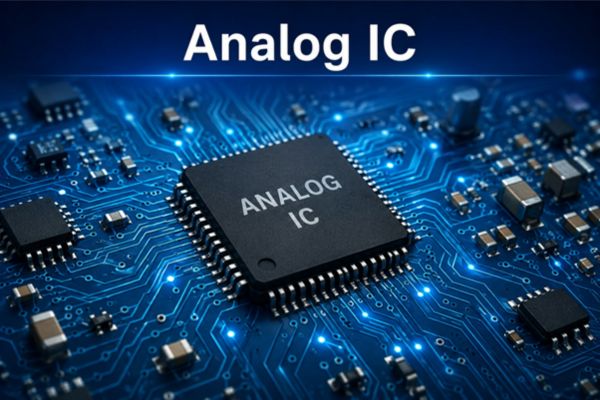
The Analog Integrated Circuit (IC) Market represents one of the most fundamental segments of the semiconductor industry. While digital chips process binary data, analog ICs act as the bridge between the real world and electronic systems. They interpret physical signals such as temperature, sound, pressure, voltage, and light, converting them into forms that electronic devices can understand and process.
In an increasingly connected world, analog ICs have become indispensable components in smartphones, electric vehicles, industrial automation systems, medical devices, telecommunications infrastructure, and renewable energy solutions. As technology becomes smarter and more responsive, the demand for efficient signal processing and power management solutions continues to accelerate, placing analog ICs at the center of global innovation.
Why Are Analog ICs Essential in Modern Electronics?
Every electronic device interacts with the physical environment in some way. Analog ICs enable this interaction by managing power, amplifying signals, regulating voltage, and converting real-world inputs into usable electronic information.
Unlike digital processors that operate using ones and zeros, analog ICs handle continuous signals. This capability makes them critical for ensuring accuracy, efficiency, and reliability in electronic systems. Without analog ICs, devices would struggle to communicate with sensors, batteries, displays, or communication networks effectively.
As industries move toward intelligent automation and data-driven operations, analog technologies are becoming increasingly important for ensuring seamless connectivity between hardware and software ecosystems.
How Is the Analog IC Market Evolving?
The analog IC market is undergoing significant transformation driven by technological advancements and changing consumer expectations. Manufacturers are focusing on creating highly efficient, low-power, and compact integrated circuits capable of supporting next-generation applications.
The rapid growth of edge computing, artificial intelligence, autonomous systems, and connected devices is creating new opportunities for analog semiconductor developers. Modern analog ICs are being designed to deliver higher precision, lower energy consumption, and enhanced reliability while operating in increasingly complex environments.
At the same time, advancements in semiconductor manufacturing processes are enabling greater functionality within smaller chip footprints, helping electronics manufacturers create lighter, smarter, and more powerful products.
What Role Do Electric Vehicles Play in Market Growth?
The global transition toward electric mobility is one of the strongest growth drivers for the analog IC market. Electric vehicles require sophisticated power management systems, battery monitoring technologies, motor control units, and sensor interfaces—all of which depend heavily on analog integrated circuits.
Analog ICs help optimize battery performance, improve charging efficiency, monitor vehicle health, and enhance safety systems. As governments and automotive manufacturers continue investing in sustainable transportation solutions, demand for advanced analog semiconductor technologies is expected to rise substantially.
Furthermore, autonomous driving features rely on multiple sensors and communication systems, increasing the need for precision analog signal processing capabilities.
How Is Industrial Automation Influencing Demand?
Industries worldwide are embracing automation to improve productivity, reduce operational costs, and enhance decision-making processes. Smart factories, robotics, predictive maintenance systems, and industrial Internet of Things (IIoT) platforms all depend on analog ICs for data acquisition and power management.
Sensors embedded throughout manufacturing facilities continuously collect information related to temperature, vibration, pressure, and equipment performance. Analog ICs process these signals with high accuracy, enabling real-time monitoring and control.
As Industry 4.0 initiatives expand across developed and emerging economies, analog semiconductor solutions are becoming critical building blocks for intelligent industrial ecosystems.
Why Is Healthcare Becoming a Key Opportunity?
Healthcare technology is rapidly evolving toward personalized, portable, and connected medical solutions. Devices such as wearable health monitors, digital diagnostic tools, imaging systems, and remote patient monitoring platforms require precise analog signal processing.
Analog ICs play a crucial role in capturing biological signals, managing power consumption, and ensuring measurement accuracy. Their ability to handle delicate physiological data makes them essential for modern medical electronics.
As global healthcare systems increasingly adopt digital health technologies, the need for reliable and energy-efficient analog semiconductor components is expected to grow steadily.
How Does Renewable Energy Support Market Expansion?
The transition toward renewable energy sources is creating new opportunities for analog IC manufacturers. Solar power systems, wind turbines, energy storage installations, and smart grids require advanced power conversion and monitoring capabilities.
Analog integrated circuits help optimize energy generation, regulate power flow, monitor system performance, and improve overall energy efficiency. Their contribution is particularly important in maintaining stability within complex renewable energy networks.
As nations pursue ambitious sustainability goals and carbon reduction initiatives, analog semiconductor technologies will continue supporting the development of cleaner and more efficient energy infrastructures.
What Challenges Does the Analog IC Market Face?
Despite strong growth prospects, the analog IC market faces several challenges. Semiconductor supply chain disruptions, fluctuating raw material costs, and increasing design complexity can impact production timelines and profitability.
Additionally, analog circuit design requires specialized engineering expertise and extensive testing to ensure performance reliability. Unlike digital chips, analog systems are highly sensitive to environmental conditions and manufacturing variations, making development more challenging.
However, continuous investments in research, manufacturing capabilities, and design innovation are helping industry participants overcome these obstacles and maintain long-term competitiveness.
Which Trends Are Shaping the Future of Analog ICs?
Several transformative trends are expected to influence the future direction of the analog IC market:
Artificial Intelligence Integration
AI-enabled devices require efficient sensor interfaces and power management systems, creating new demand for advanced analog solutions.
Internet of Things Expansion
Billions of connected devices rely on analog ICs to capture and process environmental data accurately.
Advanced Power Management
Energy efficiency remains a top priority across industries, encouraging innovation in power regulation and battery management technologies.
Miniaturization of Electronics
Manufacturers are increasingly seeking compact components that deliver higher performance without increasing energy consumption.
5G and Future Communication Networks
High-speed communication infrastructure depends on analog technologies for signal amplification, transmission, and reception.
Competitive Landscape
- Texas Instruments
- Analog Devices
- Infineon Technologies
- STMicroelectronics
- NXP Semiconductors
- ON Semiconductor
- Skyworks Solutions
- Maxim Integrated
- Microchip Technology
- Renesas Electronics
- Rohm Semiconductor
- Diodes Incorporated
- Cirrus Logic
- Nuvoton Technology
- Monolithic Power Systems
- Vishay Intertechnology
- Semtech Corporation
- Silicon Labs
- Melexis
- ams OSRAM
What Is the Long-Term Outlook for the Analog IC Market?
According to our Growth Market Report, The future of the analog IC market appears highly promising as digital transformation continues to reshape global industries. Although digital technologies often attract the spotlight, analog semiconductors remain the silent enablers that connect electronic intelligence with the physical world.
From electric vehicles and smart factories to renewable energy systems and healthcare innovations, analog integrated circuits are becoming more important than ever. Their ability to manage power, process signals, and support intelligent decision-making positions them as a foundational technology for the next generation of electronics.
As innovation accelerates and connectivity expands worldwide, the analog IC market is expected to remain a critical pillar of technological progress, supporting the evolution of smarter, more efficient, and more sustainable systems across every major industry.