

Market Summary
According to our Growth Market Report, the global high-precision shunt resistor market size reached USD 1.32 billion in 2025, showcasing robust growth momentum across key industries. The market is expanding at a CAGR of 7.1% and is forecasted to attain a value of USD 2.43 billion by 2034. This impressive growth trajectory is primarily driven by the escalating demand for accurate current measurement in advanced electronic systems, the proliferation of electric vehicles (EVs), and the increasing sophistication of industrial automation. The market’s expansion is further supported by technological innovations and the growing adoption of high-performance electronic components across diverse sectors. The broader shunt resistor industry is simultaneously benefiting from these structural tailwinds, reinforcing the growth case for precision current-sensing components across the value chain.
Introduction: Why High-Precision Shunt Resistors Matter More Than Ever
The modern electronics industry depends on accurate current measurement to ensure efficiency, reliability, and safety. While semiconductors, processors, and batteries often receive the spotlight, high-precision shunt resistors quietly perform one of the most critical tasks inside electronic systems—measuring electrical current with exceptional accuracy. As India’s electronics manufacturing ecosystem expands under initiatives such as Make in India, semiconductor investments, electric mobility, renewable energy, and industrial automation, the High-Precision Shunt Resistor Market is gaining strategic importance.
Unlike conventional resistors, high-precision shunt resistors are specifically engineered with extremely low resistance values and minimal tolerance variations. Their ability to provide stable performance even under fluctuating temperatures makes them indispensable in advanced electronic circuits. From battery management systems and industrial power supplies to electric vehicles and smart meters, these components enable engineers to design products that meet demanding performance and safety standards.
What Is a High-Precision Shunt Resistor?
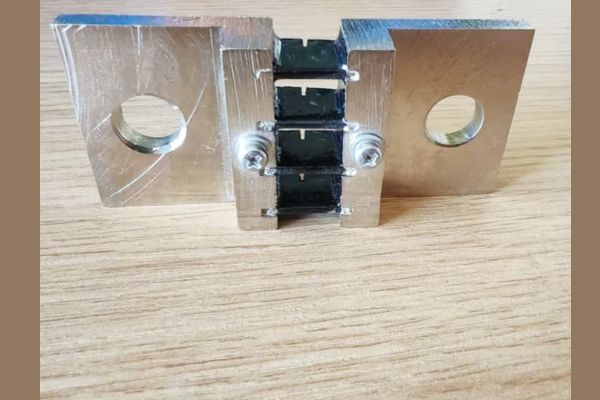
A high-precision shunt resistor is a specialized electronic component designed to measure electric current by producing a precisely calculated voltage drop across an accurately controlled resistance. Engineers use this voltage difference to monitor current flow without significantly affecting circuit performance.
Unlike standard resistors that mainly limit current or divide voltage, shunt resistors focus on delivering exceptional measurement accuracy. They are manufactured using advanced metal alloys such as manganin or zeranin, materials chosen for their low temperature coefficient of resistance (TCR), long-term stability, and resistance to environmental stress. This makes them suitable for applications where even tiny measurement errors can lead to system inefficiencies or safety concerns.
Why Is the High-Precision Shunt Resistor Market Growing?
The electronics industry is evolving toward higher efficiency, smarter energy management, and digital intelligence. These trends require highly accurate current sensing across a wide variety of devices.
Electric vehicles require precise battery monitoring to maximize battery life and prevent thermal events. Renewable energy systems rely on accurate current sensing to optimize power conversion. Industrial automation requires continuous monitoring of motors and power electronics. Consumer electronics increasingly integrate intelligent battery management features that depend on precision measurement.
As manufacturers continue reducing device sizes while improving performance, the demand for compact, thermally stable, and highly reliable shunt resistors continues to increase.
India’s Electronics Manufacturing Boom Is Creating New Opportunities
India has emerged as one of the fastest-growing electronics manufacturing destinations. Government incentives supporting domestic manufacturing, semiconductor production, and electronics exports have encouraged companies to establish local production facilities.
High-precision shunt resistors play a supporting role in nearly every advanced electronic product manufactured within the country. Their growing usage spans:
- Electric vehicle battery packs
- Smart electricity meters
- Solar inverters
- Telecom equipment
- Medical electronics
- Industrial control systems
- Data centre power supplies
- Consumer electronics
- Energy storage systems
- Railway electrification equipment
As India’s electronics value chain matures, component localization is becoming increasingly important. This opens significant opportunities for domestic manufacturers capable of delivering globally competitive precision resistor technologies.
Key Applications Across the Electronics Industry
Battery Management Systems
Modern lithium-ion batteries require continuous monitoring of charging and discharging currents. High-precision shunt resistors provide highly accurate data that helps battery management systems calculate the state of charge, detect faults, and improve battery lifespan. Their performance directly contributes to the safety and efficiency of electric vehicles, portable electronics, and stationary energy storage systems.
Electric Vehicles
India’s transition toward electric mobility has accelerated demand for sophisticated power electronics. Shunt resistors monitor motor currents, battery currents, charging systems, and regenerative braking circuits. Accurate current sensing improves vehicle efficiency, extends driving range, and enhances passenger safety.
Renewable Energy Systems
Solar photovoltaic installations and energy storage systems require accurate current monitoring to optimize energy conversion efficiency. Precision shunt resistors enable inverters and charge controllers to maximize power output while maintaining stable operation under varying environmental conditions.
Industrial Automation
Factories increasingly rely on intelligent automation systems that continuously monitor motor performance, robotics, programmable logic controllers, and power distribution networks. Precision current measurement helps improve operational efficiency while reducing maintenance costs and unexpected equipment failures.
Consumer Electronics
Laptops, smartphones, wearable devices, gaming systems, and smart appliances integrate battery management circuits that depend on accurate current sensing. As portable devices become more power efficient, precision resistors contribute to longer battery life and improved charging performance.
Technology Innovations Reshaping the Market
Ultra-Low Resistance Designs
Manufacturers are developing resistors with increasingly lower resistance values to minimize power losses while maintaining exceptional measurement accuracy. These innovations improve efficiency in high-current applications such as EV batteries and industrial power systems.
Improved Thermal Stability
Temperature variations can significantly affect measurement accuracy. New alloy compositions and advanced manufacturing techniques reduce thermal drift, allowing electronic systems to maintain consistent performance even in harsh industrial environments.
Miniaturization
Electronic products continue becoming smaller without compromising functionality. Surface-mount high-precision shunt resistors now offer outstanding performance within compact footprints, supporting the ongoing trend toward miniaturized electronic devices.
Higher Power Ratings
As power electronics become more powerful, resistor manufacturers are introducing products capable of handling higher currents without sacrificing precision. These developments are particularly valuable for electric transportation and renewable energy infrastructure.
Challenges Facing the High-Precision Shunt Resistor Market
Although the market demonstrates strong growth potential, several technical and commercial challenges remain.
Maintaining ultra-tight manufacturing tolerances requires sophisticated production equipment and rigorous quality control. Fluctuations in specialty alloy prices can influence manufacturing costs. Designers must also balance accuracy, thermal performance, size, and cost when selecting suitable components.
In addition, increasing competition from alternative current sensing technologies, including Hall-effect sensors and magnetic current sensors, encourages continuous innovation among shunt resistor manufacturers.
How Manufacturers Can Strengthen Their Competitive Position
Electronics manufacturers can improve competitiveness by investing in advanced materials research, automated precision manufacturing, and comprehensive reliability testing. Building strong partnerships with automotive, industrial automation, renewable energy, and medical electronics companies will also support long-term business growth.
Focusing on international quality certifications, supply chain resilience, and customized product development will enable Indian manufacturers to compete successfully in global electronics markets.
Competitive Landscape
- Yageo Corporation
- Vishay Intertechnology
- ROHM Co., Ltd.
- Susumu Co., Ltd.
- TT Electronics
- Cyntec Co., Ltd.
- Panasonic Corporation
- KOA Corporation
- Isabellenhütte Heusler GmbH & Co. KG
- Walsin Technology Corporation
- Ohmite Manufacturing Company
- Caddock Electronics, Inc.
- Bourns, Inc.
- Riedon Inc.
- TE Connectivity
- Samsung Electro-Mechanics
- Delta Electronics, Inc.
- Littelfuse, Inc.
- Shenzhen Ever Ohms Technology Co., Ltd.
Emerging Trends Creating Future Growth
Several long-term technology trends are expected to accelerate demand across India’s electronics ecosystem.
Artificial intelligence is increasing power requirements inside data centres and high-performance computing equipment, creating greater demand for accurate power monitoring. Smart factories require intelligent energy management systems that depend on precise current measurement. Expansion of fast-charging infrastructure for electric vehicles is driving investments in high-power electronics that require reliable current sensing.
Meanwhile, India’s semiconductor ecosystem is expected to strengthen domestic component manufacturing, encouraging greater integration between resistor manufacturers, PCB suppliers, EMS providers, and semiconductor companies.