
The global energy landscape is undergoing a profound transformation. Governments, industries, and consumers are increasingly embracing renewable energy sources and electric vehicles (EVs) as part of their commitment to reducing carbon emissions and achieving long-term sustainability goals. Solar and wind power installations continue to expand rapidly, while electric mobility is becoming an integral part of modern transportation. However, this transition also introduces new challenges in balancing electricity generation, distribution, and consumption.
Unlike conventional power plants, renewable energy sources are inherently dependent on environmental conditions. Solar power fluctuates with cloud cover and daylight hours, while wind generation varies with atmospheric conditions. At the same time, the growing adoption of EVs is creating new demand patterns that place additional pressure on electrical grids and charging infrastructure. These variables make energy planning more dynamic and complex than ever before.
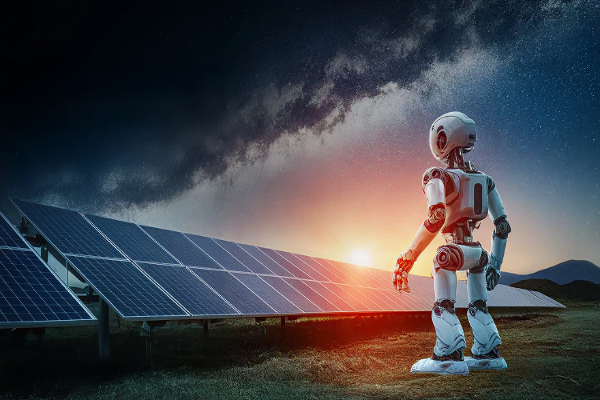
Artificial Intelligence (AI)-based energy forecasting is emerging as a game-changing solution that addresses these challenges through intelligent data analysis and predictive decision-making. By combining machine learning, advanced analytics, and real-time operational data, AI enables utilities, renewable energy providers, and EV charging operators to forecast energy generation and demand with unprecedented accuracy. The result is a smarter, more resilient, and sustainable energy ecosystem that benefits businesses, utilities, and end users alike.
The Need for Intelligent Energy Forecasting
Traditional forecasting methods primarily rely on historical consumption data and statistical models. While these approaches have served the energy industry for decades, they often struggle to account for rapidly changing weather conditions, fluctuating electricity demand, distributed renewable generation, and evolving consumer behavior.
Today’s energy ecosystem generates enormous volumes of data from weather monitoring systems, smart meters, renewable energy plants, Battery Energy Storage Systems (BESS), EV charging stations, and intelligent grid infrastructure. The challenge lies not in collecting this information, but in converting it into meaningful insights that support timely and informed decisions.
AI transforms this process by continuously learning from historical trends while simultaneously analyzing real-time data. Rather than simply predicting what might happen based on past patterns, AI adapts to changing conditions and refines its forecasts over time. This continuous learning capability significantly improves forecasting accuracy and enables proactive energy management.
Understanding AI-Based Energy Forecasting
AI-based energy forecasting utilizes machine learning algorithms, neural networks, and predictive analytics to estimate future energy generation, electricity demand, and system behavior. These intelligent models evaluate multiple variables simultaneously, including:
- Historical energy consumption
- Solar irradiance and weather forecasts
- Wind speed and atmospheric conditions
- Temperature and humidity
- Electricity market prices
- Consumer usage patterns
- Grid load conditions
- EV charging demand
- Battery storage availability
Unlike conventional forecasting models that treat these factors independently, AI identifies hidden relationships among them, enabling more reliable predictions. As more operational data becomes available, the forecasting models continue to improve their performance, making them increasingly valuable for utilities and energy operators.
AI and Renewable Energy Optimization
Renewable energy has become one of the most important pillars of global decarbonization strategies. However, its intermittent nature presents significant operational challenges.
For example, solar photovoltaic systems may experience sudden drops in generation due to passing clouds, while wind farms can experience rapid fluctuations caused by changing wind patterns. These variations can create instability within power grids if they are not accurately anticipated.
AI addresses this challenge by integrating weather forecasting, satellite imagery, historical generation data, and environmental monitoring into sophisticated predictive models. These models can estimate renewable energy production several hours or even days in advance with remarkable accuracy.
Improved forecasting enables utilities and renewable energy operators to optimize generation schedules, reduce reliance on fossil-fuel-based backup generation, improve grid stability, and maximize the utilization of clean energy resources. Better predictions also contribute to lower operational costs and improved energy reliability.
Transforming EV Charging Infrastructure Through AI
The rapid adoption of electric vehicles is reshaping electricity consumption patterns across cities and transportation networks. Public charging stations, fleet depots, commercial facilities, and residential charging points collectively represent a growing electrical load that must be carefully managed.
Without intelligent forecasting, simultaneous charging during peak demand periods can overload local distribution networks, increase electricity costs, and reduce charger availability.
AI-based forecasting enables charging network operators to predict charging demand based on historical usage, traffic movement, weather conditions, public holidays, local events, and consumer behavior. These insights allow operators to distribute charging loads more efficiently, optimize charger utilization, and reduce waiting times for EV users.
Intelligent charging strategies also enable dynamic load balancing, allowing multiple chargers to share available power without exceeding grid capacity. This improves infrastructure efficiency while delaying or eliminating costly grid upgrades.
Furthermore, AI supports smart charging by automatically scheduling charging sessions during periods of lower electricity demand or higher renewable energy availability. This not only reduces operational costs but also increases the use of clean energy within EV charging networks.
Smart Grids and Intelligent Energy Management
Modern energy systems are evolving from centralized power networks into highly interconnected smart grids that incorporate renewable generation, battery storage, distributed energy resources, and electric vehicles. Managing such complex systems requires continuous monitoring and rapid decision-making.
AI serves as the intelligence layer within smart grids by continuously analyzing data from substations, renewable assets, smart meters, and charging infrastructure. Predictive analytics help utilities anticipate congestion, forecast demand spikes, identify potential equipment failures, and optimize electricity distribution in real time.
As renewable penetration continues to increase, AI becomes increasingly valuable in balancing supply and demand while maintaining grid reliability.
The integration of AI with smart grids also enables automated demand-response programs, where electricity consumption can be adjusted dynamically based on grid conditions. Such capabilities improve overall system efficiency while supporting long-term sustainability objectives.
Battery Energy Storage Systems: Unlocking Greater Flexibility
Battery Energy Storage Systems (BESS) have become an essential component of modern renewable energy infrastructure. They provide the flexibility needed to store excess renewable energy and supply electricity when generation declines or demand increases.
AI significantly enhances battery performance by forecasting both renewable generation and future electricity demand.
Intelligent algorithms determine the optimal time to charge batteries, when to discharge stored energy, and how to maximize battery lifespan without compromising operational performance. Predictive analytics also reduce unnecessary charging cycles, improving asset utilization and lowering maintenance costs.
When integrated with renewable energy plants and EV charging infrastructure, AI-powered battery management creates a highly efficient and resilient energy ecosystem.
Predictive Maintenance and Operational Reliability
AI-based forecasting extends beyond energy generation and demand prediction. It also plays a critical role in predictive maintenance.
Modern charging stations, transformers, inverters, and renewable energy assets generate continuous operational data through embedded sensors and monitoring systems.
AI analyzes this information to identify early warning signs of equipment degradation, thermal anomalies, voltage fluctuations, communication failures, and abnormal operating conditions.
Rather than relying on scheduled maintenance intervals, organizations can proactively service equipment before failures occur. This minimizes downtime, improves system availability, reduces maintenance costs, and enhances customer satisfaction.
For EV charging operators, predictive maintenance translates directly into greater charger uptime and improved user confidence.
The Road Ahead
The future of energy management will be increasingly driven by Artificial Intelligence. Emerging technologies such as edge AI, digital twins, autonomous energy management systems, and Vehicle-to-Grid (V2G) integration will further enhance forecasting accuracy and operational efficiency.
Digital twins will enable utilities to simulate entire power networks before implementing operational changes. Vehicle-to-Grid technology will allow electric vehicles to function as distributed energy storage assets capable of supporting grid stability. Edge AI will process energy data locally, enabling faster decision-making with lower latency.
These innovations will create intelligent energy ecosystems capable of responding dynamically to changing environmental conditions, electricity demand, and renewable energy availability.
Organizations that invest in AI-driven forecasting today will be well positioned to build scalable, resilient, and sustainable energy infrastructure capable of supporting the next generation of clean transportation and renewable energy systems.
Conclusion
Artificial Intelligence is rapidly transforming how renewable energy is generated, managed, and consumed. Accurate energy forecasting is no longer simply an operational advantage—it has become a strategic necessity for utilities, renewable energy providers, and EV charging infrastructure operators.
By combining predictive analytics, machine learning, real-time monitoring, and intelligent automation, AI enables more efficient renewable energy integration, optimized EV charging operations, enhanced grid stability, and improved customer experiences. As the world accelerates toward a low-carbon future, AI-based energy forecasting will serve as a cornerstone of intelligent energy management, ensuring that renewable energy and electric mobility evolve together in a reliable, efficient, and sustainable manner.
About Vari Energy
Vari Energy is committed to accelerating the transition toward sustainable mobility through innovative EV charging infrastructure and intelligent energy solutions. The company focuses on delivering advanced charging technologies, smart energy management systems, and future-ready solutions that support the growing electric vehicle ecosystem. By embracing innovation, digital technologies, and sustainable practices, Vari Energy continues to contribute to the development of cleaner, smarter, and more resilient energy infrastructure for the future.