
Asahi Kasei has developed a new pre-doping technology for high-voltage lithium-ion batteries using silicon-based anodes. The process uses lithium carbonate as an extra lithium source at lower voltages, helping reduce the initial capacity loss common in silicon-rich batteries. The company plans to collaborate with customers globally to test the technology through proof-of-concept evaluations and explore commercial applications.
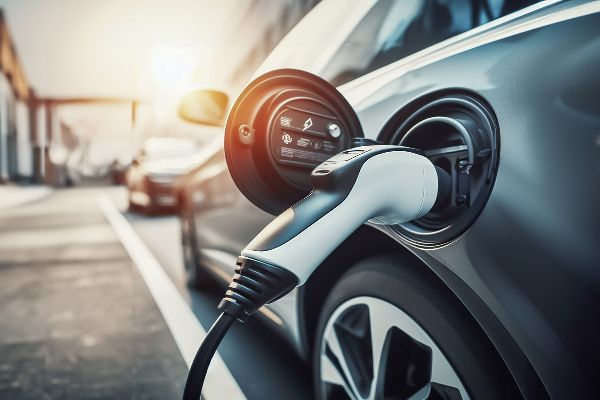
With the growing adoption of electric vehicles (EVs) and humanoid robots, LIBs are being required to deliver ever-higher energy densities. In response, development efforts have focused on partially replacing graphite with silicon-based materials in the anode and on increasing the operating voltage of cathode materials.
However, silicon-based anodes suffer significant, irreversible capacity loss during the initial charge, severely limiting the battery’s lifespan and total energy density. Compensating for this effect requires greater amounts of cathode active material, which in turn leads to higher material use and higher costs.
Asahi Kasei focused on lithium carbonate, which is relatively inexpensive and has an established track record of use as a lithium-ion battery (LIB) material, as an alternative to existing methods. However, because the decomposition voltage of lithium carbonate is far above the nominal operating voltage range of LIBs, its use for lithium pre-doping applications has tended to be difficult.
The lithium pre-doping technology developed by Asahi Kasei uses special additives in the electrolyte to promote the decomposition of lithium carbonate at typical cell voltages of standard LIBs. This allows lithium carbonate to be pre-added to the cathode as a sacrificial lithium source, which is decomposed during the initial charge to supply lithium. The use of low-cost lithium carbonate substantially improves energy density. Internal tests with an NMC (nickel-manganese-cobalt) cell having an anode of 90% graphite and 10% silicon monoxide (SiO) showed a 10% increase in energy density. Furthermore, this technology improves cycle life at low cost per Wh (watt-hour), can be applied without significant modifications to existing battery manufacturing lines, and is expected to be broadly applicable across a range of cathode and anode material systems.
Asahi Kasei plans to license this technology and offer flexible collaboration frameworks that support a phased approach tailored to each customer’s development stage. This strategy is part of the company’s medium-term management plan (MTP), which includes its Technology-value Business Creation (TBC) initiative. Through TBC, Asahi Kasei seeks to create value from its extensive intangible assets—such as patents, know-how, data, and algorithms—by providing them in various forms, including licensing. Through this licensing-based business development, the company aims to
conclude at least 10 new license agreements during fiscal 2025–2027, with a cumulative profit contribution of ¥10 billion or more by around 2030.