

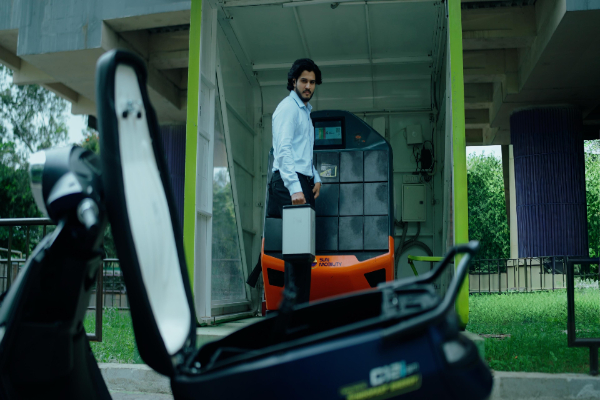
Indofast Energy, a major player in India’s EV ecosystem, has achieved a significant milestone by completing 100 million battery swaps through its nationwide network. This achievement highlights the company’s growing contribution to India’s electric mobility sector by making EV adoption more affordable and convenient for riders, fleet operators, gig workers, and daily commuters.
The company currently operates more than 2,200 battery-swapping stations across 24 cities and has connected over 163,000 electric vehicles to its network. Many of these vehicles support commercial operations and gig-based services, where minimising downtime is essential. Together, these EVs have travelled 2.97 billion kilometres, helping prevent an estimated 13,277 metric tonnes of CO2 emissions. Indofast’s battery-swapping model also offers significant cost benefits, reducing vehicle running expenses by around 40% compared with conventional petrol-powered vehicles.
The milestone comes as two- and three-wheelers lead India’s EV transition. In FY2026, electric two-wheeler sales grew 22% to a record 1.40 million units, while electric three-wheelers crossed 8.3 lakh units and now make up 61% of all three-wheelers sold in India. Sustaining this momentum depends on removing the barriers that still hold many riders back: long charging times, range anxiety and the upfront cost of the battery. Indofast’s battery swapping ecosystem solves this for two-wheelers, three-wheelers, e-loaders and electric rickshaws across 32+ OEM partnerships. Every battery undergoes rigorous checks and controlled charging, giving the network a strong safety record with zero fire incidents across 2.97 billion kilometres of vehicle operations. With road transport accounting for 12% of India’s energy-related CO2 emissions and the country committed to net zero by 2070, faster electrification of these everyday vehicles is central to cleaner, more sustainable mobility.
Commenting on the milestone, Kamaldeep Singh, CEO, Indofast Energy, said, “Crossing 100 million swaps shows that battery swapping works at scale for India’s riders, and that the shift to clean mobility can be both affordable and practical. Our next phase will be driven by a sharper focus on the customer: stations where riders need them, batteries that are always ready, and a service that is simple to use and pay for. As we scale to more than 10,000 stations across 50+ cities by 2030, our goal is to make EVs the more affordable, accessible and convenient choice for every rider”.
To widen access further, Indofast is promoting affordable retrofitting, which lets owners convert existing petrol two-wheelers to electric. Backed by strategic infrastructure partnerships with IndianOil, Indian Railways and Metro corporations, the company plans to strengthen its presence in high-density urban areas, expand into Tier-2 and Tier-3 cities and deepen its ecosystem partnerships.
By 2030, Indofast aims to put battery swapping within reach of more than 1 million EV users, growing its network more than fourfold to over 10,000 stations across 50+ cities and supporting India’s clean mobility ambitions and net-zero goals.