
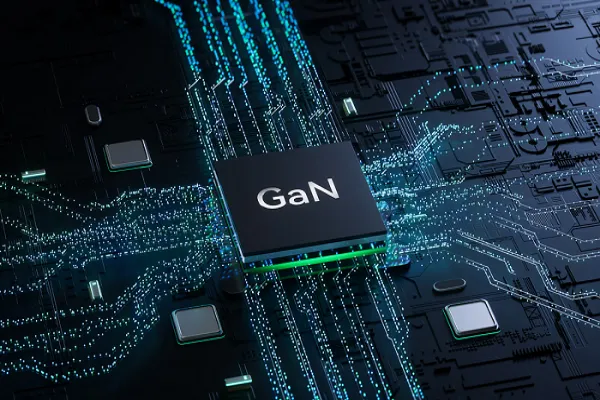
Atomera has expanded its collaboration with Synopsys to advance the modeling capabilities for gallium nitride (GaN) devices used in RF and power semiconductor applications. Building on their previous work integrating Atomera’s Mears Silicon Technology (MST) with Synopsys’ Sentaurus TCAD simulation platform, this new phase of the partnership focuses on enhancing GaN-specific workflows.
The goal is to improve the precision and efficiency of device modeling, accelerating the development of next-gen GaN components. As GaN technology gains traction in high-frequency and high-power applications, accurate simulation tools become essential for optimizing performance and shortening development cycles.
As part of the expanded collaboration, Atomera will leverage Synopsys’ Sentaurus TCAD platform to develop and calibrate GaN-specific modeling methodologies. This includes creating validated TCAD models for GaN devices and providing the necessary documentation to help semiconductor designers integrate the models into their workflows. Additionally, Atomera will offer technical feedback to Synopsys to refine the simulation tools for GaN-based designs.
The two companies already have a strong track record of working together, particularly around integrating MST technology into the Sentaurus environment. MST, a quantum-engineered thin-film technology, boosts semiconductor performance by enhancing carrier mobility and reducing defects. When combined with TCAD simulations, this allows designers to evaluate the effects of MST at both the process and device levels before fabrication.
Now, expanding this capability to GaN technology enables engineers to simulate complex device structures with greater accuracy, optimizing key parameters like efficiency, switching speed, and thermal performance. This is especially important for RF amplification and power conversion applications, where GaN offers benefits like faster switching speeds and higher power densities.
By integrating MST material enhancements with advanced TCAD simulations, the collaboration aims to simplify the design process and accelerate the time-to-market for high-performance GaN devices. The availability of calibrated models and simulation tools is expected to reduce the need for extensive prototyping and lead to more predictable design outcomes.
Overall, this expanded partnership underscores the growing role of simulation-driven design in semiconductor development, especially for new materials and device architectures like GaN.