
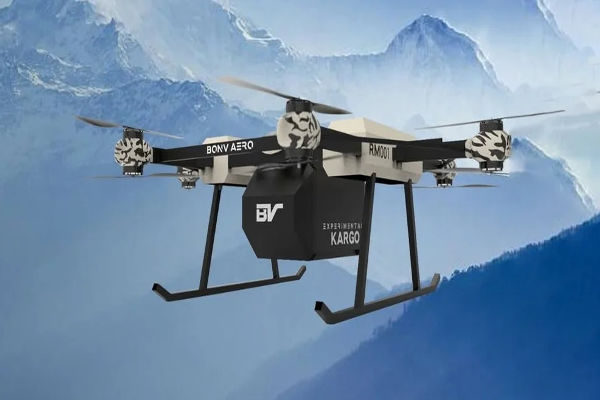
BonV Aero, a prominent Indian deep-tech drone manufacturing startup, has successfully carried out the country’s first organised UAV-based disaster-response training programme in collaboration with STPI, CDDMASS, and Fx-UAV. Designed for 55 engineering students from BPUT, Rourkela, Odisha, the initiative combined classroom instruction with hands-field training, creating a national-level effort focused on the use of unmanned aerial systems in emergency situations.
The training began with a month-long online foundation module and moved into five days of on-site sessions. This progression enabled students to shift from conceptual learning to practical handling of UAV platforms such as Air Orca, Air Hans and Sandra. The sessions covered aerodynamics, mission planning, flight safety, maintenance routines, simulation tools and automated path planning, allowing participants to follow a continuous learning arc.
The primary component of the field phase was a full disaster-response drill. Students were grouped into teams and tasked with flood, structural-collapse and post-attack scenarios. Using UAV feeds, they carried out reconnaissance, payload movement, victim identification and prioritisation tasks. The drill linked technical training with the decision-making process used in real emergency conditions, marking a first for an academic programme of this scale.
Commenting on the program, BonV Aero CEO, Satyabrata Satapathy said the initiative showed how academic institutions and industry can work together to prepare students for UAV-led disaster response. He said realistic scenarios are essential for national readiness.
CDDMASS Mentor-cum-Director and Drone for Humanity advisor Nilamadhab Prusty said the training brought together disaster-management practice with drone use across pre-disaster surveillance, relief actions and post-disaster assessment, supported by an on-ground simulation drill.
BonV Aero project coordinator Debasis Mohanty said the STPI-backed initiative stood out for integrating a mock disaster drill that tested both technical and first-responder capability. CDDMASS chief executive Narendra Singh Kachhotiya added that the 45-day structure represented India’s first Techno-Humanitarian internship.
Following the training, students will visit UAV facilities to observe development, manufacturing and field practices, completing what organisers call the country’s first end-to-end academic exposure to UAVs in disaster response.