
According to a new report published by Allied Market Research, the thermal batteries for military market size was valued at $188.50 million in 2025 and is projected to reach $344.5 million by 2035, growing at a CAGR of 6.2% from 2026 to 2035.
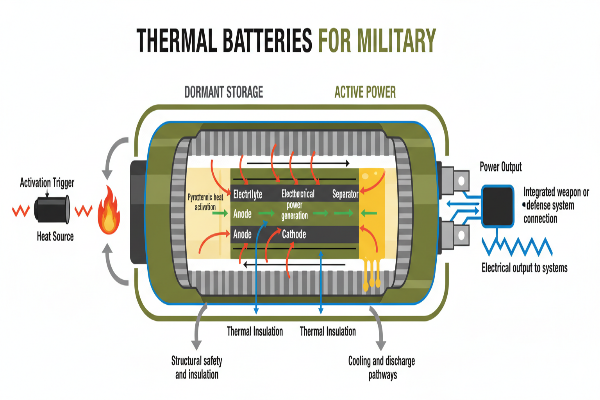
The thermal batteries for military market is witnessing stable growth as defense organizations around the world continue investing in advanced power solutions for mission-critical military operations. Modern defense systems require energy sources capable of operating under extreme environmental conditions while delivering instant activation, reliability, and long operational life. Thermal batteries have emerged as a preferred technology because they remain inactive for extended periods and provide immediate power when activated.
Growing military modernization initiatives across major economies are significantly supporting the expansion of the thermal batteries for military market. Defense agencies are increasingly integrating advanced missile systems, electronic warfare platforms, unmanned systems, and space technologies into their strategic operations. These applications require high-performance power systems capable of operating reliably in harsh combat and aerospace environments.
Thermal batteries are gaining popularity because they offer several operational advantages compared to conventional battery technologies. Their ability to withstand severe temperature conditions, mechanical vibrations, and long storage durations makes them ideal for military applications. As modern warfare evolves toward precision-guided systems and autonomous defense technologies, demand for reliable thermal batteries is expected to rise steadily over the coming years.
Growing Demand for Reliable Military Power Solutions Driving Market Growth
One of the key factors accelerating the thermal batteries for military market is the increasing need for dependable power sources in critical defense applications. Military systems operate in unpredictable and extreme environments where battery failure can compromise mission success. Thermal batteries are specifically designed to provide high reliability, making them highly suitable for strategic weapon systems and emergency power applications.
Modern missile systems rely heavily on thermal batteries because of their ability to remain dormant for years without losing operational capability. Once activated, these batteries deliver high power instantly, supporting guidance systems, communication modules, and propulsion functions. Their robust design ensures uninterrupted performance even under intense mechanical shock and vibration.
In addition to missiles, thermal batteries are widely used in torpedoes, artillery systems, aircraft safety equipment, and electronic warfare devices. Defense organizations are increasingly deploying advanced communication systems and battlefield electronics that require compact and maintenance-free power solutions. This expanding application scope is strengthening the overall thermal batteries for military market outlook.
Defense Modernization Programs Supporting Thermal Batteries for Military Market Expansion
Rising global defense spending is another major factor fueling the thermal batteries for military market. Countries across North America, Europe, and Asia-Pacific are modernizing military infrastructure and investing in advanced weapon systems to strengthen national security capabilities.
Modern defense procurement programs focus heavily on precision-guided weapons, next-generation missiles, and unmanned defense platforms. These technologies require reliable and durable onboard power systems capable of supporting complex electronics and high-energy operations. Thermal batteries are increasingly becoming an essential component in these advanced defense systems.
Several military agencies are emphasizing rapid response capabilities and operational readiness. Thermal batteries support these goals because they require minimal maintenance and can remain operational after long storage periods. This readiness advantage is particularly important for emergency response systems, missile defense platforms, and aerospace applications.
The aerospace and defense sectors are also witnessing increased demand for ruggedized power systems that meet strict military performance standards. Thermal batteries continue to gain preference because they offer durability, precision, and operational reliability in challenging combat environments.
Technological Advancements Improving Battery Performance
Continuous innovation in materials science and battery engineering is positively influencing the thermal batteries for military market. Manufacturers are investing heavily in research and development to improve battery performance, safety, energy density, and activation mechanisms.
Advancements in electrolyte materials and electrode compositions are enabling thermal batteries to deliver higher power output and longer activation durations. Improved thermal management systems are also enhancing battery safety and reducing operational risks associated with overheating.
Miniaturization trends are another important development in the thermal batteries for military market. Modern defense platforms increasingly require lightweight and compact battery systems that can fit within sophisticated weapon architectures. Manufacturers are responding by developing smaller and modular thermal battery designs without compromising performance.
Enhanced manufacturing technologies and quality control systems are helping companies meet stringent military standards for reliability and durability. As defense systems become more advanced and electronically complex, the demand for technologically advanced thermal batteries is expected to increase significantly.
Expansion of Smart Weapons and Unmanned Systems Accelerating Demand
The rapid expansion of unmanned defense systems and smart weapon technologies is creating significant opportunities in the thermal batteries for military market. Autonomous military platforms require reliable onboard energy systems capable of operating under highly demanding conditions.
Unmanned aerial vehicles (UAVs), autonomous underwater systems, and advanced missile guidance technologies depend on instant and uninterrupted power delivery. Thermal batteries are well suited for these applications because they provide high-energy output and consistent performance during mission execution.
Precision-guided munitions are another major growth area for the thermal batteries for military market. These advanced weapons rely on complex electronics, navigation systems, and sensors that require dependable power sources. Thermal batteries ensure mission reliability while supporting fast activation and operational precision.
Military space programs are also contributing to increased demand. Satellites, launch vehicles, and space defense systems require high-performance batteries capable of functioning in extreme temperature conditions and vacuum environments. Thermal battery manufacturers are increasingly developing customized solutions for aerospace and military space applications.
High Production Costs Remain a Key Market Challenge
Despite strong growth potential, the thermal batteries for military market faces several operational and financial challenges. One of the major barriers is the high cost associated with manufacturing advanced thermal battery systems.
Thermal batteries require specialized materials, complex engineering processes, and strict quality standards to meet military performance requirements. These factors increase production costs and can limit profitability for manufacturers. In addition, maintaining consistent quality and reliability across large-scale production remains a technical challenge.
Supply chain constraints related to critical raw materials and specialized electronic components can also impact manufacturing timelines and operational efficiency. The defense industry often depends on limited suppliers for high-performance materials, increasing procurement risks.
Competition from alternative battery technologies such as lithium-ion and solid-state batteries may also affect market dynamics. Manufacturers in the thermal batteries for military market must continue investing in innovation to maintain technological advantages and meet evolving defense requirements.
Voltage Segment Analysis
Based on voltage, the thermal batteries for military market is segmented into 10 V to 50 V, 51 V to 100 V, and above 101 V categories. The 10 V to 50 V segment accounted for the largest market share in 2025 due to its widespread use in tactical munitions and compact military systems.
These batteries are preferred because they offer cost-effective solutions while meeting the operational needs of core defense applications. Their compact design and reliability make them suitable for missiles, communication devices, and battlefield electronics.
However, the above 101 V segment is expected to witness the highest CAGR during the forecast period. Increasing demand for high-power military applications such as advanced missile systems, radar technologies, electronic warfare platforms, and space programs is driving growth in this segment.
As military technologies become more sophisticated and energy-intensive, demand for higher-voltage thermal batteries is expected to rise significantly over the next decade.
Missiles Segment Dominating Market Revenue
By application, the missiles segment held the largest share of the thermal batteries for military market in 2025. Thermal batteries are extensively used in guided missile systems because they provide instant activation, high reliability, and stable power output during mission-critical operations.
Growing geopolitical tensions and increasing investments in missile defense programs are supporting demand for advanced missile technologies worldwide. Governments are procuring precision-guided weapons and next-generation missile systems that require highly reliable thermal battery solutions.
The spacecraft and rockets segment is projected to register the highest CAGR during the forecast period. Rising military space initiatives, satellite deployment programs, and launch vehicle development activities are creating new opportunities for thermal battery manufacturers.
Military organizations are increasingly investing in space-based defense systems and advanced aerospace technologies, further expanding the application scope of thermal batteries in space missions and defense exploration programs.
North America Leading the Global Market
Region-wise, North America dominated the thermal batteries for military market in 2025 due to the strong presence of leading defense contractors, advanced missile programs, and high military expenditure.
The United States continues to invest heavily in defense modernization, aerospace technologies, and next-generation weapon systems. These investments are creating sustained demand for advanced thermal battery solutions across multiple military applications.
North America also benefits from a strong defense manufacturing ecosystem and continuous technological innovation. Major defense companies are collaborating with battery manufacturers to develop specialized solutions for emerging military platforms.
Meanwhile, the Asia-Pacific region is expected to witness the fastest CAGR during the forecast period. Countries such as China, India, Japan, and South Korea are significantly increasing defense budgets and expanding domestic defense manufacturing capabilities.
Rapid military modernization, growing missile development programs, and increasing investments in aerospace technologies are supporting thermal batteries for military market growth across the Asia-Pacific region.
Competitive Landscape
Key companies operating in the thermal batteries for military market are focusing on innovation, product development, and strategic collaborations to strengthen their market presence. Manufacturers are investing in advanced battery technologies that improve safety, energy density, and operational performance.
EaglePicher Technologies, Rafael Advanced Defense Systems, Diehl Stiftung & Co. KG, ADVANCED THERMAL BATTERIES, MISSILES AND SPACE BATTERIES LTD, ASB Group, EnerSys, HBL Engineering, VITZRO CELL, ÅUKASIEWICZ – INSTITUTE OF NON-FERROUS METALS, Wuhan Joho Technology Co., TUBiTAK SAGE.
Defense contractors and battery manufacturers are increasingly partnering to develop customized solutions for advanced weapon systems and aerospace platforms. Research activities focused on miniaturization, lightweight materials, and enhanced activation systems are expected to shape future market competition.
The growing importance of autonomous defense systems, precision-guided technologies, and military space applications will continue creating opportunities for companies operating in the thermal batteries for military market.
Future Outlook
The future of the thermal batteries for military market appears highly promising as defense organizations continue prioritizing operational reliability, rapid response capability, and advanced weapon system performance. Increasing geopolitical tensions, military modernization programs, and rising investments in defense electronics are expected to support sustained market growth.
Technological advancements in battery materials, manufacturing processes, and thermal management systems will continue improving product performance and operational efficiency. The integration of thermal batteries into next-generation defense platforms, autonomous systems, and military space technologies will further strengthen market demand.
As military operations become increasingly technology-driven, thermal batteries are expected to remain a critical component of modern defense infrastructure, supporting mission readiness and operational effectiveness worldwide.