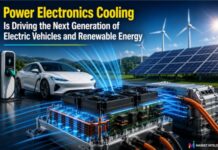


According to Research Intelo, the Global Multi-Port DC-DC Converter market size was valued at $1.32 billion in 2024 and is projected to reach $3.47 billion by 2033, expanding at a CAGR of 11.2% during the forecast period of 2025–2033. The primary growth driver for this market is the rapid proliferation of electric vehicles (EVs) and renewable energy systems, both of which require efficient, compact, and flexible power conversion solutions to support multi-source and multi-load architectures. As industries increasingly focus on energy efficiency and system integration, the demand for advanced multi-port DC-DC converters continues to escalate globally, enabling seamless management of power flows in complex electronic and electrical systems.
Introduction
In today’s energy landscape, the demand for efficient, flexible, and scalable power conversion systems is rising rapidly. Multi-Port DC-DC converters (MPDCs) have emerged as a groundbreaking technology that can manage multiple power sources and loads through a single, compact unit. They are increasingly relevant in renewable energy integration, electric vehicles, and hybrid energy storage systems.
Understanding Multi-Port DC-DC Converters
A Multi-Port DC-DC Converter is an advanced power electronic system designed to interface with multiple DC sources and/or loads. Unlike conventional converters, which connect a single input to a single output, MPDCs integrate several ports for simultaneous energy management, enabling greater flexibility and efficiency.
How They Work
An MPDC uses shared switching devices and magnetic components to handle multiple energy pathways within one circuit. By controlling the duty cycles of switches, the converter manages power flows between sources (like solar panels, batteries, and fuel cells) and loads, all while maintaining voltage stability.
Key Advantages of Multi-Port DC-DC Converters
The shift toward multi-port designs isn’t just a technological novelty—it’s a necessity driven by modern energy challenges.
1. Space and Component Reduction
Using a single converter for multiple power interfaces significantly reduces system size, weight, and cost compared to deploying separate converters for each port.
2. Higher Efficiency
By sharing power conversion stages, MPDCs minimize energy losses and improve overall system efficiency.
3. Simplified Control Architecture
Multiple power flows can be controlled through a centralized algorithm, making system monitoring and management more straightforward.
4. Enhanced Energy Management
MPDCs can intelligently distribute power between various sources and loads, ensuring optimal energy utilization in dynamic conditions.
Applications of Multi-Port DC-DC Converters
1. Renewable Energy Systems
In hybrid renewable setups—such as solar-wind-battery systems—MPDCs allow smooth power routing between sources and storage units, ensuring stability even with fluctuating input conditions.
2. Electric and Hybrid Vehicles
Electric vehicles often require simultaneous charging from renewable sources and grid connections. Multi-port converters streamline charging, discharging, and auxiliary power supply processes.
3. Microgrids
MPDCs act as central hubs in microgrids, connecting energy storage, renewable generators, and DC loads while maintaining grid stability.
4. Portable Power Systems
For military, aerospace, or remote applications, MPDCs provide a lightweight, reliable solution for managing diverse power inputs in limited spaces.
Design Challenges in Multi-Port DC-DC Converters
While MPDCs offer compelling advantages, they also present engineering challenges.
1. Complex Control Strategies
Coordinating multiple power flows requires sophisticated control algorithms, often involving real-time feedback and advanced digital controllers.
2. Thermal Management
With multiple ports sharing components, heat dissipation becomes a critical design factor.
3. Reliability Concerns
A fault in the shared conversion stage can affect all connected ports, demanding robust protection mechanisms.
Recent Technological Advancements
The development of wide-bandgap semiconductors (like SiC and GaN) has significantly improved the efficiency and power density of MPDCs. Moreover, advances in digital signal processors (DSPs) and model predictive control (MPC) have enabled more precise and adaptive power flow management.
The Future of Multi-Port DC-DC Converters
As the world transitions toward decentralized energy generation and electrified transportation, the role of MPDCs will become increasingly prominent. Future designs are expected to feature AI-driven control systems, modular scalability, and ultra-high efficiency, making them integral to sustainable energy infrastructures.
Conclusion
Multi-Port DC-DC converters represent a pivotal shift in power electronics. By merging multiple energy pathways into a single intelligent system, they pave the way for smarter, more compact, and more efficient energy management solutions. Whether in renewable energy farms, electric vehicles, or advanced microgrids, their role will only grow in importance in the coming years.