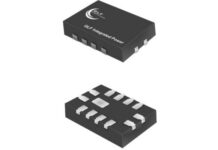

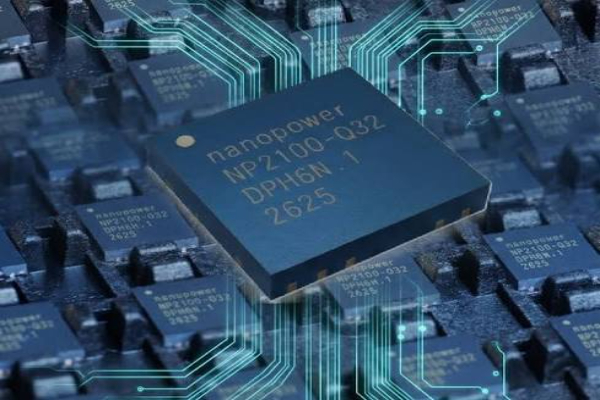
Nanopower Semiconductor has unveiled the nPZ2100, the newest addition to its nPZero range of power-saving integrated circuits (PSICs). Designed for battery-powered and continuously operating edge devices, the IC can independently control sensors and peripherals while allowing the primary microcontroller (MCU) to remain switched off until computing power is needed.
The nPZ2100 delivers a typical idle current of just 200 nA at 3.0 V, with polling consumption of 1 µA. It can autonomously control as many as six peripherals through I²C or SPI connections and includes four 1 mA power switches for peripherals plus a separate 10 mA switch for the host processor. The device is specified for operation between -40°C and +85°C.
The solution targets a common power-management issue in edge computing. Modern processors, wireless SoCs, and AI accelerators can consume considerable energy even when their processing functions are only needed occasionally. Instead of leaving the main processor running continuously, the nPZ2100 acts as an ultra-low-power supervisory layer, monitoring system activity and waking the host processor only when computation is necessary.
For autonomous operation, the IC incorporates 256 bytes of SRAM, an 8-bit three-channel ADC, a 32-bit global timer with alarm functionality, a watchdog, and a general-purpose event counter. These integrated resources allow the device to track sensors, analog inputs, timing events, and other system conditions while the main MCU remains powered down.
The nPZ2100 can additionally switch off peripheral power when those devices are inactive. This helps reduce their standby consumption and prevents unnecessary processor wake-ups. By managing sensor communications and monitoring functions independently, the IC can shorten the host processor’s active periods and reduce total system power usage.
Its power-conscious architecture also makes the device suitable for energy-harvesting designs. Lower sensor sampling frequencies and fewer processor wake cycles can help systems function within limited energy supplies, potentially allowing designers to use smaller batteries or alternative energy sources.
Potential applications include wireless IoT sensors, smart-home and building equipment, asset-tracking devices, electronic shelf labels, wearables, remote controls, human-interface products, security and monitoring systems, industrial battery-powered sensors, consumer electronics, and energy-harvesting platforms.
Nanopower has released the nPZ2100 datasheet, product documentation, and early development materials through its development portal. Development kits, engineering samples, and nPZero 2100 Development Stamps are expected in September 2026. Full commercial availability and volume production are targeted for the second quarter of 2027.