
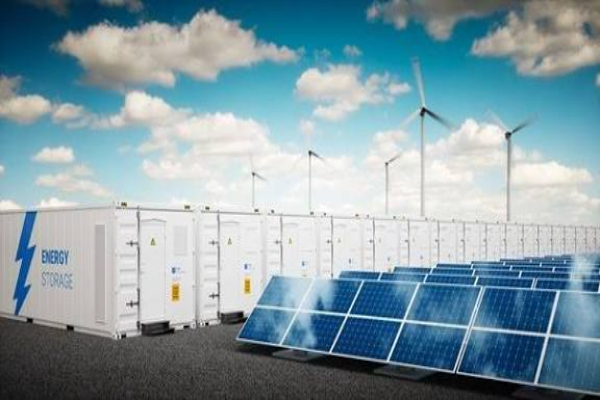
onsemi and Sungrow are enhancing utility-scale battery energy storage systems (BESS) by integrating onsemi’s EliteSiC hybrid power modules into Sungrow’s PowerTitan 3.0 platform. The technology aims to achieve peak inverter efficiency above 99.3%, increase power density, and minimize energy losses in grid-scale storage installations.
PowerTitan 3.0 uses onsemi’s high-density power integrated modules (PIMs), which combine silicon carbide and silicon devices to improve power conversion, thermal performance, and system cost efficiency. Designed for advanced three-level inverters, the platform supports power conversion units rated up to 450 kW.
According to onsemi, the upgraded architecture improves inverter efficiency by 0.4 percentage points compared with the previous generation. In a 100 MW battery storage installation, this improvement could save more than 475 MWh of energy annually, helping reduce operating costs and increase the electricity available for grid delivery.
These advancements address growing energy demands driven by AI infrastructure, renewable energy expansion, and electrification, while improving the performance and economics of large-scale energy storage systems.
Beyond efficiency, the hybrid SiC architecture provides increased power density and improved thermal performance. These characteristics support high-power operation and enhanced overload capability, helping energy storage systems manage demanding operating conditions while maintaining reliability. Higher power density can also enable more compact system designs or greater conversion capacity within a given installation footprint.
The adoption follows an established strategic relationship between onsemi and Sungrow. The companies collaborated on platform development, system optimization, engineering validation, and qualification to meet the performance requirements of next-generation energy storage applications.
The technology addresses the growing need for efficient energy storage infrastructure as utilities balance rising electricity consumption with increased renewable generation. Higher-power and higher-voltage architectures, combined with improved conversion efficiency, can help operators maximize usable energy, reduce system losses, and improve the economics of grid-scale battery storage deployments.