

Photoelectric sensors are fundamental components in modern industrial automation systems. Thanks to minimal response times, they enable efficient and precise control over machines and conveyor systems – they are also essential elements of many safety systems.
The offer of photoelectric sensors from the Autonics brand includes hundreds of products. Navigating such a wide assortment may seem complicated – however, the manufacturer has ensured a logical and clear organization of its portfolio. Below we present its overview. The most important product groups of Autonics, their basic parameters, and unique competitive features are presented here.
Autonics photoelectric sensors
Slot Sensors (Series BS3, BS4, and BS5)
The fields of application for slot sensors include production control, robotics control, and operation of precise mechanisms. These small components are commonly used in encoders, mounted directly in electronic circuits or connected with wires. Autonics offers slot sensors adapted for mounting with screws and mounting holes, equipped with wire soldering leads, IDC connector sockets, and factory-installed 1m cables. The sensors feature integrated signal amplifiers and transistor outputs (open collector NPN or PNP). The elements are designed to operate at frequencies up to 2 kHz, in DARK-ON or LIGHT-ON mode. The manufacturer offers over a hundred models of such sensors, available in various shapes.
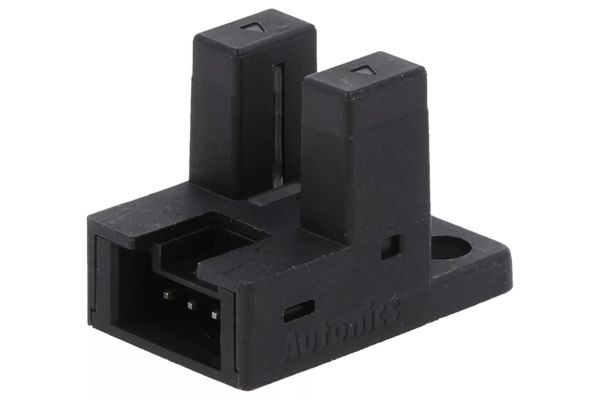
Series BS3, BS4, and BS5
Color Sensors (Series BC)
Color sensors of the BC series use RGB LEDs and 12-bit resolution detectors, thus offering exceptionally precise measurement. This is further stabilized by reducing interference caused by external light. The elements are programmed based on a pattern to then precisely verify the color of objects, e.g., as part of quality control on production lines. The observed area is very small, just 1.24 x 6.7 mm. An important feature of these sensors is a high degree of sealing (IP67) allowing them to be used in harsh environmental conditions, paint shops, or printing plants.
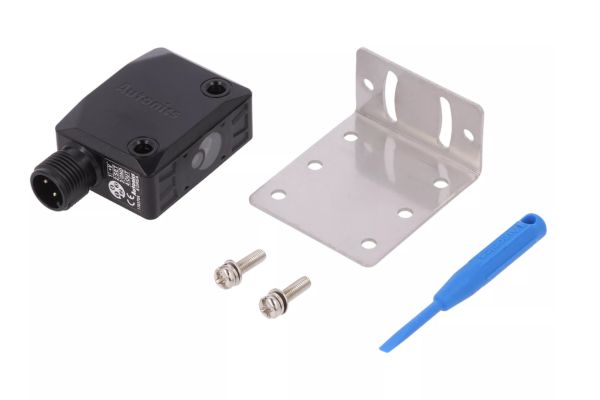
Series BC
Laser Sensors (Series BD)
Autonics laser sensors are characterized by very high precision and protection class (IP67), with housings made of aluminum or polycarbonate. They are available in ranges from 27.3 mm to 600 mm. Designed for measuring thickness, width, curvature, or detecting surface irregularities. Their maximum resolution is approx. 1 µm (depending on the model). These are reflective sensors, i.e., containing both transmitter and receiver – the manufacturer equipped them with adjustment to adapt operation to the transparency level of observed objects. The range of measured distances can be automatically calibrated (single- or two-point).
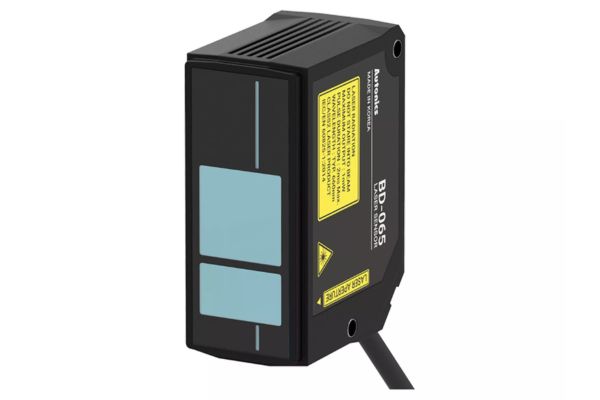
Series BD
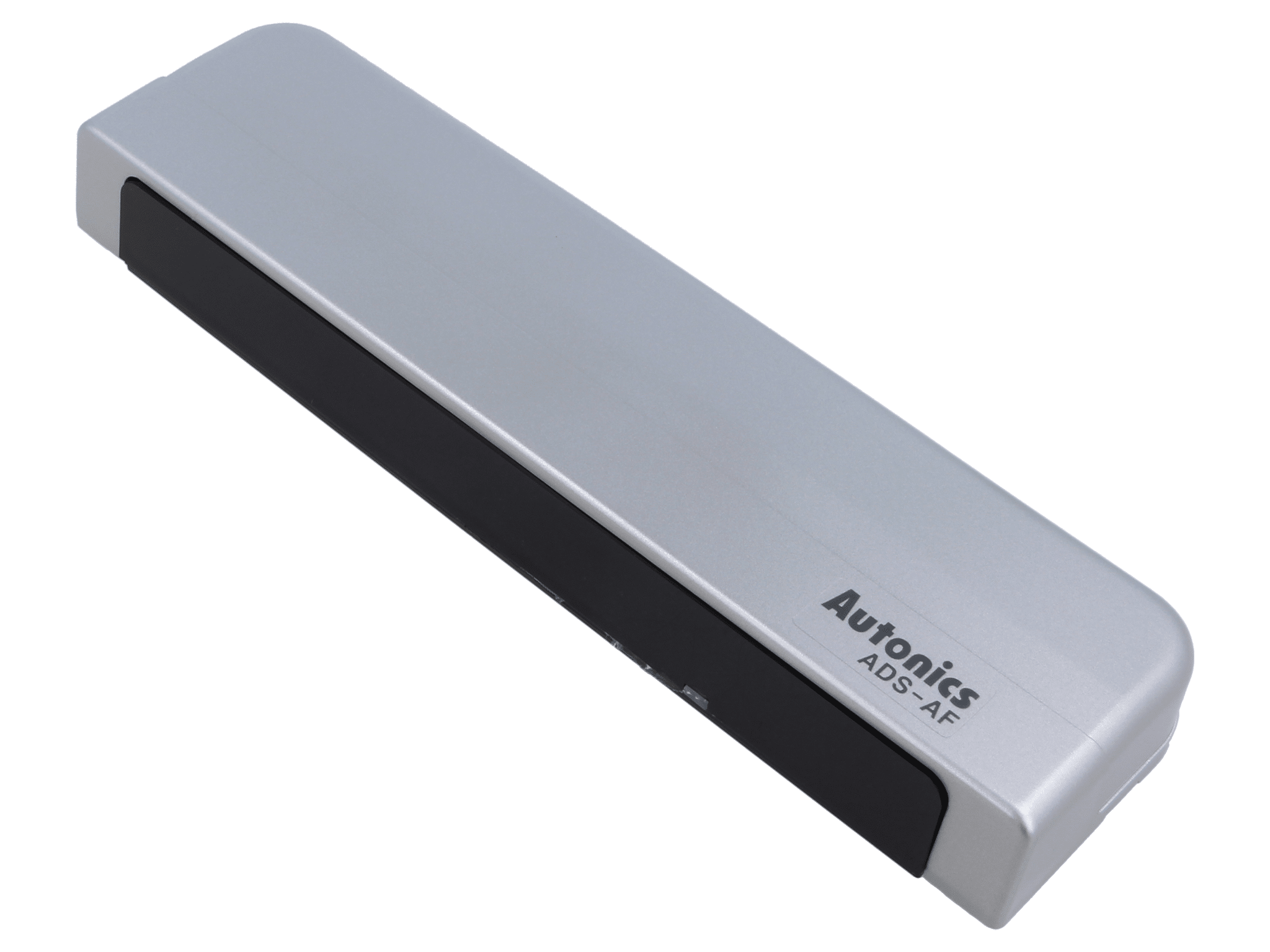
Motion and Presence Detection (Series ADS-A and ADS-SE)
The ADS-A and ADS-SE series sensors are designed for applications in building security and automation (automatic door opening). They are adapted to operate in diverse environmental conditions. The elements’ circuits are based on microcontrollers interpreting data from the sensor – this allows easy adjustment of sensor sensitivity and viewing angle (from 7.5° to 28.5°), as well as signal extension (“hold”) for control purposes. For ADS-SE elements, note the wide operational distance range (from 0…10 m) and the ability to work in sunlit areas.
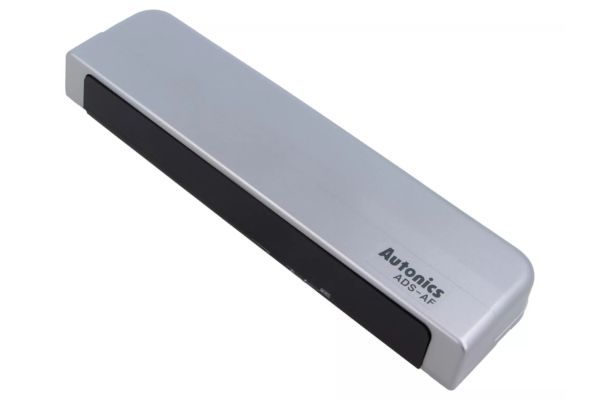
Series ADS-A and ADS-SE
Universal Sensors (Series BEN)
The BEN series includes the most universal sensors offered by Autonics. Available in transmitter-receiver, reflective, and reflective with reflector versions. The “universality” of this product group refers to several aspects. They come in versions powered by direct current (from 12V to 240V DC) and alternating current (from 24V to 240V AC). Their outputs can be transistor (PNP and NPN) as well as relay (connection to SPDT contact configuration). They are equipped with pre-installed 2-meter cables. Sensors operate in LIGHT-ON and DARK-ON modes. Also worth noting: the assortment includes sensors with varied ranges, the smallest being 0…0.3 m, and the largest 0…10 m. Regardless of sensor housing variant, they have a compact, rectangular format with dimensions of 18x50x50 mm.
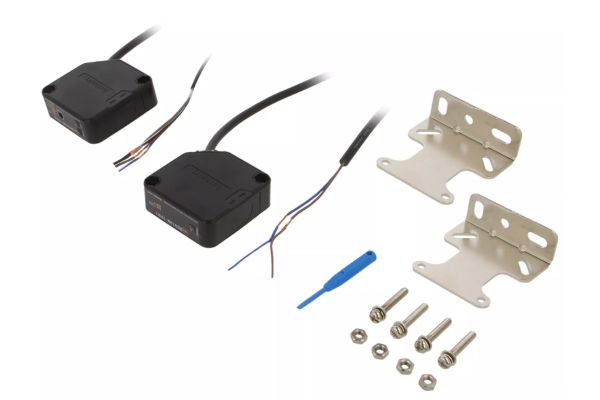
Series BEN
Oil-Resistant Sensors: Reflective, Transmitter-Receiver
Like BEN sensors, the BJR series elements come in various versions and wide ranges (up to 15 m). Key distinguishing feature of these products is high resistance to oils – both machine oils and cutting oils. Furthermore, they are adapted to operate in the presence of electrical and optical interference. As a result, they can be used in branches of industry where other solutions would be vulnerable to damage. The elements feature sensitivity adjustment and transistor outputs. These are sensors designed to operate at voltages from 10V to 30V DC.
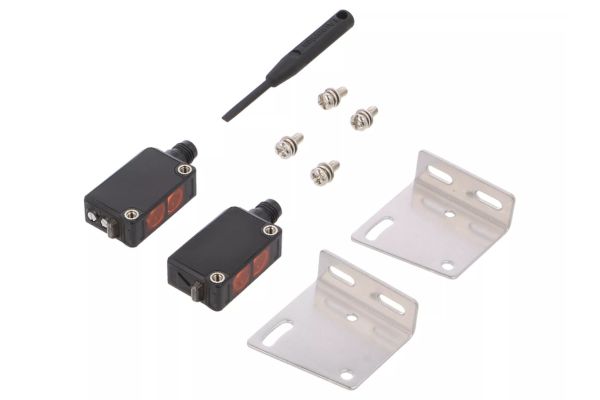
Series BJR
Cylindrical Sensors (Series BRQ and BR)
Regarding sealing and mechanical resistance, the best parameters are exhibited by sensors in cylindrical housings. In the case of the BRQ and BR series, these are elements enclosed in metal housings surrounded by an M18 thread. They can operate at distances up to 20 m (depending on the model). They are connected using integrated cables or industrial M12 connectors, which receive IP66/67 protection class guaranteed by the housing design. BRQ and BR sensors also feature wide thermal tolerance, e.g., from -25°C to 60°C.
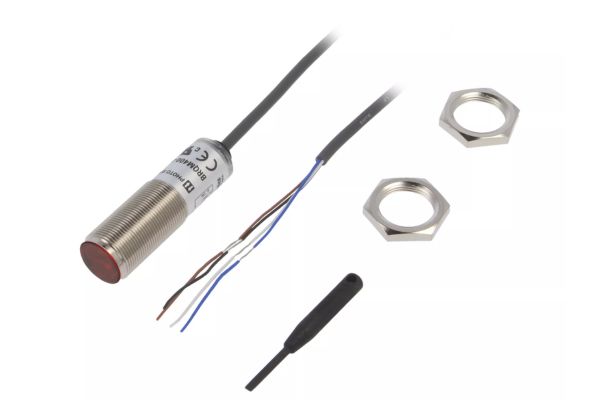
Series BRQ and BR
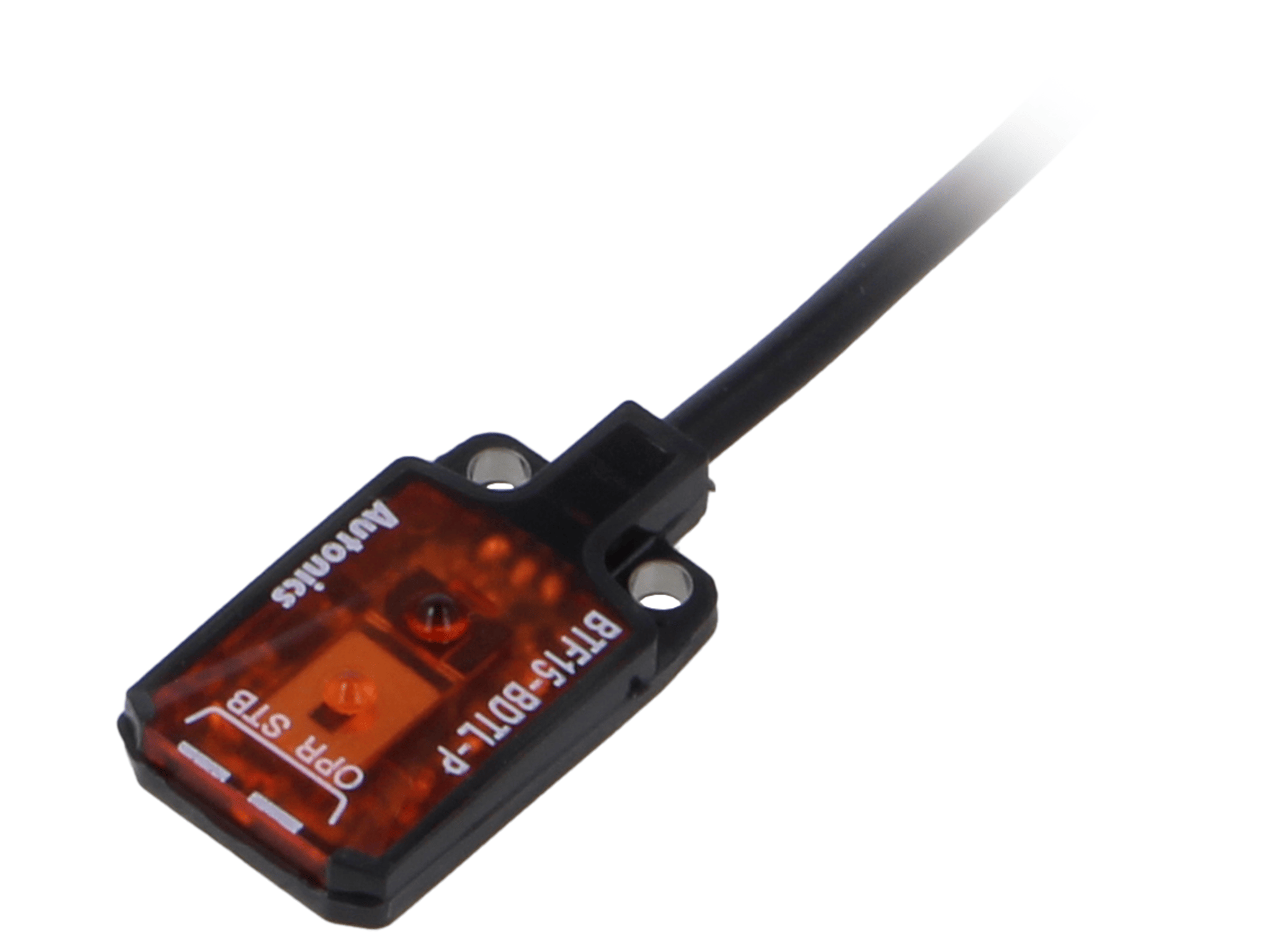
Ultra-Flat Sensors (Series BTF)
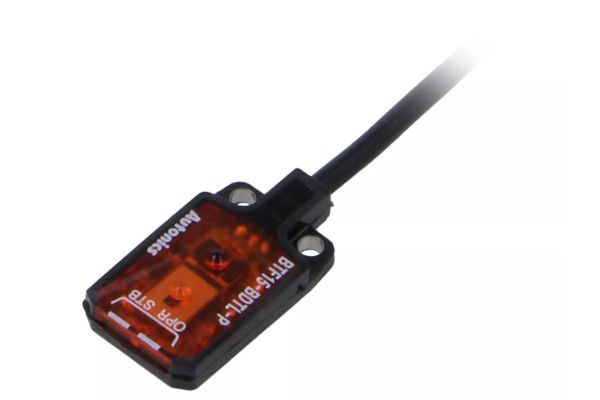
BTF is a series of reflective sensors (and in transmitter-receiver versions), whose key parameter is compact dimensions designed for limited spaces in machines and automation systems. Their module thickness is only 3.7 mm (with a base of 13×19 mm). Products may operate at distances of 1…15 mm, 5…30 mm, or up to 1 meter. They have PNP and NPN outputs and are powered by voltages ranging from 12V to 24V DC. Importantly: these sensors can detect very small objects, as small as 0.2 mm in diameter (under mounting conditions specified by the manufacturer). Even such precise and low-profile Autonics sensors are made with a high sealing class (IP67), thus remaining resistant to moisture, flooding, and dust.