
According to Growth Market Reports, the global semiconductor glass core embedded die market was valued at USD 1.12 billion in 2024. Strong demand for smaller, high-performance electronic devices is fueling rapid growth. The market is projected to expand at a CAGR of 17.8% from 2025 to 2033, reaching approximately USD 4.60 billion by 2033. This growth is driven by advances in semiconductor packaging, increased use in consumer electronics and automotive applications, and the ongoing push for miniaturized, more capable devices.
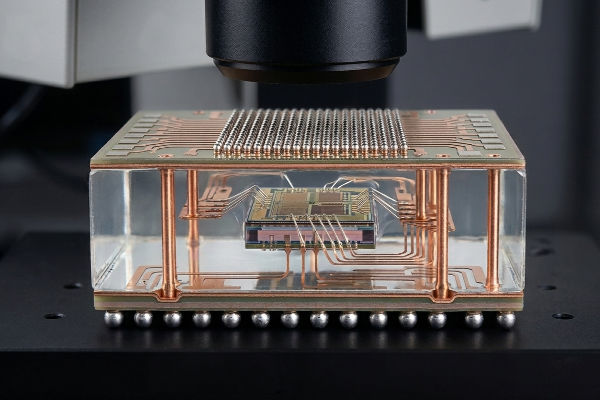
The Semiconductor Glass Core Embedded Die Market has emerged as a critical segment within the broader semiconductor packaging ecosystem. As electronic devices become smaller, more powerful, and more energy efficient, manufacturers are turning toward advanced packaging methods that allow multiple components to be integrated into compact modules. Glass core embedded die solutions offer significant advantages in terms of reliability, scalability, and electrical performance, making them suitable for next-generation applications such as artificial intelligence processors, high-performance computing systems, automotive electronics, and 5G communication infrastructure.
Key Drivers of Market Growth
Rising Demand for Miniaturized Electronics
One of the most significant drivers is the ongoing demand for smaller, thinner, and more powerful electronic devices. Smartphones, wearable devices, and portable computing systems require high performance within limited space. Embedded die technology helps achieve this by integrating multiple functions within a single compact package.
Growth of Artificial Intelligence and Data Centers
Artificial intelligence and machine learning workloads require extremely powerful processors and high-speed data transfer capabilities. Advanced packaging technologies such as glass core substrates allow semiconductor manufacturers to create high-bandwidth connections between chiplets, enabling faster computing performance.
Data centers and high-performance computing platforms are increasingly adopting such technologies to meet growing computational demands.
Expansion of Automotive Electronics
Modern vehicles are becoming increasingly dependent on electronic systems. Advanced driver-assistance systems (ADAS), electric vehicle power management, infotainment systems, and autonomous driving technologies all require reliable and high-performance semiconductor components.
Glass core embedded die packaging offers improved thermal management and mechanical stability, making it suitable for automotive applications that operate under harsh conditions.
Development of 5G and Advanced Communication Infrastructure
The rollout of 5G networks and future wireless technologies requires compact and efficient communication hardware. Embedded die solutions help reduce signal loss and improve electrical performance, making them valuable in high-frequency communication equipment.
Technological Advancements Shaping the Market
Through Glass Via (TGV) Technology
One of the most important innovations supporting glass core embedded die packaging is Through Glass Via (TGV) technology. TGV enables vertical electrical connections through the glass substrate, allowing multiple semiconductor layers to be integrated into a single package.
This technology significantly improves signal transmission and reduces electrical interference, which is essential for high-speed computing and communication applications. TGV also enables greater miniaturization of electronic modules by facilitating 3D integration.
Panel-Level Packaging
Panel-level packaging is another technological advancement that is influencing the development of glass core embedded die solutions. Unlike traditional wafer-level packaging, panel-level manufacturing allows semiconductor devices to be processed on larger substrates, increasing production efficiency and reducing costs.
Glass substrates are particularly well suited for panel-level packaging because of their excellent dimensional stability and mechanical strength.
Hybrid Integration and Heterogeneous Packaging
Hybrid integration is becoming a key strategy in modern semiconductor design. Instead of relying on a single large chip, manufacturers combine multiple specialized chiplets within a single package.
Glass core embedded die technology enables this type of heterogeneous integration by providing a stable platform for integrating logic chips, memory components, sensors, and passive elements within one compact structure.
Future Outlook
The future of the Semiconductor Glass Core Embedded Die Market appears highly promising. As semiconductor devices continue to evolve, traditional packaging solutions will struggle to meet the demands of advanced computing applications.
Glass core substrates combined with embedded die technology offer a powerful solution to these challenges by enabling higher interconnect density, improved thermal performance, and greater design flexibility. The increasing adoption of artificial intelligence, high-performance computing, and next-generation communication technologies will likely accelerate demand for these advanced packaging solutions.
Industry experts expect the market to expand rapidly over the next decade as research breakthroughs and manufacturing improvements reduce production costs and improve reliability. By enabling the development of smaller, faster, and more energy-efficient electronic devices, semiconductor glass core embedded die technology is poised to play a crucial role in shaping the future of the global semiconductor industry.
Competitive Landscape
Prominent companies operating in the market are:
- TTM Technologies
- Shinko Electric Industries
- AT&S (Austria Technologie & Systemtechnik)
- ASE Group (Advanced Semiconductor Engineering)
- Samsung Electro-Mechanics
- Unimicron Technology
- Ibiden Co., Ltd.
- Murata Manufacturing Co., Ltd.
- Amkor Technology
- Taiwan Semiconductor Manufacturing Company (TSMC)
- Kyocera Corporation
- LG Innotek
- Simmtech Co., Ltd.
- Fujitsu Interconnect Technologies
- Daeduck Electronics
- Kinsus Interconnect Technology