
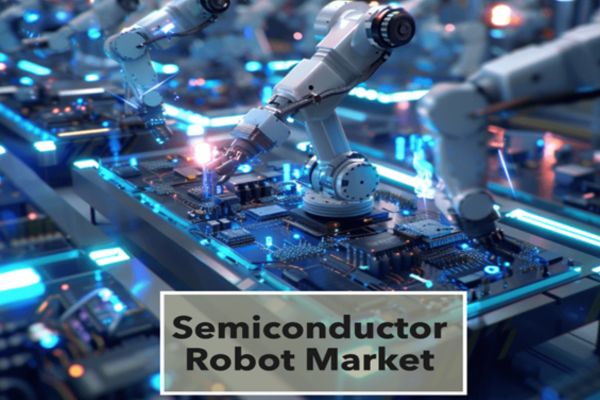
The semiconductor robots market is expected to be valued at US$ 1.1 billion in 2023 and grow at a compound annual growth rate (CAGR) of 17.5% to reach US$ 5.6 billion by the end of the forecast period.
Because of their many uses in consumer electronics, automobiles, medical devices, and other fields, semiconductors are in high demand worldwide. To keep up with this demand, semiconductor manufacturers are increasing their production capacity and implementing semiconductor robots for improved results.
“Surging Demand for Semiconductors to Supplement Semiconductor Robot Sales”
The automotive, medical, electronic, and aerospace sectors have demonstrated a robust compound annual growth rate (CAGR) of more than 5.0% in previous years, and this trend is anticipated to persist during the forecast period. Due to this, there is a huge need for semiconductors, which are utilized in many different applications like blood pressure monitoring, magnetic resource imaging, and navigation control, among others.
In the car sector, semiconductors are commonly employed in entertainment, collision detection, and navigation control systems. An estimate states that 1,400–1,500 semiconductor chips are put in the typical modern automobile. For some autos, that might reach 3,000 chips.
“The ups and downs in raw material prices could pose challenges for the semiconductor robot market in the years ahead”
The semiconductor robots market is feeling the pinch from fluctuating raw material prices. These ups and downs in metal and copper prices are likely to create some hurdles for the market.
Silicone, known for its stable structure, is another key player in the semiconductor world. However, with the rising demand for semiconductors, many markets are now grappling with a silicone shortage, which could dampen the growth of the semiconductor robot market in the coming years.
Additionally, the ongoing tensions between China and Taiwan are casting a shadow over the semiconductor landscape, as both countries are major players in semiconductor production. This conflict is likely to influence both manufacturing and the demand for semiconductor robots.
Lastly, government regulations in various countries regarding the import and export of semiconductorscould negatively affect sales in the semiconductor and semiconductor robot sectors.
Which Application Will Drive Market Growth Over the Forecast Period?
Printed circuit boards (PCBs) are essential in the world of semiconductors, enhancing quality control, streamlining workflows, offering greater versatility, improving inspection reliability, speeding up material handling, and ensuring overall operational stability. Their role in semiconductor robots is particularly vital, as they enable precise placement and efficient handling, which in turn boosts demand in the semiconductor robotics market.
All these factors underscore the important contribution of PCBs to market growth. In fact, the PCB segment was valued at a remarkable US$ 236.2 million in 2022 and is expected to soar to US$ 1,255.8 million by the end of the forecast period.
Region-Specific Insights
By the end of the forecast period, the US semiconductor robot market is expected to grow at a CAGR of 18.2% and be valued US$ 817.9 million.
The US has a strong economy, high expectations for consumer electronics, and massive data centers that hold vast amounts of data. These demands necessitate semiconductors, thus the US is investing in semiconductor manufacturing, which opens the door for semiconductor robots.
Additionally, the trade disputes between the US and China increased demand for semiconductors in the US, opening up profitable expansion prospects for the semiconductor industry there. Over the course of the projection period, there are expected to be several chances for the semiconductor robots market due to the growing momentum of the US semiconductor business.
Key Strategies of Market Titans
Samsun Electronics, Intel, SK Hynix, Qualcomm, Broadcom, Micron, Texas Instrument, Microchip, STMicroelectronics, NXP Semiconductors, and other firms are notable makers of semiconductor robots.
In order to achieve large profit margins, manufacturers are concentrating on growing their markets throughout emerging nations. Therefore, for industry titans looking to grow, partnerships and acquisitions are the favored business expansion tactics.
Businesses in the semiconductor robot industry are committed to offering technical support and after-sale robot services in order to keep positive working relationships with semiconductor manufacturers.