
The global power electronics industry is poised for robust expansion, with IDTechEx projecting it to surpass $65 billion by 2036, growing at an estimated CAGR of about 10%. This growth is largely fueled by increasing demand from electric vehicles, AI-driven data centers, and renewable energy installations.
To meet rising expectations for higher efficiency, greater power density, improved reliability, and smaller system sizes, manufacturers are increasingly turning to wide bandgap (WBG) semiconductors such as silicon carbide (SiC) and gallium nitride (GaN). These materials support higher voltage operation and more advanced power system designs, positioning them as critical technologies for next-generation applications across industries.
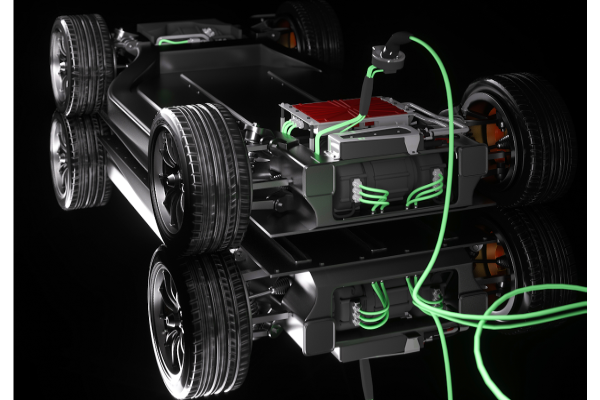
In the electric vehicle sector, traditional silicon-based devices like IGBTs have long been used in components such as traction inverters, onboard chargers, and DC-DC converters. However, SiC MOSFETs are quickly gaining momentum thanks to their ability to handle higher temperatures, switch more efficiently, and deliver better overall performance. IDTechEx expects SiC to dominate key EV power electronics applications by 2036, enabling lighter systems, improved efficiency, and extended driving ranges. Although GaN is also emerging in EV applications, its wider adoption will depend on proving long-term reliability in high-voltage environments.
The data center industry is also undergoing major change due to the rapid growth of AI workloads, which significantly increase power and thermal demands. As a result, power electronics must evolve to support more efficient and compact systems. WBG technologies are expected to become increasingly important in power supply units and point-of-load converters, with GaN in particular forecast to see strong growth over the next decade. Additionally, data centers are gradually shifting toward 800V DC architectures, replacing conventional AC distribution to reduce conversion losses, simplify infrastructure, and support higher power densities, including megawatt-scale racks.
In renewable energy, especially wind power, adoption of WBG devices has been slower due to challenging operating environments and strict reliability standards. However, growing confidence in the durability of SiC is expected to gradually increase its use in wind turbine power converters.
Overall, although each sector has unique technical demands, ongoing advances in semiconductor materials and power system design are collectively reshaping the future of the global power electronics market.