
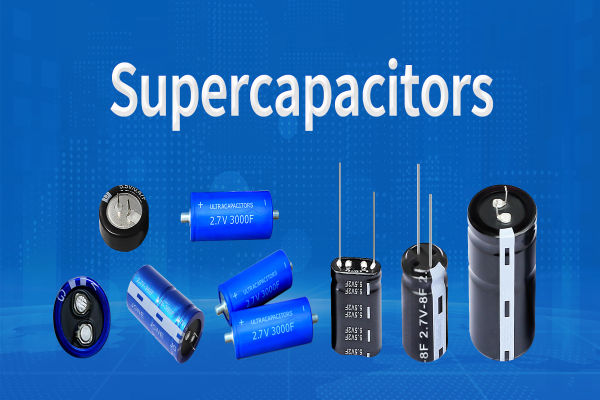
The global supercapacitors market was valued at approximately USD 3.39 billion in 2025 and is projected to reach around USD 17.32 billion by 2035, expanding at a strong compound annual growth rate (CAGR) of about 17.8% during the forecast period. This rapid expansion is being driven by rising demand for high-power energy storage solutions in sectors such as automotive electrification, renewable grid support, and advanced consumer electronics.
Supercapacitors differ from traditional batteries by storing energy through rapid ion movement rather than slow chemical reactions, allowing much faster charge/discharge cycles and longer operational life — attributes that are increasingly required in modern power systems and high-efficiency applications.
Key Takeaways
- Asia Pacific dominates the global supercapacitors market with nearly 44% share, supported by strong manufacturing capabilities, accelerating electric vehicle adoption, and increasing demand from consumer electronics and renewable energy installations.
- Double Layer Capacitors hold the largest share at 48%, owing to their extended lifecycle, operational stability, and broad utilization in automotive and industrial power applications.
- Hybrid supercapacitors represent the fastest-growing segment, expanding at a rate of over 32%, as they effectively combine high power output with enhanced energy storage capacity.
- The 100–1,000 F capacitance segment captures around 45% of the market, driven by its adaptability across automotive systems, industrial equipment, and grid-support solutions.
- Carbon and metal oxide-based materials contribute approximately 49% of total demand, attributed to their cost-effectiveness, strong electrical conductivity, and scalability in mass production.
- Automotive applications account for 32% of the overall market, propelled by growing EV production and the increasing integration of regenerative braking and start-stop technologies.
Key Growth Drivers
1. Electrification of Transportation
- The expanding adoption of electric vehicles (EVs) and hybrid electric vehicles (HEVs) is creating significant demand for supercapacitors. These devices are well-suited for regenerative braking and power bursts during acceleration, helping improve vehicle efficiency and reduce stress on conventional batteries.
2. Smart Energy & Grid Modernization
- As more renewable energy sources such as wind and solar enter power grids, maintaining grid stability becomes essential. Supercapacitors offer rapid response support during frequency and voltage fluctuations, complementing slower-responding energy systems like batteries or gas turbines.
3. Consumer Electronics & IoT
- Devices that require short, high-power bursts — such as wearables, smartphones, and IoT sensors — benefit from supercapacitors due to their quick charging capabilities and long operational lifespans.
Market Restraints & Challenges
High Production Costs
- The cost of key raw materials — particularly high-purity activated carbon and advanced electrolytes — remains a significant barrier for supercapacitor manufacturers, contributing to higher initial prices compared with traditional energy storage systems.
Lower Energy Density
- Although supercapacitors excel in power delivery, their energy storage density is substantially lower than that of lithium-ion batteries, limiting their suitability for long-duration energy applications on their own. This has encouraged hybrid systems that combine capacitors with batteries.
Emerging Opportunities
- Smart Grid & Urban Infrastructure: Growing investments in smart city and smart grid technologies present new opportunities for supercapacitor-integrated energy storage systems.
- Aerospace & Defense: Supercapacitors are increasingly used in high-reliability systems in aerospace and defense applications where rapid power delivery and operational durability are essential.
Recent Industry Highlights
- Innovative Hybrid Technologies: Companies are introducing advanced systems that combine the high power density of supercapacitors with enhanced energy density, such as “SuperBattery” technology, which bridges the gap between traditional capacitors and batteries. These innovations are especially useful in industrial power applications that require fast recharge and discharge cycles.
- Policy Support & Subsidies: Government incentives such as the U.S. Inflation Reduction Act and the European Green Deal are boosting domestic production and adoption of energy storage technologies, including supercapacitors.
- Commercial Demonstrations: Deployment of supercapacitor-based solutions — such as fast opportunity-charging systems for buses and urban transit — has shown real-world benefits, highlighting practical pathways for broader electrification of public transportation.
Regional Market Insights
- Asia-Pacific: Asia-Pacific leads the global market with the largest share due to strong electronics and EV manufacturing in China, Japan, and South Korea, backed by supportive government initiatives and established supply chains for key supercapacitor materials.
- North America: The North American market is growing rapidly on the back of grid modernization efforts, research advancement, and expanded use in data center backups and renewable energy stabilization projects.
- Europe: Driven by strict decarbonization policies and robust industrial demand, Europe is increasingly incorporating supercapacitors into rail systems, wind power installations, and other sustainability-oriented infrastructure.
- LAMEA (Latin America, Middle East & Africa): Growth here is supported by industrialization, expanding microgrids, and the need for rugged, maintenance-free energy storage solutions in remote areas and decentralized systems.
Market Segment Overview
By Type
- Electrostatic Double-Layer Capacitors (EDLCs): Largest share due to long cycle life and reliability.
- Hybrid Capacitors: Fastest-growing segment, combining high energy and power.
- Pseudo Capacitors: Used where high capacitance performance is needed.
By Capacitance Range
- 100–1,000 F: Most widely used due to versatility in automotive, industrial, and grid applications.
- <100 F & >1,000 F: Emerging segments aligned with IoT and large-scale power applications.
By Material
- Carbon & Metal Oxide: Leading share thanks to affordability and conductivity.
- Composite Materials & Conducting Polymers: Growing due to enhanced performance potential.
By End User
- Automotive: Represents the largest share driven by EV use cases.
- Consumer Electronics, Energy, Industrial, Healthcare & Others: Each category growing with electrification and power efficiency trends.
Key Industry Players
Leading companies active in the supercapacitors market include:
Maxwell Technologies (Tesla), Panasonic Holdings Corp., Eaton Corporation PLC, Skeleton Technologies, CAP-XX Limited, AVX Corporation, Ioxus Inc., Nippon Chemi-Con Corporation, Kyocera / Kyocera AVX, LS Mtron, NEC TOKIN / KEMET, ELNA Co., Nichicon Corporation, Jinzhou Kaimei Power, Samwha Capacitor / Supreme Power Solutions among others.
Recent developments include new modular energy systems for microgrid frequency regulation, ultra-thin supercapacitor designs for wearables, and partnerships to integrate next-gen capacitors into vehicular systems.
Summary
The supercapacitors market is poised for robust growth over the next decade, powered by global electrification trends, renewable energy adoption, and increasing demand for high-power, fast-response energy storage solutions. While challenges such as material costs and lower energy density persist, technological innovation and strategic policy support are enhancing the commercial appeal and application scope of supercapacitor technologies worldwide.