

Strategic Outlook & Growth Drivers
The global transition toward renewable energy systems and the increasing need for reliable, long-duration storage solutions has thrust vanadium redox flow batteries (VRFBs) into the spotlight. As power grids evolve to support high shares of solar and wind generation, traditional short-duration storage technologies like lithium-ion batteries are no longer sufficient for all use cases. In this context, the Global Vanadium Redox Flow Battery Market is gaining prominence as a scalable option for sustaining grid stability and balancing renewable intermittency.
Market Insights from Acumen Research and Consulting
According to Acumen Research And Consulting, the Vanadium Redox Flow Battery Market was valued at USD 495.43 million in 2025 and is projected to grow to USD 3,058.12 million by 2035, expanding at a robust compound annual growth rate (CAGR) over the forecast period.

Acumen Research and Consulting’s comprehensive analysis of highlights strong momentum across industrial, commercial, and utility applications.
Key findings from the report include:
- Market Size (2025): USD 495.43 million
- Forecast (2035): USD 3,058.12 million
- CAGR (2026–2035): 19.9%
- Top Growth Drivers: Rising renewable capacity, increasing demand for grid stability, and supportive government policies.
- Regional Leader: The Asia-Pacific region dominated with 48% market share, while North America is expected to remain the fastest-growing region displaying growth at CAGR 21.1% from 2026 to 2035.
Such significant expected growth underscores the increasing adoption of long-duration energy storage systems across multiple sectors, including utilities, renewable energy integration projects, and industrial energy management.
What Are Vanadium Redox Flow Batteries?
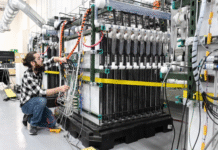
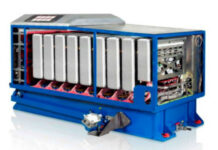
Vanadium redox flow batteries are a type of flow battery that use vanadium ions in different oxidation states to store and release energy through electrochemical reactions. Unlike conventional battery chemistries, where energy storage is limited by electrode mass, VRFBs separate energy capacity from power output — allowing storage capacity to be increased simply by enlarging electrolyte tanks.
This unique architecture delivers several strategic advantages:
- Long lifespan and durability: Electrolytes can be used repeatedly without significant degradation.
- Safety and stability: Aqueous electrolytes reduce fire risk and improve operational safety.
- Scalability: System capacity can be tailored without redesigning the power module.
- Suitability for long-duration storage: Ideal for multi-hour or seasonal storage needs supporting renewable integration.
These features position VRFBs as a compelling alternative to short-duration storage systems, especially in utility-scale applications where longevity and reliability are paramount.
Vanadium Redox Flow Battery Market Drivers
1. Renewable Energy Integration and Grid Stability
As solar and wind capacities grow worldwide, storage systems capable of absorbing surplus generation and releasing it during demand peaks are becoming essential. VRFBs are uniquely suited to this role due to their long cycle life and ability to deliver energy over extended periods.
Decarbonization goals in regions such as the European Union, North America, and Asia Pacific have accelerated renewable installations, directly driving investment in advanced energy storage systems that can manage renewable variability.
2. Demand for Long-Duration Storage
Short-duration storage technologies like lithium-ion batteries excel at frequency regulation and short-term balancing. However, for multi-hour or seasonal storage — especially where renewable generation patterns fluctuate — VRFBs offer clear performance benefits. Their ability to maintain capacity over long durations without rapid degradation is a key differentiator.
3. Utility Sector Adoption
Utilities increasingly see flow batteries as a strategic asset to support grid flexibility, peak load management, and deferred infrastructure upgrades. VRFB systems’ modularity and reliability are conducive to utility applications where operational longevity and maintainability are critical.
4. Lower Lifecycle Costs
Although upfront costs remain higher than some competing technologies, the extended cycle life and ease of maintenance associated with vanadium flow batteries can translate into lower total cost of ownership (TCO) over the system lifetime. This economic advantage is increasingly compelling to large-scale energy storage investors.
Vanadium Redox Flow Battery Market Regional Dynamics
| Region | Market Share 2025 (%) |
| North America | 24% |
| Europe | 18% |
| Asia-Pacific | 48% |
| Latin America | 4% |
| Middle East & Africa | 6% |
Asia-Pacific Leading the Charge
According to the Acumen Research And Consulting report, the Asia-Pacific region dominated the global Vanadium Redox Flow Battery Market in 2025 and is expected to maintain strong growth through 2035.
Countries such as China, Japan, and South Korea are investing heavily in renewable energy infrastructure and grid modernization programs, creating conducive environments for VRFB deployment. China in particular has seen large pilot and commercial deployments of vanadium flow storage tied to utility projects, reinforcing its position as a regional leader.
North America and Europe: Strategic Growth
Although Asia-Pacific leads in volume, North America and Europe are also important growth arenas. Utility procurement programs, state and federal incentives (in markets such as the U.S.), and ambitious energy transition policies in European countries have encouraged storage developers to evaluate VRFB technology for grid applications.
Investments and Industry Movement
The impressive growth projections in the Acumen Research And Consulting report also reflect growing investor confidence in long-duration storage technologies.
Vanadium supply and processing chains are attracting attention as well: companies focused on vanadium mining and electrolyte production are forming partnerships to ensure secure upstream inputs for battery manufacturing.
Strategic collaborations between battery manufacturers and utilities, plus government funding for energy storage research and deployment, are further enabling the commercial scaling of VRFB systems.
Vanadium Redox Flow Battery Market Trends Shaping the Future
1. Electrolyte Optimization and Performance Enhancements
Continuous research into electrolyte chemistry is enhancing energy efficiency and reducing operational costs. Improved vanadium electrolyte formulations are yielding better energy utilization and longer life cycles.
2. Modular and Scalable System Designs
Manufacturers are increasingly focusing on modular designs that allow system operators to tailor VRFB installations to specific capacity and discharge requirements — making them more attractive for both utility and commercial deployments.
3. Hybrid Renewable–Storage Systems
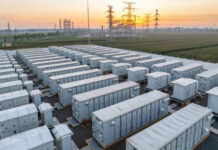
VRFBs are increasingly integrated with solar and wind farms as part of hybrid energy systems. These setups allow renewable generation to be captured and deployed flexibly — smoothing supply fluctuations and improving grid resilience.
Challenges and Market Constraints
Despite the strong growth outlook, several challenges could influence the pace of adoption:
- High Initial Costs: VRFB system capital expenditure is often higher than that of lithium-ion alternatives, though lifecycle cost benefits can offset this over time.
- Vanadium Price Volatility: Vanadium pricing is influenced by both battery demand and traditional industrial uses such as steel production, which can affect overall system economics.
- Supply Chain Maturity: The global vanadium value chain — from extraction to electrolyte synthesis — is still evolving, with regional imbalances in production capacity.
Addressing these constraints will be essential for wider commercial adoption as systems scale to meet global energy storage requirements.
Use Cases Driving Adoption
Utility Grid Support
VRFBs are being evaluated and deployed for grid ancillary services, including frequency regulation and load leveling — helping utilities integrate higher shares of renewables without compromising reliability.
Renewable Energy Integration
Large-scale renewable installations benefit from the long-duration storage capacity provided by vanadium flow batteries, enabling smoother power delivery during times of low generation.
Industrial and Commercial Backup
Industrial facilities and commercial enterprises requiring reliable backup power and energy cost management are evaluating VRFBs as part of hybrid energy solutions.
Vanadium Redox Flow Battery Market Outlook
The Acumen Research And Consulting forecast suggests a compelling growth curve for the Vanadium Redox Flow Battery Market, with the sector expected to grow more than six-fold over the coming decade.
This optimism is supported by macro trends in renewable energy deployment, grid modernization, and climate policy commitments worldwide. As VRFB technology continues to mature, ongoing innovation — alongside supportive regulatory environments — could further strengthen the case for vanadium flow batteries in long-duration storage applications.
The Vanadium Redox Flow Battery Market is entering a phase of accelerated expansion. Supported by a strong foundation in energy storage needs and renewable integration, VRFB technology — valued at USD 495.43 million in 2025 and projected to exceed USD 3,058.12 million by 2035 — is poised to become a pivotal part of future energy infrastructure.
While challenges remain, the growing global emphasis on resilient energy systems and long-term storage solutions positions VRFBs as a strategic investment area for utilities, industrial users, and clean energy stakeholders.