
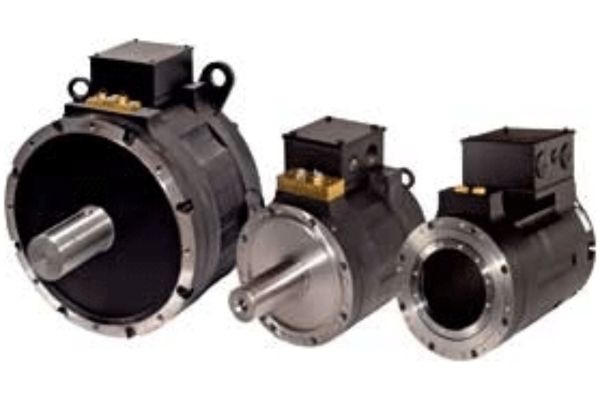
High-torque synchronous motors are advanced electric machines. They are designed to deliver precise speed and consistent torque even under varying load conditions. Unlike induction motors, they operate at a constant speed regardless of load fluctuations. This makes them highly efficient and reliable for heavy-duty industrial applications. These motors are increasingly being used in industries such as mining, oil & gas, manufacturing, power generation, and transportation, where durability and efficiency are crucial. With the global shift toward energy-efficient machinery and sustainable operations, high-torque synchronous motors are becoming a preferred choice across sectors.
What Are High-Torque Synchronous Motors?
High-torque synchronous motors are a category of synchronous machines that combine high torque density with precise control. The ability of these motors to maintain synchronization with the supply frequency ensures the speed does not vary under different load conditions. These motors are known for their high efficiency and low maintenance requirements. Additionally, they offer high operational reliability. Depending on the application, these motors can be designed for direct online starting, variable-frequency drives, or brushless configurations.
What Are Key Applications of High-torque Synchronous Motors?
Below, we’ve explained to you the various applications of high-torque synchronous motors:
Mining and Heavy Industrial Machinery
Mining operations require robust and reliable motors to power crushers, mills, and conveyors. The high starting torque and long-term operational stability of these motors make them ideal for such heavy-duty equipment.
Oil & Gas Industry
Synchronous motors are used in oil refineries and drilling operations for powering compressors, pumps, and fans. Their constant speed performance and high efficiency help reduce energy costs and ensure operational safety in demanding environments.
Power Generation
Synchronous motors are commonly used in power plants. Here, they drive pumps, blowers, and other auxiliary systems. Their ability to operate at a leading power factor helps improve grid stability and reduce reactive power consumption.
Transportation and Marine Applications
High-torque synchronous motors are also widely used in transportation and marine applications. They deliver the torque and reliability required in large-scale transportation. Their precision and efficiency support safe and uninterrupted operations.
Manufacturing and Process Industries
Industries such as cement, steel, paper, and chemicals utilize synchronous motors for large compressors, rolling mills, and grinding machines. Their durability ensures smooth operations under continuous heavy loads.
What Are Major Market Metrics?
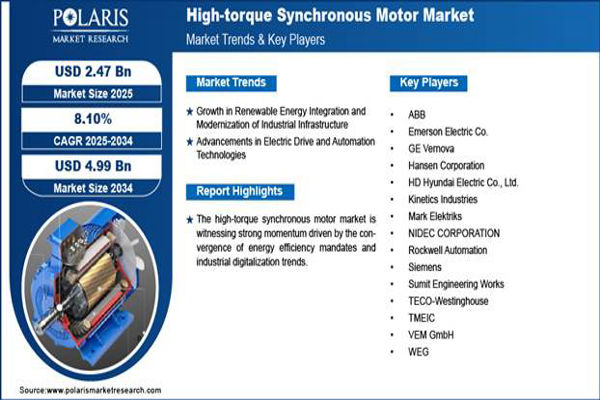
Polaris Market Research has recently published its latest assessment of the high-torque synchronous motor market. The report notes the market to forecasted a CAGR of 8.10% during 2025–2034. According to the analysis, the market is anticipated to grow to USD 4.99 billion by 2034.
What’s Driving Market Forward?
The high-torque synchronous motor market is experiencing steady momentum as industries adapt to changing regulatory and operational demands. Several key factors are shaping their demand:
Energy Efficiency Regulations
Governments and international agencies are enforcing stricter energy efficiency standards across industrial equipment. High-torque synchronous motors offer better power factor correction and consume less energy as compared to traditional induction motors. Additionally, these motors have lower greenhouse gas emissions. As industries seek compliance with these regulations, adoption of synchronous motors is becoming a strategic necessity rather than just an option.
Industrial Automation Growth
The wave of Industry 4.0 is transforming production processes. Automation, robotics, and smart manufacturing are driving the need for precise and reliable motor systems. High-torque synchronous motors are known for their ability to provide accurate speed control and maintain torque under varying loads. This makes them integral to automation systems in sectors such as automation, electronics, and logistics.
Sustainability and Cost Savings
Sustainability has become a business priority across various industries. Companies globally are prioritizing technologies that minimize operational costs and environmental footprints. High-torque synchronous motors deliver long-term savings through reduced energy bills and minimal maintenance requirements. Additionally, the longer operational lifespan of these motors makes them highly attractive for eco-conscious businesses.
What Are Emerging Market Trends?
Below, we’ve detailed the key trends shaping the high-torque synchronous motors market landscape:
Shift Toward Permanent Magnet Technology
One of the key market trends is the growing use of permanent magnet synchronous motors (PMSMs). These motors are more compact and deliver higher torque density compared to conventional designs. With industries focusing on reducing power consumption and achieving better control, PMSMs are becoming increasingly popular in various applications.
Integration with Smart Systems
The adoption of smart manufacturing and predictive maintenance is another key trend driving market demand. Smart systems require motors that can transmit operational data in real-time. This has resulted in the integration of high-torque synchronous motors with IoT sensors and AI-driven analytics. The integration allows manufacturers to optimize performance and extend the lifespan of critical assets.
Conclusion
High-torque synchronous motors have established themselves as indispensable machines for industries that require reliability and precision. With growing energy regulations and a push for sustainable practices, these motors offer a long-term solution that combines durability with cost-effectiveness. With advancements in design and control technologies, the high-torque synchronous motors market is expected to expand further.