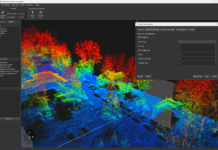


Analog Devices, a leading name in semiconductor innovation, has announced the release of CodeFusion Studio 2.0, a major update to its open-source platform for embedded development. The new version is designed to make it easier and faster to build AI-powered embedded systems. It offers enhanced hardware abstraction, smoother AI integration, and advanced automation tools, helping developers move efficiently from design to deployment across ADI’s wide range of processors and microcontrollers.
“The next era of embedded intelligence requires removing friction from AI development,” said Rob Oshana, Senior Vice President of the Software and Digital Platforms group, ADI. “CodeFusion Studio 2.0 transforms the developer experience by unifying fragmented AI workflows into a seamless process, empowering developers to leverage the full potential of ADI’s cutting-edge products with ease so they can focus on innovating and accelerating time to market.”
Empowering Developers with End-to-End AI Workflows
CodeFusion Studio 2.0 now supports complete AI workflows, enabling developers to bring their own models and deploy them efficiently across ADI’s processors and microcontrollers—from low-power edge devices to high-performance DSPs (digital signal processors). The latest platform, based on Microsoft’s Visual Studio Code, features a built-in model compatibility checker, performance profiling tools and optimization capabilities that are designed to ensure robust deployment and an accelerated time-to-market.
A new Zephyr-based modular framework enables runtime performance profiling for AI/ML workloads, offering layer-by-layer analysis and seamless integration with ADI’s heterogeneous platforms. This encapsulation of toolchains simplifies machine learning deployment and enhances system-level performance insights.
Unified Development Experience
The updated CodeFusion Studio System Planner now supports multi-core applications and expanded device compatibility, while unified configuration tools reduce complexity across ADI’s hardware ecosystem. Developers benefit from integrated debugging capabilities, including Core Dump Analysis and GDB (GNU debugger) support, making troubleshooting faster and more intuitive.
ADI Future Proofs Its Digital Roadmap
CodeFusion Studio 2.0 is the latest milestone in ADI’s open-source embedded development platform, embodying its commitment to delivering developer-first tools that simplify complexity and accelerate innovation. As ADI expands its digital roadmap, future releases will continue to push the boundaries of embedded intelligence, bringing deeper hardware-software integration, expanded runtime environments and new capabilities tailored to evolving developer needs as they experiment with physical AI.
“Companies that deliver physically aware AI solutions are poised to transform industries and create new, industry-leading opportunities. That’s why we’re creating an ecosystem that enables developers to optimize, deploy and evaluate AI models seamlessly on ADI hardware, even without physical access to a board,” said Paul Golding, Vice President of Edge AI and Robotics, ADI. “CodeFusion Studio 2.0 is just one step we’re taking to deliver Physical Intelligence to our customers, ultimately enabling them to create systems that perceive, reason and act locally—all within the constraints of real-world physics.”