
Market Summary
According to our Growth Market Report, the global embedded computer market size reached USD 47.2 billion in 2024, demonstrating robust momentum driven by increasing adoption across diverse industries. The market is projected to expand at a CAGR of 6.8% during the forecast period, reaching approximately USD 86.7 billion by 2033. This sustained growth is propelled by rapid advancements in industrial automation, rising demand for connected devices, and the proliferation of smart technologies across manufacturing, healthcare, and transportation sectors. The embedded computer market continues to evolve as organizations worldwide prioritize digital transformation and operational efficiency.
Introduction: The Computers You Never See—but Always Use
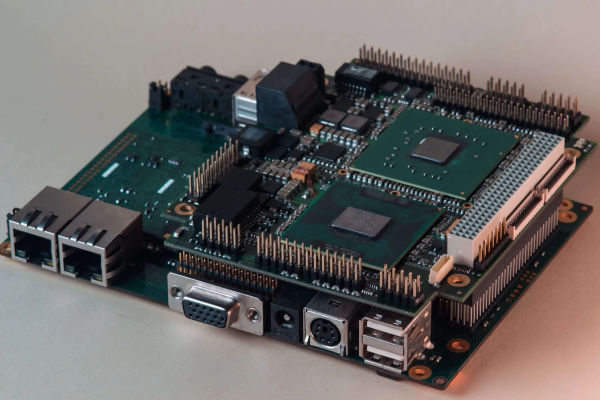
When people think of computers, they imagine laptops, servers, or smartphones. Yet the most influential computers in the modern world often have no screens, no keyboards, and no brand logos. These are embedded computers—silent decision-makers embedded inside machines, infrastructure, and systems that define how society moves, heals, manufactures, and communicates.
The embedded computer market is not about devices; it is about intelligence distribution—how computing power is strategically placed exactly where decisions must happen fastest.
Understanding Embedded Computers Beyond the Textbook Definition
An embedded computer is not simply a “small computer.” It is a purpose-built computing brain designed to perform a specific task with absolute reliability, often in harsh or constrained environments.
What differentiates embedded computers is not size alone, but intent:
- They are optimized for determinism rather than versatility
- They prioritize uptime over user experience
- They often outlive consumer electronics by a decade or more
This intent-driven design philosophy is what gives the embedded computer market its unique momentum.
The Market’s Real Growth Driver: Decision Latency
Most discussions focus on IoT or automation as growth drivers. However, the deeper force reshaping the embedded computer market is decision latency—the need to make decisions closer to where data is generated.
In modern systems:
- Sending data to the cloud introduces delay
- Delay introduces risk
- Risk introduces cost
Embedded computers eliminate this chain by processing data locally, enabling instant response. This makes them indispensable in sectors where milliseconds matter.
Architecture Evolution: From Control Units to Cognitive Nodes
Earlier embedded systems were simple controllers. Today’s embedded computers are evolving into cognitive nodes capable of learning, adapting, and coordinating.
From Fixed Logic to Adaptive Intelligence
Modern embedded computers now integrate:
- Multicore processors
- AI accelerators
- Edge analytics capabilities
This shift transforms them from rule-followers into context-aware decision engines, capable of understanding patterns rather than just executing instructions.
Industry Verticals Shaping Market Demand
Industrial Automation: Precision Without Pause
Factories increasingly rely on embedded computers to synchronize robotics, vision systems, and predictive maintenance tools. These computers act as digital foremen, ensuring machines communicate seamlessly without production interruptions.
Transportation and Mobility: Intelligence on the Move
From railway signaling to electric vehicles, embedded computers manage navigation, safety, energy optimization, and diagnostics—often under vibration, temperature extremes, and electromagnetic interference.
Healthcare Equipment: When Failure Is Not an Option
Embedded computers inside imaging systems, infusion pumps, and monitoring devices must operate with clinical-grade reliability, making this one of the most regulation-driven segments of the market.
Defense and Aerospace: Computing Under Extreme Conditions
In mission-critical environments, embedded computers must withstand radiation, shock, and long operational lifespans. This drives demand for ruggedized, long-support-cycle embedded platforms.
Hardware Trends Redefining Embedded Systems
Miniaturization Without Compromise
The market is moving toward smaller form factors without sacrificing performance, enabling embedded computers to fit into space-constrained environments such as wearables, drones, and compact medical devices.
Power Efficiency as a Design Philosophy
Energy efficiency is no longer an optimization—it is a requirement. Low-power architectures allow embedded computers to function autonomously for years in remote or inaccessible locations.
Software: The Market’s Silent Multiplier
While hardware captures attention, software ecosystems quietly determine market success. Real-time operating systems (RTOS), firmware security layers, and long-term software support have become decisive purchasing factors.
Vendors that provide stable software roadmaps gain trust—not just customers.
Security: From Afterthought to Market Gatekeeper
As embedded computers connect to networks, they inherit cybersecurity risks. A compromised embedded system can disrupt factories, grids, or healthcare services.
As a result, security is becoming:
- A core design principle
- A compliance requirement
- A competitive differentiator
The market increasingly rewards vendors who integrate security at the silicon and firmware levels.
Regional Market Dynamics: Strategy Over Scale
Unlike consumer electronics, the embedded computer market values regional expertise over mass volume. Local standards, environmental conditions, and regulatory frameworks shape product design and adoption patterns.
This results in a market where customization outperforms commoditization.
Challenges Limiting Market Acceleration
Long Product Lifecycles
Embedded computers must often be supported for 10–15 years, complicating upgrades and innovation cycles.
Talent Gap
Designing reliable embedded systems requires specialized expertise in hardware-software co-design—a skill set in limited supply.
Certification Complexity
Regulatory compliance slows time-to-market but remains unavoidable in critical applications.
Competitive Landscape
- Advantech
- Kontron
- Abaco Systems
- Curtiss-Wright Defense Solutions
- Congatec
- Digi International
- Eurotech
- Avalue Technology
- IEI Integration
- Radisys
- ADLINK Technology
- AAEON Technology
- Emerson Electric
- Beckhoff Automation
- Siemens AG
- Texas Instruments
- Microchip Technology
- NXP Semiconductors
- STMicroelectronics
- Renesas Electronics
The Future Outlook: Embedded Computers as Infrastructure
According to our Growth Market Report, The next phase of the embedded computer market is not about selling boards or modules—it is about embedding intelligence into infrastructure itself.
Roads, power grids, factories, and cities will increasingly rely on distributed embedded computers acting autonomously yet cooperatively.
In this future, embedded computers will not be components—they will be foundational layers of digital civilization.