

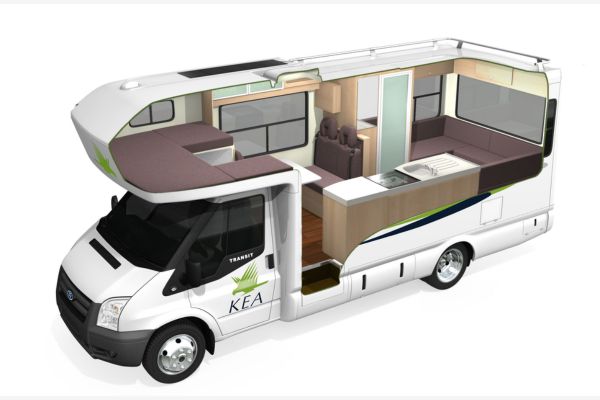
The global Recreational Vehicles (RV) Market is projected to grow from USD 61.22 billion in 2023 to USD 98.28 billion by 2032, registering a CAGR of 5.4% during the forecast period. Growth is being supported by rising consumer interest in road-based leisure travel, growing demand for customized RVs, and increasing innovation in electric and connected Recreational Vehicless.
Recreational Vehicless including motorhomes, camper vans, and towable travel trailers are increasingly being adopted as flexible travel and lifestyle platforms. Demand is being further reinforced by adventure tourism growth, rising campground infrastructure, and growing consumer preference for self-contained, experience-driven travel.
Quick Insights
- Market Size (2023): USD 61.22 Billion
- Forecast Size (2032): USD 98.28 Billion
- CAGR (2024–2032): 5.4%
- Dominant Vehicle Type: Motorhomes
- Leading Class Segment: Class B RVs
- Leading Region: North America
- Key Players: THOR Industries, Forest River, Winnebago Industries, Erwin Hymer Group
- Core Driver: Rising demand for customized RVs and outdoor travel
- Key Opportunity: Electrification and smart connected RV platforms
- Primary Challenge: Emission regulations and ownership costs
Revenue Breakdown & Market Segmentation
| Segment Category | Key Insights |
| Base Year | 2023 – USD 61.22 Billion |
| Forecast Year | 2032 – USD 98.28 Billion |
| CAGR | 5.4% |
| By Type | Towable RVs, Motorhomes |
| By Class | Class A, Class B, Class C |
| By Application | Domestic, Commercial |
| By Propulsion Trend | ICE, Hybrid, Electric (Emerging) |
| By Region | North America, Europe, Asia-Pacific, MEA, South America |
- Motorhomes hold the leading share due to increasing demand for premium mobile accommodation.
- Class B vehicles dominate due to maneuverability, fuel efficiency, and compact travel convenience.
What’s Driving Growth? What Trends Are Reshaping the Market?
Why is the Recreational Vehicles market moving beyond leisure into a broader mobility-lifestyle category?
- Adventure and outdoor tourism growth is increasing RV adoption globally.
- Customization demand is driving premiumization and new consumer segments.
- Electric RV innovation is opening a new growth frontier.
- Connected RV technologies including smart energy systems and digital controls are improving user experience.
- Rise of mobile living and remote work is expanding use cases beyond traditional vacation travel.
Regional & Segment Analysis
- North America leads the market, supported by strong camping culture, mature campground ecosystems, and large installed RV ownership.
- Europe remains a major market driven by caravan tourism and rental penetration.
- Asia-Pacific is projected to be the fastest-growing region, supported by rising disposable incomes and travel demand.
Segment Insights:
- Class B motorhomes continue leading the class segment.
- Domestic applications account for the majority of demand.
- Electric and hybrid RV platforms are emerging as a future growth opportunity.
Latest Industry Developments
- Winnebago Industries introduced the eRV2 all-electric prototype, signaling movement toward zero-emission RV platforms.
- THOR Industries unveiled an electric RV charging concept aimed at supporting electrified recreational travel.
- Kia announced plans for an India-inspired leisure vehicle platform with electrified powertrain options.
- OEMs are increasingly integrating smart power management, solar systems, and connected cabin technologies.
Challenges & Cost Pressures
- Fuel and ownership costs remain a barrier for broader adoption.
- Emission regulations could pressure traditional ICE-powered RV segments.
- High acquisition prices may limit first-time buyer conversion.
- Supply chain pressures continue to affect components, batteries, and lightweight materials.
Case Study: Electrification Reshaping Premium RV Design
The launch of the Winnebago eRV2 prototype demonstrated how electric drivetrains, energy management systems, and sustainable materials can redefine RV product development. The initiative highlighted growing industry interest in electrified recreational mobility as a scalable future growth segment.