
The global Track Inspection Vehicles Market is projected to grow from approximately USD 16.25 billion in 2024 to USD 29.85 billion by 2032, expanding at a CAGR of 7.1% during the forecast period. The growth is primarily driven by increasing investments in railway infrastructure, rising emphasis on rail safety, and the adoption of advanced inspection technologies such as ultrasonic testing, laser scanning, and AI-based monitoring systems.
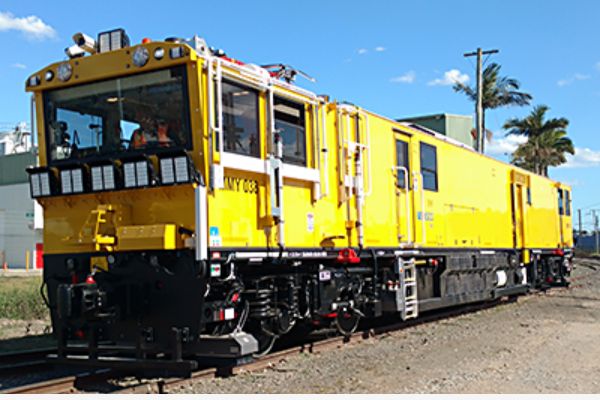
Track inspection vehicles play a critical role in ensuring railway safety and operational efficiency by continuously monitoring track geometry, rail integrity, and structural conditions. As global rail networks expand particularly in high-speed and urban transit systems the demand for automated and high-precision inspection solutions is accelerating.
Quick Insights
- Market Size (2024): USD 16.25 Billion
- Forecast Size (2032): USD 29.85 Billion
- CAGR (2025–2032): 7.1%
- Key Segments: Portable & Ordinary Track Inspection Vehicles
- Major Applications: High-Speed Rail, Urban Transport, Heavy Haul Railways
- Leading Region: Asia-Pacific
- Core Driver: Railway safety and infrastructure modernization
- Key Opportunity: Integration of AI, sensors, and predictive analytics
- Key Players: Amberg Technologies, ENSCO, Trimble Railway, Mermec, Harsco Rail, Nordco, Fugro
Revenue Breakdown & Market Segmentation
| Segment Category | Key Insights |
| Base Year | 2024 – USD 16.25 Billion |
| Forecast Year | 2032 – USD 29.85 Billion |
| CAGR | 7.1% |
| By Type | Portable Track Inspection Vehicles, Ordinary Track Inspection Vehicles |
| By Application | High-Speed Railway, Heavy Haul Railway, Conventional Railway, Urban Transport |
| By Technology | Ultrasonic Testing, Laser Scanning, Vision Systems, Electromagnetic Testing |
| By Region | North America, Europe, Asia-Pacific, MEA, South America |
The high-speed railway segment is expected to witness the fastest growth, driven by increasing investments in high-speed rail corridors globally.
What’s Driving Growth? What Trends Are Reshaping the Market?
Why is the track inspection vehicles market gaining strategic importance?
- Railway safety regulations: Governments are enforcing strict inspection standards to reduce derailments and accidents.
- High-speed rail expansion: Increasing deployment of high-speed networks requires precise and frequent inspection.
- Shift toward predictive maintenance: Adoption of AI and data analytics enables early fault detection and cost optimization.
- Automation & digitalization: Integration of sensors, IoT, and real-time monitoring systems enhances inspection efficiency.
- Urban transit growth: Expanding metro and light rail systems are driving demand for advanced inspection vehicles.
Regional & Segment Analysis
- Asia-Pacific dominates the market, driven by large-scale railway expansion projects in China and India and increasing investments in metro infrastructure.
- Europe is focused on upgrading aging rail infrastructure and adopting advanced inspection technologies.
- North America emphasizes maintenance and modernization of existing rail networks.
Segment Insights:
- Portable inspection vehicles offer flexibility for localized inspections.
- Ordinary inspection vehicles dominate in large-scale rail monitoring operations.
- Urban transport systems are emerging as a key growth segment due to rapid metro expansion.
Latest Industry Developments
- Amberg Technologies and Trimble Railway are advancing high-precision track geometry measurement systems.
- ENSCO is focusing on automated inspection solutions with AI-driven analytics.
- Companies are integrating laser scanning, ultrasonic sensors, and real-time data platforms to enhance inspection accuracy.
- Increasing adoption of autonomous inspection vehicles is shaping the next phase of innovation.
Challenges & Cost Pressures
- High capital investment: Advanced inspection vehicles require significant upfront costs.
- Technological complexity: Integration of multiple inspection systems increases operational complexity.
- Skilled workforce requirement: Operation and data interpretation require specialized expertise.
- Infrastructure variability: Differences in rail standards across regions create deployment challenges.
Case Study: AI-Driven Rail Inspection in High-Speed Networks
A high-speed rail operator implemented AI-enabled inspection vehicles equipped with laser scanning and ultrasonic sensors. The system enabled real-time defect detection, reducing maintenance downtime and improving operational safety. The initiative resulted in significant cost savings and enhanced track reliability, demonstrating the value of intelligent inspection systems.