
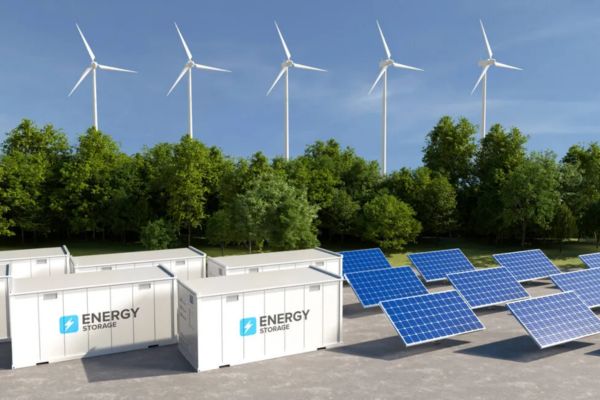
The transition towards clean energy is no longer about generating power from renewable resources, but more about how efficiently can that energy be stored and reused. As solar power and wind power have started producing more and more energy, the need for proper energy storage units arises.
In recent years, advancements in battery technologies, smart grid and decentralised storage systems have transformed the way energy is managed. Moving from storage at the level of the power grid to individual units of storage, the systems are able to regulate supply and demand, reduce energy waste, and ensure that there is energy even when renewable sources aren’t generating power.
With the world turning its back on fossil fuels and focusing on reducing carbon emissions, energy storage is becoming crucial for securing and stabilizing the energy sector.
Key Innovations in Energy Storage Techniques
There have been rapid developments in energy storage devices in the recent past owing to the rising need for effective energy storage systems.
- The newest invention to be discussed is lithium-ion batteries and lithium sulfur batteries that will feature high energy density, longer life span and lower cost, thus making them suitable for use in various fields, including electric vehicles and large-scale energy storage facilities.
- Solid-state batteries are currently very popular. They contain a solid component in place of the liquid electrolyte, that makes them more safe and secure.
- The development of thermal energy storage system is also an important discovery. The storage units have the capability of storing extra energy in the form of heat energy, which can be converted to electrical energy at a later time or used directly for heating purposes. These types of storage units are quite applicable in industrial power stations.
- The storage of mechanical energy is another type of energy that is under development. These systems store energy as air or water which provides long term durability.
Role in Renewable Energy Integration and Grid Stability
Energy storage plays a crucial role in managing renewable energy sources such as wind and air. These kinds of resources rely upon weather patterns and hence cannot provide consistent power output. Power storage enables the storage of surplus electricity generated at peak hours and using it when electricity generation becomes low.
Apart from storing the extra power supply, they also contribute towards stabilizing the power grid system. They enable stabilization of the grid by managing voltage and frequency through quick adjustments of supply and demand for electricity.
Furthermore, it enables creation of decentralized systems of power generation. Consumers can generate and store electricity on their own instead of relying upon centralized power plants.
Challenges and Limitations of Current Storage Systems
Even with considerable progress made in recent times, energy storage devices come with their own set of challenges that restrict their wide-scale use. The most important challenge associated with energy storage devices is the cost incurred in setting them up, particularly lithium-ion batteries.
The other notable challenge faced with regard to energy storage devices is the limited life of batteries. This means batteries degrade in performance after charging them for a number of times.
Environmental and resource issues related to energy storage are also worth mentioning. The raw materials use such as lithium, cobalt, and nickel should be extracted during the production process of batteries, which proves to be harmful both to the environment and people at large.
In addition, there are issues related to safety, such as overheating, fire hazards and malfunctioning of the entire system. This would cause increased expenses as well as stricter regulation due to the necessity of using monitoring systems.
Future Prospects of Energy Storage
The future for energy storage looks very bright, since there is constant innovation, which has resulted in making these systems more efficient, economical and sustainable. The most anticipated development would be the next level of batteries to come, including solid-state and sodium-ion batteries.
Such types of batteries are being developed with the purpose of creating better density, quicker charge, increased safety and lower use of costly elements, such as lithium and cobalt.
Another area of tremendous potential is energy storage due to its reduced cost. As technology advances and becomes more scalable, as well as increased global demand, it is estimated that there will be a significant reduction in energy storage costs in the coming years. This means that it will be within everyone’s reach including poorer and under developed nations.
Moreover, there will be increased attention towards more sustainable and eco-friendly ways of storing energy. There will be improvements in battery recycling processes, while new materials will be used that are more environmentally friendly. Finally, regulations will also be tighter in this regard.
Conclusion
The advancements in energy storage are revolutionizing the way the future of clean energy generation is evolving. With the increase in renewable energy production from sources such as solar and wind power, the requirement for energy storage is increasingly becoming critical.
Innovative energy storage techniques are improving not just energy efficiency but also the adaptability of the power generation system.
However, despite any possible problems that might occur like high costs, scarcity of resources and limitations on the use of technology, there have been significant advances within the industry because of innovations and researches conducted all the time.
Energy storage is very important in the process of conversion into renewable energy sources as it is an essential bridge between energy generation and consumption.