
The global Automotive Wiring Harness Market is projected to grow from USD 71.32 billion in 2023 to USD 128.64 billion by 2032, expanding at a CAGR of 6.9% during the forecast period. According to Introspective Market Research (IMR), this growth is fueled by the rapid electrification of vehicles, increasing integration of advanced electronics, and the rising demand for connected and autonomous driving technologies.
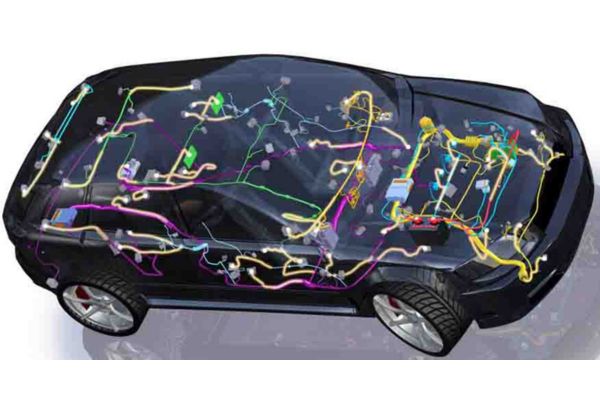
Automotive wiring harnesses serve as the backbone of a vehicle’s electrical architecture, enabling seamless transmission of power and data across systems such as infotainment, ADAS, lighting, and powertrain. As vehicles evolve into software-defined, electronics-rich platforms, the complexity and importance of wiring harness systems continue to grow significantly.
Quick Insights
- Market Size (2023): USD 71.32 Billion
- Forecast Size (2032): USD 128.64 Billion
- CAGR (2024–2032): 6.9%
- Leading Segment: Passenger vehicles
- Fastest-Growing Segment: Electric vehicles (EVs)
- Key Players: Yazaki Corporation, Sumitomo Electric Industries, Aptiv PLC, Leoni AG, Furukawa Electric
- Core Driver: Growth in vehicle electrification and electronic content
- Key Opportunity: High-voltage wiring harness for EV platforms
- Primary Challenge: Weight, complexity, and raw material costs
Revenue Breakdown & Market Segmentation
| Segment Category | Key Insights |
| Base Year | 2023 – USD 71.32 Billion |
| Forecast Year | 2032 – USD 128.64 Billion |
| CAGR | 6.9% |
| By Component | Electric Wires, Connectors, Terminals |
| By Application | Body Wiring, Engine Wiring, Chassis Wiring, HVAC, Sensors |
| By Vehicle Type | Passenger Cars, Commercial Vehicles |
| By Material | Copper, Aluminum |
| By Voltage | Low Voltage, High Voltage |
| By Region | North America, Europe, Asia-Pacific, MEA, South America |
Copper-based wiring harnesses dominate due to superior conductivity, while aluminum harnesses are gaining traction as a lightweight alternative in EV applications.
What’s Driving Growth? What Trends Are Reshaping the Market?
Why is the automotive wiring harness market becoming increasingly critical?
- Vehicle electrification: EVs require more complex and high-voltage wiring systems.
- Rising electronic content: Increasing number of sensors, ECUs, and infotainment systems boost wiring demand.
- ADAS and autonomous driving: Advanced safety systems rely heavily on high-speed data transmission networks.
- Lightweighting trend: Automakers are adopting aluminum and optimized harness designs to reduce vehicle weight.
- Zonal architecture shift: Transition from traditional wiring to zonal electrical architectures reduces complexity and improves efficiency.
Regional & Segment Analysis
- Asia-Pacific dominates the market due to large-scale automotive production in China, Japan, and India.
- Europe is driven by strong EV adoption and stringent emission regulations.
- North America is witnessing growth due to increasing demand for connected and electric vehicles.
Segment Insights:
- Passenger vehicles account for the largest share due to high production volumes.
- High-voltage wiring harnesses are the fastest-growing segment, driven by EV expansion.
- OEM segment dominates, with growing aftermarket demand for replacement and upgrades.
Latest Industry Developments
- Yazaki Corporation is focusing on lightweight wiring solutions for EV platforms.
- Aptiv PLC is advancing zonal architecture systems to reduce wiring complexity and improve efficiency.
- Sumitomo Electric Industries is investing in high-voltage harness technologies for next-generation electric vehicles.
- Companies are increasingly integrating fiber optics and high-speed data cables to support connected vehicle ecosystems.
Challenges & Cost Pressures
- Complexity in design: Increasing number of electronic components leads to intricate wiring systems.
- Weight issues: Traditional copper harnesses add significant weight to vehicles.
- Raw material volatility: Fluctuations in copper and aluminum prices impact costs.
- Manufacturing challenges: Customization for different vehicle models increases production complexity.
Case Study: Zonal Architecture in Electric Vehicles
A leading EV manufacturer adopted a zonal electrical architecture, reducing wiring harness length by over 30%. This resulted in lower vehicle weight, improved energy efficiency, and reduced manufacturing complexity, demonstrating how next-generation wiring solutions are transforming vehicle design.