
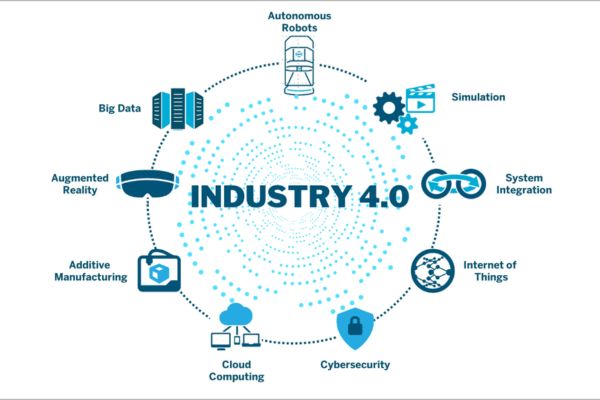
Manufacturing industries across the world are going through a major transformation driven by digital technologies. Factories are becoming smarter, more connected, and highly automated. This new phase of industrial development is commonly known as Industry 4.0.
Industry 4.0 combines technologies such as artificial intelligence, the Internet of Things, robotics, cloud computing, and real time data analytics to improve manufacturing operations. In 2026, these technologies are helping businesses increase productivity, reduce costs, improve quality, and achieve greater operational efficiency.
At the same time, companies are also focusing on Sustainable Manufacturing practices to reduce environmental impact while maintaining strong production performance.
Understanding Industry 4.0
Industry 4.0 refers to the integration of digital technologies into manufacturing and industrial processes. Unlike traditional factories that rely heavily on manual operations, smart manufacturing environments use connected systems and automated machines to make production more intelligent and efficient.
Machines, sensors, and software platforms continuously communicate with each other to monitor operations, collect data, and optimize performance. This allows manufacturers to respond quickly to production challenges and market demands.
Industry 4.0 is not only changing how products are made but also transforming the entire manufacturing ecosystem.
Role of the Internet of Things in Manufacturing
The Internet of Things, commonly known as IoT, plays a central role in smart manufacturing. IoT devices and sensors are installed on machines, equipment, and production lines to gather real time data.
This data helps manufacturers track machine performance, monitor production conditions, and identify potential issues before they become major problems. For example, sensors can detect unusual temperature changes or equipment vibrations that may indicate maintenance needs.
By using connected systems, factories can improve efficiency, reduce downtime, and make better operational decisions.
Artificial Intelligence and Automation
Artificial intelligence is helping manufacturers automate complex processes and improve decision making. AI systems can analyze large volumes of production data to identify patterns, optimize workflows, and predict equipment failures.
Automation powered by AI is reducing the need for repetitive manual tasks. Robots and automated machines can perform assembly, packaging, inspection, and material handling with high accuracy and consistency.
These technologies improve production speed while maintaining quality standards. AI driven automation also allows workers to focus on higher value activities such as planning, innovation, and quality control.
Predictive Maintenance and Reduced Downtime
One of the most valuable benefits of Industry 4.0 is predictive maintenance. Traditional maintenance methods often rely on fixed schedules or reactive repairs after equipment failure occurs.
Predictive maintenance uses real time data and AI analytics to monitor machine conditions continuously. Manufacturers can identify warning signs early and perform maintenance before breakdowns happen.
This approach reduces unexpected downtime, lowers repair costs, and extends equipment lifespan. As a result, production becomes more reliable and efficient.
Digital Twins and Real Time Simulation
Digital twin technology is another important advancement in smart manufacturing. A digital twin is a virtual representation of a physical machine, process, or factory system.
Manufacturers use digital twins to simulate operations, test improvements, and analyze performance without disrupting actual production. Real time data from physical equipment is connected to the digital model, allowing accurate monitoring and forecasting.
This technology helps businesses improve planning, optimize workflows, and reduce operational risks.
Smart Robotics in Modern Production
Robotics technology has become more advanced and intelligent in Industry 4.0 environments. Modern robots can work alongside human workers safely and efficiently.
Collaborative robots, often called cobots, assist employees with tasks that require precision, lifting, or repetitive motion. These robots improve productivity while reducing physical strain on workers.
Smart robotics also supports flexible manufacturing. Production lines can adapt quickly to changing product designs or market requirements, helping companies respond faster to customer demand.
Cloud Computing and Data Integration
Cloud computing allows manufacturers to store, manage, and analyze production data more efficiently. Instead of relying only on local systems, factories can access centralized platforms that connect multiple facilities and departments.
Cloud based systems improve collaboration and visibility across the supply chain. Managers can monitor operations remotely and access real time information from different locations.
This integration helps organizations make faster decisions and improve overall production coordination.
Sustainable Manufacturing and Energy Efficiency
As industries adopt advanced technologies, Sustainable Manufacturing has become an important priority. Manufacturers are focusing on reducing waste, lowering energy consumption, and minimizing environmental impact.
Industry 4.0 technologies help achieve these goals through better resource management and process optimization. Smart sensors and AI systems can monitor energy usage and identify areas where efficiency can be improved.
Automation also reduces material waste by improving production accuracy. In addition, predictive maintenance prevents unnecessary equipment failures that can lead to resource loss.
By combining digital innovation with Sustainable Manufacturing practices, companies can improve both profitability and environmental responsibility.
Workforce Transformation and Skills Development
The rise of smart manufacturing is changing workforce requirements. Employees now need digital skills to manage automated systems, analyze data, and work with advanced technologies.
Manufacturers are investing in employee training programs to prepare workers for modern industrial environments. Human expertise remains essential for problem solving, system management, and innovation.
Industry 4.0 is not replacing the workforce completely. Instead, it is creating opportunities for workers to take on more technical and strategic roles.
Challenges in Industry 4.0 Adoption
Despite its benefits, implementing Industry 4.0 technologies can be challenging. High investment costs, cybersecurity concerns, and system integration issues are common obstacles.
Some companies may struggle with upgrading older equipment or training employees to use advanced systems. Data security is also important because connected factories rely heavily on digital communication.
However, as technology becomes more accessible and affordable, adoption is expected to increase across industries.
Conclusion
Industry 4.0 technologies are transforming manufacturing by making production smarter, faster, and more efficient. IoT, artificial intelligence, robotics, cloud computing, and predictive analytics are helping companies improve productivity and reduce operational costs.
At the same time, Sustainable Manufacturing practices are ensuring that industrial growth aligns with environmental responsibility. Businesses that adopt smart manufacturing technologies will be better prepared to compete in the evolving global market.
As Industry 4.0 continues to advance, it will shape the future of manufacturing and redefine how products are designed, produced, and delivered worldwide.