
After introducing the new Intel Core processors (Series 3), previously known as Wildcat Lake, in April, AAEON’s UP brand announced plans to launch four new platforms built around the processor family. The lineup will include both developer boards and edge computing systems.
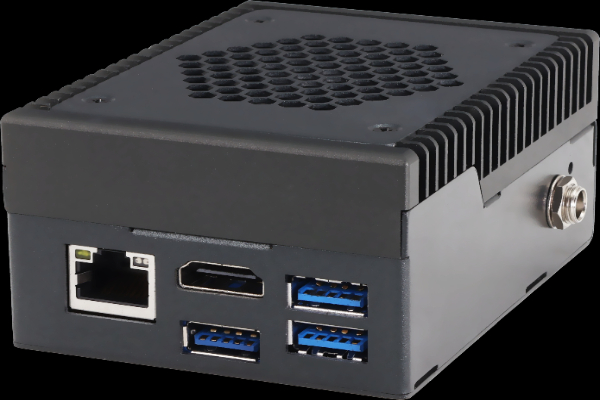
Scheduled for mass production in late Q3 2026, the roadmap features the UP WCL and UP Nexus WCL developer boards. The UP WCL retains the compact, credit card-sized design of the original UP board, while the UP Nexus WCL adopts the former UP Squared Pro form factor, measuring 101.6mm × 101.6mm. In addition, both boards will be available as fully integrated edge systems—the UP WCL Edge and UP Nexus WCL Edge—offering ready-to-deploy solutions for customers seeking plug-and-play functionality.
All four platforms will be available with the option of Intel Core 7 processor 350 and Intel Core 5 processor 320 CPUs from the Wildcat Lake family, while the UP WCL will also provide SKUs with the Intel Core 3 processor 304. Delivering up to 40 TOPS of AI performance via integrated GPU and NPU but with a CPU prioritizing low power E-cores, the Intel Core series’ first integrated heterogeneous compute architecture sees AAEON position its upcoming products as suitable for building advanced applications across market segments, but with the benefit of a lower power footprint than platforms tailored to high-performance computing needs.
Both the UP WCL and UP Nexus WCL present a number of notable improvements on previous generations. For the UP WCL, a substantial boost in available system memory from the previously capped 8GB can be found, with standard UP WCL SKUs equipped with 24GB of onboard LPDDR5. Meanwhile, the UP Nexus WCL, which had previously only seen a maximum of 16GB of LPDDR5 for its UP Squared Pro line offers up to 48GB. The standard 64GB of eMMC storage typically found listed among UP product specification sheets has also seen an upgrade, with both the UP WCL and UP Nexus WCL both coming with 256GB of UFS3.1.
Standing out among the preliminary specifications for the UP WCL are a 10-pin wafer for I2C, PWM, and SPI, GPIO 8-bit, 2.5GbE LAN, and three USB 3.2 Gen 2 ports. Meanwhile, the UP Nexus WCL retains the conventional 40-pin GPIO offered by traditional UP boards, while adding two 10-pin headers for RS-232/422/485, two 2.5GbE LAN ports, and both dual USB Type-A (USB 3.2 Gen 2) and dual USB Type-C (USB 3.2 Gen 2×2) ports.
With respect to OS compatibility, all four offerings list support both Windows 11 LTSC and Linux Ubuntu 24.04 LTS.
The UP WCL, UP Nexus WCL, and their corresponding edge systems are expected to enter mass production in late Q3, 2026. However, preliminary specifications are already available on the product pages located on the UP product series section of the AAEON website.