

Healthcare has traditionally relied on snapshots, a clinic visit, a diagnostic scan, or a periodic laboratory test to understand a patient’s health. While valuable, these moments often fail to capture the bigger picture: what happens between medical encounters.
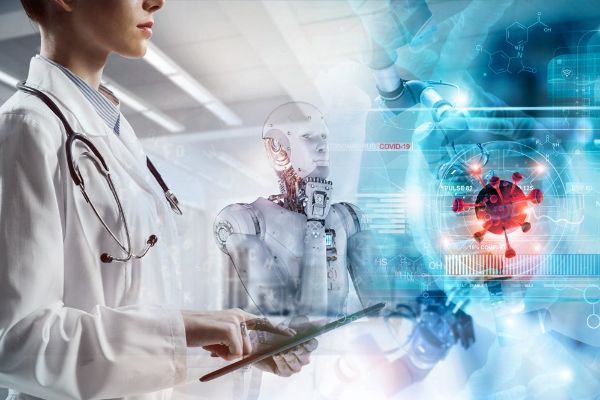
The convergence of Artificial Intelligence (AI) and the Internet of Things (IoT), collectively known as AIoT, is changing that reality. By combining real-time data collection with advanced analytics, AIoT is transforming healthcare from a system built around episodic care into one driven by continuous insight. The result is smarter diagnostics, proactive monitoring, preventive intervention, and increasingly personalized care.
As a cornerstone of Healthcare 5.0, AIoT is helping create a healthcare ecosystem that is more connected, intelligent, and patient-centric than ever before.
From Detection to Prediction
One of AIoT’s most significant contributions is in diagnostics. Instead of relying solely on isolated tests, healthcare providers can integrate data from multiple sources to generate faster and more informed clinical insights.
AI-powered imaging tools are helping clinicians detect diabetic retinopathy, lung abnormalities, and cardiovascular disorders at earlier, more treatable stages. AI-enabled ECG interpretation is also supporting frontline healthcare workers in identifying potential cardiac abnormalities, particularly in settings where specialist access is limited.
Across India, portable AI-enabled ECG devices are supporting cardiovascular screening in rural and semi-urban communities, helping connect high-risk patients with specialist care closer to home. By improving diagnostic accuracy and enabling earlier intervention, AIoT is helping make quality healthcare more accessible.
Healthcare Without Boundaries
Many health conditions evolve continuously between clinical visits. AIoT bridges this gap through real-time monitoring enabled by wearables, connected glucose monitors, smart blood pressure devices, and remote cardiac sensors.
Continuous glucose monitoring has transformed diabetes management by providing real-time visibility into blood sugar fluctuations, enabling more informed treatment decisions. Similarly, wearable cardiac devices can detect irregular heart rhythms and alert healthcare providers before symptoms become severe.
Remote monitoring programmes are extending care beyond hospital walls. By continuously tracking patient health and flagging deterioration early, these systems support timely intervention, improve patient safety, and reduce avoidable hospitalizations. For countries facing a growing burden of chronic disease, their impact could be transformative.
The Shift from Sick Care to Health Care
Beyond diagnosis and monitoring, AIoT is enabling a shift from reactive treatment to proactive health management. By continuously analysing physiological trends and behavioural patterns, connected systems can identify emerging risks before they develop into serious medical conditions.
The preventive potential of AIoT is already becoming evident in India. AI-powered retinal screening solutions are helping detect early signs of diabetic retinopathy, a leading cause of vision loss among people with diabetes within seconds of analysing retinal images. Designed for use at primary and district-level health centres, these tools can help identify at-risk individuals earlier and facilitate timely referral, reducing the risk of preventable blindness.
As healthcare systems increasingly focus on outcomes rather than interventions, prevention is becoming as important as treatment—and AIoT is helping make that transition possible.
The End of One-Size-Fits-All Medicine
No two patients are alike. Even individuals with the same diagnosis can differ significantly in their genetics, lifestyle, and response to treatment.
AIoT enables healthcare providers to move beyond generalized protocols by creating a more comprehensive understanding of each patient. By combining data from electronic health records, wearable devices, laboratory reports, medication histories, and behavioural patterns, AI systems can help clinicians develop individualized care plans and anticipate risks before they escalate.
A patient managing multiple chronic conditions, for example, can receive recommendations tailored to their unique health profile rather than based solely on population averages. This level of personalization improves outcomes, strengthens patient engagement, and supports long-term adherence to treatment.
The Road Ahead
AIoT is already reshaping care across hospitals, clinics, and communities by enabling healthcare providers to diagnose earlier, monitor continuously, and intervene before conditions worsen. As adoption accelerates, organizations that successfully integrate these capabilities into everyday clinical practice will help set new standards for healthcare delivery.
The true promise of AIoT lies not in the technology itself, but in what it enables: earlier diagnosis, continuous care, preventive intervention, and personalized treatment. By harnessing these capabilities responsibly and ensuring innovation is supported by strong governance, security, and clinical oversight healthcare leaders can help build a future where high-quality, patient-centric care is accessible to everyone, regardless of geography or circumstance.
With AIoT at its core, Healthcare 5.0 is rapidly emerging as the blueprint for a healthcare ecosystem that is smarter, more connected, and truly centred on the patient.