
The global Automotive Parts & Components Market continues to expand as automotive manufacturers adopt advanced technologies, electrified powertrains, and intelligent vehicle systems. According to the latest study by Introspective Market Research, the market was valued at USD 2,066.3 Billion in 2023 and is projected to reach USD 2,844.52 Billion by 2032, growing at a CAGR of 3.9% from 2024 to 2032.
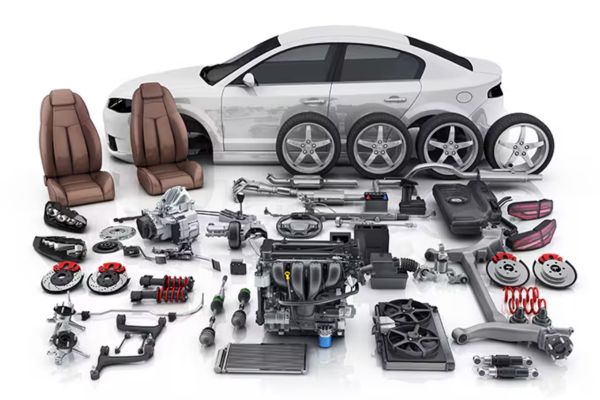
Automotive Parts & Componentss include a wide range of systems essential for vehicle functionality, such as engine components, transmission systems, braking systems, suspension systems, electrical modules, and steering mechanisms. As the automotive industry undergoes a transition toward electric vehicles, connected mobility, and advanced driver-assistance systems, the demand for technologically advanced components continues to rise.
Quick Insights: Automotive Parts & Components Market
- Market Size (2023): USD 2,066.3 Billion
- Projected Market Size (2032): USD 2,844.52 Billion
- Forecast CAGR (2024–2032): 3.9%
- Key Market Driver: Rising global vehicle production and electrification
- Dominant Region: Asia-Pacific
- Major Segments: Engine Parts, Transmission, Steering, Suspension, Brake Parts, Electrical Components
- Leading Companies: Bosch, Magna International, Denso Corporation, Continental AG, Valeo, Lear Corporation, Schaeffler AG, Tenneco, Gestamp, Panasonic Holdings
Market Revenue Outlook
| Year | Market Value |
| 2023 | USD 2,066.3 Billion |
| 2024 | USD 2,147+ Billion (Estimated) |
| 2032 | USD 2,844.52 Billion |
The increasing production of passenger and commercial vehicles, combined with expanding automotive aftermarket demand, is expected to drive steady growth across the automotive parts ecosystem over the coming decade.
What Opportunities Are Emerging in the Automotive Parts & Components Market?
As the global automotive sector undergoes a major transformation toward electrification and digitalization, component manufacturers are adapting their product portfolios to support next-generation vehicle architectures.
Key opportunity areas include:
- Electric powertrain components and battery systems
- Advanced driver-assistance system (ADAS) sensors
- Lightweight materials and advanced composites
- Connected vehicle electronics and smart control modules
- High-efficiency braking and suspension technologies
The increasing adoption of electric vehicles is creating new demand for power electronics, electric motors, battery management systems, and charging components, expanding the scope of the automotive component industry beyond traditional mechanical parts.
Regional Analysis
Asia-Pacific
Asia-Pacific dominates the global automotive components market due to the large-scale vehicle manufacturing base in China, Japan, South Korea, and India. The region benefits from strong supply chains, high production volumes, and increasing EV manufacturing investments.
North America
North America continues to witness strong demand for automotive components driven by advanced automotive technologies, high vehicle ownership rates, and the expansion of electric vehicle manufacturing facilities.
Europe
Europe is a key innovation hub for automotive component technologies, particularly in electric powertrain systems, safety technologies, and emissions-reduction components.
Segmentation Analysis
By Type
- Engine Parts
- Drive Transmission
- Steering Parts
- Suspension Systems
- Brake Parts
- Electrical Components
Electrical and electronic components are emerging as one of the fastest-growing segments due to the integration of vehicle connectivity, electrified powertrains, and autonomous driving technologies.
By Application
- Original Equipment Manufacturers (OEMs)
- Aftermarket Parts
OEM demand accounts for the largest share due to direct supply relationships with vehicle manufacturers, while the automotive aftermarket segment continues to grow due to aging vehicle fleets and increased vehicle ownership worldwide.
By Distribution Channel
- Retailers
- Wholesalers
- Distributors
Industry Developments and Strategic Moves
The automotive components industry continues to witness strategic partnerships, mergers, and acquisitions as companies expand their technological capabilities.
Recent developments include:
- ASK Automotive forming a joint venture with AISIN Group to expand passenger vehicle component distribution in independent aftermarkets.
- Lumax Auto Technologies acquiring a majority stake in IAC International Automotive India to strengthen its automotive interior component portfolio.
These collaborations reflect the industry’s ongoing consolidation and technological integration.
Challenges and Cost Pressures
Despite positive growth prospects, the automotive parts market faces several challenges:
- Volatility in raw material prices
- Supply chain disruptions
- Semiconductor shortages
- Increasing production complexity due to electrification
- Stringent emission and safety regulations
Manufacturers must continuously optimize production processes and invest in innovative materials and technologies to remain competitive.
Case Study: Component Innovation in Electric Vehicles
A global automotive supplier recently developed high-efficiency electric powertrain modules designed specifically for battery-electric vehicles. By integrating motor control electronics, cooling systems, and power electronics into a single compact unit, the company significantly improved energy efficiency and reduced vehicle weight.
Such innovations demonstrate how component manufacturers are playing a critical role in shaping the next generation of electric vehicles.