
The global automotive power inductor market is projected to grow from USD 1.48 billion in 2025 to USD 3.81 billion by 2035, registering a CAGR of 9.9% from 2026 to 2035, according to Cervicorn Consulting. Increasing electric vehicle (EV) adoption, rising electronic content in vehicles, and the growing demand for efficient power management systems are creating new opportunities for automotive component manufacturers.
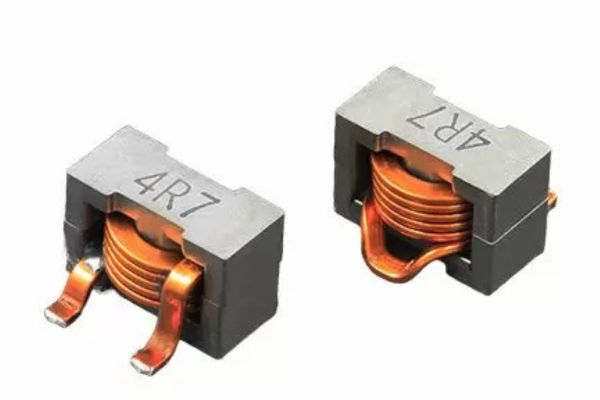
Power inductors are essential passive electronic components that store energy in magnetic fields and help regulate current in vehicle electrical systems. They support several critical applications, including DC-DC converters, onboard chargers, battery management systems, powertrain control units, advanced driver-assistance systems (ADAS), and infotainment electronics.
As automakers transition toward electrified powertrains and software-defined vehicle architectures, the demand for compact, reliable, and thermally efficient power inductors is expected to increase.
EV Electrification Strengthens Demand for Automotive Power Inductors
The expansion of electric and hybrid vehicles is emerging as a major growth driver for automotive power inductors. Modern EVs rely on sophisticated power conversion systems to manage energy between batteries, electric motors, onboard chargers, and auxiliary electrical components.
Higher-voltage vehicle architectures, including 400V and 800V systems, are increasing the need for components capable of handling demanding electrical and thermal conditions. Power inductors must maintain stable performance under high currents, temperature fluctuations, vibration, and electromagnetic interference.
Beyond electric powertrains, the growing integration of ADAS, connected-car technologies, digital cockpits, and electronic control units is expanding the range of applications for automotive-grade inductors.
According to the International Energy Agency, global electric car sales exceeded 17 million units in 2024, accounting for more than 20% of worldwide car sales. This expansion provides an important demand backdrop for automotive power electronics and related components.
Market Highlights: Shielded Inductors and Ferrite Cores Lead
Cervicorn Consulting’s market assessment identifies several leading segments in the automotive power inductor industry in 2025.
- Market size: USD 1.48 billion in 2025.
- Projected market size: USD 3.81 billion by 2035.
- Forecast CAGR: 9.9% from 2026 to 2035.
- Leading region: Asia-Pacific, with approximately 44% of market revenue.
- Leading inductor type: Shielded power inductors, with a 34% share.
- Leading core material: Ferrite cores, with a 48% share.
- Leading vehicle category: Passenger vehicles, accounting for 62% of revenue.
- Leading application: Powertrain and engine control, representing 28% of revenue.
These figures highlight the importance of reliable power management components across conventional vehicles, hybrids, and electric vehicles.
Technology Trends: Miniaturization, Thermal Performance and High-Frequency Operation
Automotive electronics manufacturers are developing power inductors that combine compact dimensions with high-current handling, low power losses, and improved thermal stability.
- Shielded power inductors: Shielded designs help control electromagnetic interference and support reliable operation in densely integrated electronic circuits. Their characteristics make them suitable for automotive power supplies, control modules, and other applications where electrical noise must be managed.
- Wire-wound power inductors: These components are gaining importance in applications requiring high-current capability, low resistance, and efficient energy conversion. Continued design improvements are expected to support their use in powertrain electronics, voltage regulators, and DC-DC converters.
- Multilayer power inductors: Compact multilayer designs are suitable for space-constrained automotive electronics, including communication systems, infotainment units, and electronic control modules.
- Advanced magnetic materials: Ferrite, metal-composite, and powdered-iron cores offer different combinations of magnetic performance, thermal characteristics, saturation behavior, and cost. Material selection will remain important as manufacturers balance efficiency, reliability, and component size.
- Automotive qualification and reliability: Automotive applications require components designed to withstand demanding environmental and mechanical conditions. AEC-Q200 provides stress-test qualification requirements for passive electronic components, with applicable tests depending on the component and specification.
These developments are encouraging manufacturers to invest in improved magnetic materials, advanced packaging, and designs that support higher power density without compromising reliability.
Battery Management Systems and EV Charging Create New Opportunities
The increasing complexity of vehicle power architectures is creating opportunities across multiple application segments.
- Battery management systems: Battery management systems monitor battery conditions and support functions such as cell balancing, protection, and energy optimization. Power inductors are used in associated power conversion and regulation circuits. Growing EV deployment is expected to increase demand for efficient, reliable components in these systems.
- DC-DC converters and onboard chargers: DC-DC converters regulate voltage between different electrical subsystems, while onboard chargers manage the conversion of charging power for vehicle batteries. These applications require components that can operate efficiently under demanding current and thermal conditions.
- Advanced driver-assistance systems: ADAS technologies rely on cameras, radar, sensors, processors, and electronic control units. As these systems become more sophisticated, the need for stable power delivery and effective noise management is increasing.
- Powertrain and engine control: Powertrain electronics remain an important application for automotive power inductors across internal combustion engine vehicles, hybrids, and electric vehicles. Electrification is also changing the performance requirements of components used in motor control and power conversion.
Asia-Pacific Leads the Market, While North America Offers Growth Potential
Asia-Pacific accounted for approximately 44% of the global automotive power inductor market in 2025, supported by its extensive automotive manufacturing base, growing EV production, and established electronics supply chains.
The region benefits from major automotive and electronic component manufacturing ecosystems in China, Japan, South Korea, and other Asian economies. Increasing demand for electric two-wheelers, passenger EVs, and advanced automotive electronics is creating opportunities for component suppliers.
Cervicorn Consulting estimates that the Asia-Pacific automotive power inductor market was valued at USD 0.65 billion in 2025 and could exceed USD 1.68 billion by 2035.
North America is another important market, supported by investments in EV manufacturing, battery production, vehicle electronics, and power semiconductor technologies. The region’s automotive industry is also transitioning toward more integrated electrical and electronic architectures, creating opportunities for specialized components.
Europe remains relevant because of its automotive engineering capabilities, electrification initiatives, and demand for high-reliability electronic systems. Across regions, the pace of EV adoption, local manufacturing investment, and automotive supply-chain development will influence future demand.
Competitive Landscape: Component Manufacturers Focus on Innovation
Competition in the automotive power inductor market is shaped by product reliability, magnetic performance, thermal management, miniaturization, manufacturing capabilities, and compliance with automotive requirements.
Key companies identified by Cervicorn Consulting include:
- TDK Corporation
- Murata Manufacturing Co., Ltd.
- Vishay Intertechnology, Inc.
- Coilcraft, Inc.
- Bourns, Inc.
- Taiyo Yuden Co., Ltd.
- Panasonic Corporation
- Würth Elektronik
- Sumida Corporation
Manufacturers are competing to develop components that deliver higher efficiency, support compact electronic designs, and meet the requirements of increasingly demanding vehicle applications. Collaboration with automotive OEMs, Tier 1 suppliers, and power electronics developers will remain important for product qualification and adoption.
Challenges Facing the Automotive Power Inductor Industry
Despite the positive outlook, manufacturers face several technical and commercial challenges.
- Thermal management: High-current operation and densely integrated electronic assemblies can create localized heat, affecting component performance and long-term reliability.
- Space constraints: Compact electronic control units and increasingly integrated vehicle architectures leave less room for conventional components and cooling solutions.
- High-voltage requirements: The transition toward higher-voltage EV platforms increases the importance of insulation, electrical robustness, thermal performance, and appropriate component ratings.
- Cost and qualification pressures: Automotive suppliers must balance component pricing with demanding reliability requirements, qualification processes, and long product-development cycles.
- Supply-chain resilience: Access to suitable magnetic materials, manufacturing capacity, and consistent component quality will remain important as automotive electronics production expands.
Addressing these challenges will require continued investment in material science, component engineering, manufacturing processes, and close cooperation across the automotive supply chain.
Outlook to 2035: Efficiency and Reliability Will Define Market Opportunities
The automotive power inductor market is positioned for sustained growth as vehicle manufacturers increase their reliance on electrification, power electronics, connectivity, and advanced driver-assistance technologies.
With the market projected to reach USD 3.81 billion by 2035, component suppliers have opportunities to strengthen their portfolios across shielded and wire-wound inductors, advanced magnetic materials, battery management systems, and high-efficiency power conversion applications.
Future market development will depend on EV production trends, vehicle electronics integration, advances in magnetic materials, qualification requirements, and the ability of suppliers to deliver compact components with reliable thermal and electrical performance.
For automotive OEMs, Tier 1 suppliers, component manufacturers, and investors, understanding these technology and regional shifts will be important for identifying emerging opportunities and strengthening competitive positioning.