
The global Electric-Driven Fixed Wing Unmanned Aerial Vehicles (UAV) Market is experiencing strong growth as industries increasingly adopt long-endurance drones for surveillance, mapping, and defense applications. According to the latest research from Introspective Market Research, the market was valued at USD 4.86 Billion in 2024 and is projected to reach USD 14.45 Billion by 2032, expanding at a CAGR of 14.59% during 2025–2032.
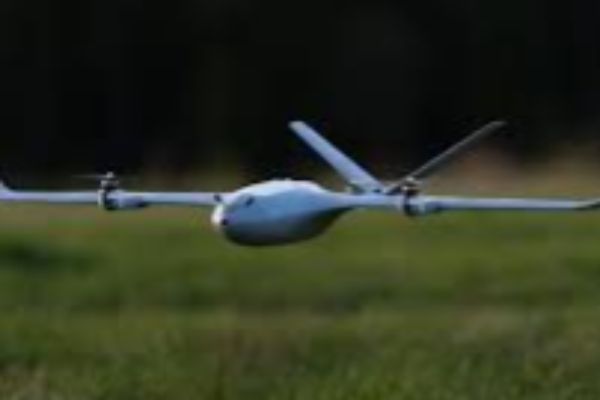
Electric-driven fixed-wing UAVs are aircraft that generate lift through wings rather than rotor propulsion, enabling longer flight endurance, improved efficiency, and lower energy consumption compared to multi-rotor drones. These systems are widely used for military reconnaissance, environmental monitoring, agriculture mapping, and infrastructure inspection due to their ability to cover large geographic areas efficiently.
Quick Insights: Electric-Driven Fixed Wing UAV Market
- Market Size (2024): USD 4.86 Billion
- Projected Market Size (2032): USD 14.45 Billion
- Forecast CAGR (2025-2032): 14.59%
- Leading Application: Military & Defense
- Fastest-Growing Use Case: Commercial surveying and environmental monitoring
- Dominant Region: Asia-Pacific
- Key Companies: AeroVironment, Boeing, DJI Innovations, IdeaForge, Northrop Grumman, Lockheed Martin, AgEagle Aerial Systems, Textron, Saab Group
Market Revenue Outlook
| Year | Market Value |
| 2024 | USD 4.86 Billion |
| 2025 | USD 5.6+ Billion (Estimated) |
| 2032 | USD 14.45 Billion |
Strong adoption across defense, agriculture, environmental monitoring, and logistics is expected to drive market expansion throughout the forecast period.
What Opportunities Are Emerging in the Electric Fixed-Wing UAV Market?
Can electric propulsion and autonomous navigation redefine aerial surveillance and mapping?
Several technological and industry trends are shaping the next generation of fixed-wing UAV systems:
- Advancements in battery technology enabling longer flight durations
- AI-driven autonomous navigation systems improving mission efficiency
- Growing use of UAVs in precision agriculture and environmental monitoring
- Drone-as-a-Service (DaaS) models enabling businesses to outsource aerial operations
These innovations are transforming UAVs from simple surveillance tools into high-precision aerial data platforms capable of delivering real-time insights for industries ranging from energy infrastructure to disaster response.
Regional Market Insights
Asia-Pacific
Asia-Pacific is expected to dominate the market due to rising defense investments, rapid drone technology development, and strong demand for UAV-based surveillance and monitoring systems. Countries such as China, India, and Japan are significantly expanding their UAV capabilities.
North America
North America remains a major innovation hub with strong participation from aerospace manufacturers and defense contractors. The region also benefits from early adoption of UAV technologies for commercial inspections, agriculture, and infrastructure monitoring.
Europe
European nations are investing heavily in UAV research programs and integrating drones into security, environmental monitoring, and disaster management operations.
Segmentation Analysis
By Application
- Military
- Government
- Commercial
The military segment is expected to dominate the market due to increasing use of UAVs for reconnaissance, intelligence gathering, surveillance, and target identification.
By Maximum Takeoff Weight
- < 25 Kilograms
- 25–170 Kilograms
- 170 Kilograms
Lightweight UAVs (<25 kg) are gaining popularity because they offer greater maneuverability and operational flexibility for surveillance and mapping tasks.
By Range
- Visual Line of Sight (VLOS)
- Extended Visual Line of Sight (EVLOS)
- Beyond Line of Sight (BLOS)
Beyond Line-of-Sight (BLOS) systems are becoming increasingly important as they allow UAVs to operate in remote regions with satellite communication links for real-time data transmission.
Industry Innovations and Strategic Developments
The UAV industry continues to experience rapid innovation as aerospace companies develop advanced electric propulsion systems and autonomous flight technologies.
Recent developments include:
- Launch of advanced inspection drones featuring AI-based obstacle avoidance and autonomous flight capabilities
- Integration of machine learning and computer vision to improve aerial mapping accuracy
- Development of lightweight composite airframes and high-capacity batteries to increase endurance
These innovations are significantly enhancing the operational capabilities of electric fixed-wing UAVs.
Challenges and Cost Pressures
Despite strong growth potential, the market faces several constraints:
- Limited battery endurance compared to fuel-powered UAVs
- Payload capacity limitations for certain mission types
- Regulatory restrictions on UAV operations in many countries
- High development costs for advanced autonomous systems
Addressing these challenges will require continued advancements in energy storage, lightweight materials, and UAV regulatory frameworks.
Case Study: UAV Deployment in Precision Agriculture
A large agricultural enterprise recently deployed electric fixed-wing UAVs for crop monitoring across thousands of acres. By integrating multispectral sensors and AI-driven analytics, the system enabled farmers to detect crop stress early, optimize irrigation schedules, and increase yield productivity.
The project demonstrated how UAV technology can reduce operational costs while improving agricultural efficiency and sustainability.