
The global Electric Vehicle (EV) Drive System Market is set for exponential growth, projected to expand from USD 581.93 million in 2024 to USD 2,874.72 million by 2032, registering a remarkable CAGR of 22.1% during the forecast period. According to Introspective Market Research (IMR), this surge is primarily driven by rapid electric vehicle adoption, advancements in integrated e-drive systems, and increasing demand for high-efficiency powertrain solutions.
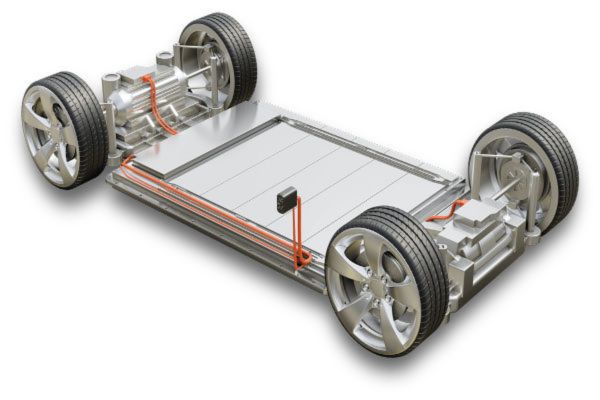
Electric vehicle drives systems comprising motors, inverters, transmissions, and power electronics are at the core of EV performance. As automakers shift toward electrified mobility, these systems are evolving into compact, integrated, and high-efficiency units, enabling improved range, torque delivery, and energy optimization.
Quick Insights
- Market Size (2024): USD 581.93 million
- Forecast Size (2032): USD 2,874.72 million
- CAGR (2025–2032): 22.1%
- Fastest Growth Segment: Integrated e-axle systems
- Leading Region: Asia-Pacific (China, Japan, South Korea EV hubs)
- Key Players: ABB, Bosch, Continental AG, Denso, Magna International, Siemens AG, ZF Group
- Core Driver: Rapid EV production and electrification policies
- Key Opportunity: Integration of motor, inverter, and gearbox into single units
- Primary Challenge: High system cost and raw material dependency
Revenue Breakdown & Market Segmentation
| Segment Category | Key Insights |
| Base Year | 2024 – USD 581.93 million |
| Forecast Year | 2032 – USD 2,874.72 million |
| CAGR | 22.1% |
| By Vehicle Type | HEV, PHEV |
| By Application | E-Axle, E-Wheel Drive |
| By Component | Motor, Inverter, Transmission, Power Electronics |
| By Region | North America, Europe, Asia-Pacific, MEA, South America |
The e-axle segment is gaining strong traction due to its compact design, improved efficiency, and reduced system complexity, making it a preferred choice for next-generation EV platforms.
What’s Driving Growth? What Trends Are Reshaping the Market?
Why is the EV drive system market experiencing such explosive growth?
- Rapid EV adoption: Global push toward zero-emission vehicles is accelerating demand for electric drivetrains.
- Integrated drive systems: 3-in-1 and 4-in-1 systems combining motor, inverter, and gearbox are becoming industry standard.
- Efficiency & performance focus: Advanced drive systems improve torque density, range, and overall vehicle performance.
- Lightweight architecture: Compact systems reduce vehicle weight and enhance energy efficiency.
- Technological innovation: Advancements in silicon carbide (SiC) inverters and high-voltage platforms are improving system capabilities.
Regional & Segment Analysis
- Asia-Pacific dominates the market due to strong EV production in China, Japan, and South Korea, supported by government incentives and large-scale manufacturing ecosystems.
- Europe is driven by stringent emission regulations and rapid electrification targets.
- North America is witnessing steady growth fueled by investments in EV infrastructure and domestic manufacturing.
Segment Insights:
- HEVs and PHEVs continue to contribute significantly, while full battery EV systems are accelerating rapidly.
- E-axle systems are the fastest-growing segment due to their integration benefits.
- OEM segment dominates, with increasing aftermarket opportunities for system upgrades.
Latest Industry Developments
- Magna International introduced an advanced 800V eDrive system, setting new benchmarks for power density and efficiency.
- Bosch and Continental AG are investing in integrated drive platforms combining software and hardware capabilities.
- ZF Group is advancing modular e-drive solutions tailored for multiple vehicle segments.
- Industry players are focusing on high-voltage architectures (800V systems) to enable faster charging and better performance.
Challenges & Cost Pressures
- High production costs: Advanced materials and components increase system costs.
- Raw material dependency: Supply of rare earth materials and semiconductors remains a concern.
- Thermal management complexity: High-performance systems require advanced cooling solutions.
- Infrastructure limitations: Charging ecosystem gaps can slow EV adoption in emerging markets.
Case Study: Integrated E-Axle Adoption in EV Platforms
A leading EV manufacturer implemented an integrated e-axle system combining motor, inverter, and transmission into a single unit. This resulted in a 20% reduction in system weight, improved energy efficiency, and enhanced vehicle range. The case highlights how integrated drive systems are transforming EV architecture and performance.