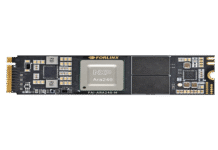


OK3506J-S/C offer cost-effective, low-power, industrial-grade solutions with rich I/O, long-term support, and rapid prototyping while OK3506-S12 Mini is a budget-friendly platform for developers to test features and validate functions before scaling up.
The latest Rockchip RK3506 with its high performance, low power consumption and rich interfaces has become a popular choice for scenarios such as industrial control, the Internet of Things (IoT), and edge computing. Against the backdrop of the versatile demands for efficient development platforms, Forlinx has released 3 different development board to feed the ever-increasing demands across industries.
This article will detail the specifications, performance advantages, and wide application scenarios of the RK3506 development board, helping developers better understand how this development board drives innovation in intelligent hardware.
RK3506J/B Processor Exclusive for Intelligent Industrial Applications
RK3506 is a new Arm embedded chip platform launched by Rockchip in the fourth quarter of 2024, featuring a tri-core Cortex-A7 and a single-core Cortex-M0 in a multi-core heterogeneous design, with a CPU frequency of up to 1.5GHz and an M0 MCU operating at 200MHz. Additionally, the RK3506 features a 2D hardware acceleration engine that enhances graphics rendering and UI performance. This is designed specifically for intelligent voice interaction, audio input/output processing, image output processing, and other digital multimedia applications.


Key Specifications of the RK3506 Development Board:
CPU: Tri-core Cortex-A7, up to 1.5GHz
Graphics Engine: 2D hardware acceleration
Interfaces: Includes dual 100Mbps Ethernet ports, 2xCAN-FD, RS-485, Flexbus etc.
Audio flexibility: Multiple SAI interfaces, PDM mic input, SPDIF, and onboard audio jacks
Industrial reliability: -40 °C to +85 °C Temp width with 0.7 W power consumption at full load
| Type | OK3506J-S Single Board Computer | OK3506J-C Single Board Computer | OK3506-S12 Mini Single Board Computer *Mainly used by software engineers to test chip performance |
| Image | |||
| Processor / CPU | Rockchip RK3506: 3× Cortex-A7 cores up to 1.5GHz + 1× Cortex-M0 @200MHz | ||
| Frequency | 1.5GHz | 1.5GHz | 1.5GHz |
| Graphics/ Display | 2D GPU / 1 x 2-lane MIPI-DSI (1.5Gbps/lane) 1 X 24-bit RGB up to 1280×1280@60Hz | ||
| RAM | 256MB DDR3,512MB DDR3 | 256MB DDR3,512MB DDR3 | 256MB DDR3,512MB DDR3 |
| Storage | 256MB NandFlash,8GB eMMC | 256MB NandFlash,8GB eMMC | 256MB NandFlash,512MB NandFlash |
| OS | Linux 6.1 | Linux 6.1+QT5.15 | Linux 6.1 |
| Ecosystem | Linux 6.1 BSP; LVGL 9.2 for GUIs; Linux RT patches; AMP for workload distribution; eMMC health diagnostics, storage optimizations. | ||
| Temp Width | -40℃~+85℃ | -40℃~+85℃ | 0℃~+70℃ |
| Voltage Input | Typical / full-load ~0.7 W DC 5V input | ||
| Audio | 1-ch | 1-ch | / |
| Ethernet | 2-ch 10/100Mbps auto negotiation | 2-ch 10/100Mbps auto negotiation | 1-ch 10/100Mbps auto negotiation |
| RS485 | 1-ch | 1-ch | / |
| CAN-FD | 2-ch,CAN-FD | 2-ch,CAN-FD | / |
| SPI | 3-ch | 3-ch | |
| TOUCH KEY | 6-ch | 6-ch | 3-ch |
| 4G | 1-ch | 1-ch | / |
| SD/SDIO | 1x TFCard | 1x TFCard | 1x TFCard |
| WiFi& BT | 1x WiFi& BT | 1x WiFi& BT | / |
| USB | 2x USB 2.0 HOST,1x USB 2.0 OTG | 2x USB 2.0 HOST,1x USB 2.0 OTG | 1x USB 2.0 HOST |
| RTC | 1-ch | 1-ch | |
| Emulating | 1x JTAG | 1x JTAG | |
| Interface | Raspberry Pi 40-Pin GPIO Interface | ||
| Form Factor | Stamp hole (146 pins in total, pin center spacing 1mm) | 2x 80-pin board-to-board connecto- rs (0.5 mm pitch, 2 mm height) | Stamp hole (146 pins in total, pin center spacing 1mm) |
| Size | 19cm×13mm | 19cm×13mm | 65mm x 105mm≈ iPhone 4 |


Highlights of the development board
- High-Speed Parallel Bus Interface DSMC
Low-cost, easy-to-develop FPGA-to-ARM high-speed communication bus supporting master/slave modes.

- Matrix IO Design, Flexible Pin Function Configuration
RK3506 uses matrix IO design, allowing multiple functional signals to share a limited number of pin interfaces. Any functional signal can be mapped to any pin interface through software configuration. Supports mapping 98 functional signals to 32 pin interfaces.

- 2 x CAN-FD with Ultra-Stable Communication Performance
CAN-FD has become an indispensable bus interface in fields such as industrial automation, energy management, and smart transportation due to its higher data transmission rate and bandwidth utilization. According to actual tests, when the bus occupancy rate is 90%, whether it is single-channel or two-channel CAN-FD receiving/transmitting simultaneously, no frame loss will occur. Moreover, when the single-channel and two-channel are transmitting and receiving simultaneously at a 1:1 ratio and the bus occupancy rate is 87%, there is no frame loss or error frame. It is not difficult to see from the following test data that the CAN-FD interface of the RK3506 development board has excellent communication performance.

- Complete Development Tools
To facilitate the rapid development of engineers, Forlinx Embedded also provides comprehensive development materials, including software adaptation information, software user manuals, images and source codes, development tools, hardware user manuals, baseboard schematics, etc., helping developers get started quickly.
Conclusion:
The RK3506 development board is based on a triple-core Cortex-A7 architecture, with rich interfaces and a comprehensive software ecosystem, capable of meeting the diverse needs of industrial and intelligent applications. Forlinx Embedded provides comprehensive after-sales technical support to help customers accelerate product development and achieve rapid market entry.