
The Global E-Bike Drive and Deceleration System Market is witnessing strong growth as electric bicycles become a key pillar of sustainable urban transportation. These systems responsible for propulsion and braking are central to the performance, safety, and efficiency of e-bikes. With rising environmental awareness, urban congestion, and demand for cost-effective mobility, this market is expanding rapidly across both developed and emerging economies.
Understanding E-Bike Drive and Deceleration Systems
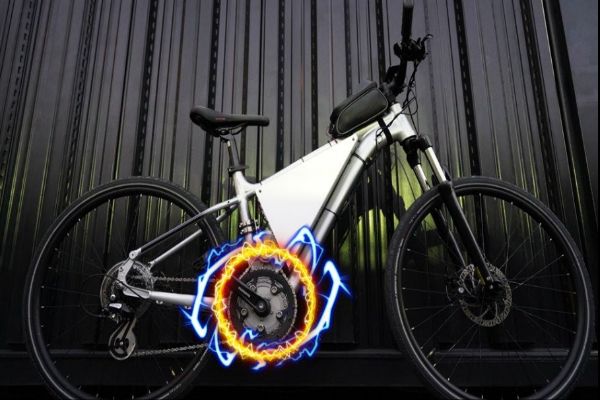
E-bike drive and deceleration systems consist of integrated components that control propulsion and braking functions.
Drive System Components:
- Electric motor (mid-drive or hub motor)
- Battery and controller
- Sensors and power electronics
Deceleration System Components:
- Mechanical disc brakes
- Hydraulic disc brakes
- Regenerative braking systems
These systems work together to deliver smooth acceleration, controlled braking, and energy efficiency. Advanced systems even enable energy recovery during braking, improving overall range.
Market Size and Growth Outlook
The global market is experiencing consistent expansion, supported by rising e-bike adoption:
- Estimated at ~USD 1.4–1.8 billion in 2025
- Expected to exceed ~USD 2.3 billion by 2030 with ~8.5% CAGR
- Some projections indicate potential growth up to USD 9+ billion by 2033 under accelerated adoption scenarios
This growth is fueled by technological innovation, increasing urban mobility needs, and supportive government policies promoting electric transportation.
Key Growth Drivers
Rising Demand for Sustainable Mobility
E-bikes are emerging as eco-friendly alternatives to cars and motorcycles, reducing carbon emissions and traffic congestion.
Government Incentives and Policies
Subsidies, tax benefits, and infrastructure development (like bike lanes) are accelerating e-bike adoption globally.
Growth of Urban Logistics and Last-Mile Delivery
E-bikes are increasingly used for delivery services, especially in dense urban areas, boosting demand for efficient drive systems.
Technological Advancements
Continuous improvements in motor efficiency, lightweight materials, and braking systems are enhancing performance and user experience.
Emerging Industry Trends
Shift Toward Mid-Drive Motors
Mid-drive systems are gaining popularity due to better weight distribution and efficiency compared to hub motors.
Growth of Regenerative Braking
Regenerative braking systems are emerging as a key innovation, enabling energy recovery and extended battery life.
Integration of Smart and Connected Systems
Modern e-bike systems are integrating IoT, sensors, and connectivity features for performance monitoring and predictive maintenance.
Lightweight and High-Efficiency Designs
Manufacturers are focusing on reducing system weight while improving power density and efficiency.
Market Segmentation Insights
By Drive Type
- Mid-drive motors (dominant and growing)
- Geared hub motors
- Direct-drive hub motors
By Deceleration System
- Hydraulic disc brakes (high performance)
- Mechanical disc brakes (cost-effective)
- Drum brakes (entry-level segment)
- Regenerative braking (emerging segment)
By Application
- Urban/commuter e-bikes
- Mountain e-bikes
- Cargo e-bikes (fastest-growing due to logistics demand)
By Sales Channel
- OEM (dominant segment)
- Aftermarket (growing with rising e-bike ownership)
Regional Insights
- Asia-Pacific dominates the market, led by China’s massive e-bike production and consumption base
- Europe shows strong growth due to environmental regulations and cycling culture
- North America is expanding rapidly with increasing adoption of e-bikes for commuting and recreation
Competitive Landscape
The market is moderately concentrated, with leading players driving innovation:
- Bosch
- Shimano
- Yamaha
- Bafang
- Brose
- Panasonic
These companies focus on improving motor efficiency, reducing weight, and integrating smart features to maintain competitive advantage.
Market Challenges
Despite strong growth, several challenges remain:
- High initial cost of advanced systems
- Battery limitations and charging infrastructure gaps
- Standardization issues across components
- Supply chain dependencies for key materials
Addressing these challenges will be critical for long-term market expansion.
Future Outlook
The future of the e-bike drive and deceleration system market is closely aligned with the global shift toward sustainable and smart mobility. As urbanization increases and governments push for greener transport solutions, e-bikes will play a central role in mobility ecosystems. With advancements in regenerative braking, smart connectivity, and high-efficiency motors, the market is expected to continue its upward trajectory—transforming e-bikes into highly efficient, intelligent, and widely adopted transportation solutions.