
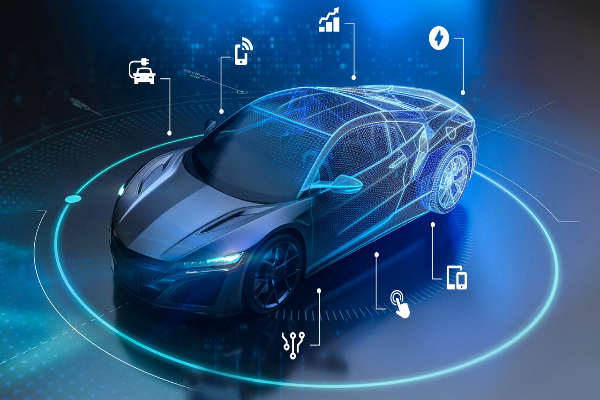
The automotive industry is undergoing tremendous changes with transforming the driven by digitalization, connectivity, electrification, and artificial intelligence. In the start, vehicles were hardware-centric systems where its functionality was determined by mechanical components and dedicated electronic control units (ECUs) for each function. However, the emergence of Software-Defined Vehicles (SDVs) is changing this traditional hardware centric systems by making software the utmost and central element controlling vehicle behaviour, its performance, user safety, and its experience.
A Software-Defined Vehicle is designed to add, modify any functionalities through software updates in the vehicle. It is similar to smartphones that receive regular updates introducing new features and security improvements. This shift from hardware to software is enabling the automakers to deliver smarter, safer, secured and more connected solutions for user safety and experience.
Understanding Software-Defined Vehicles
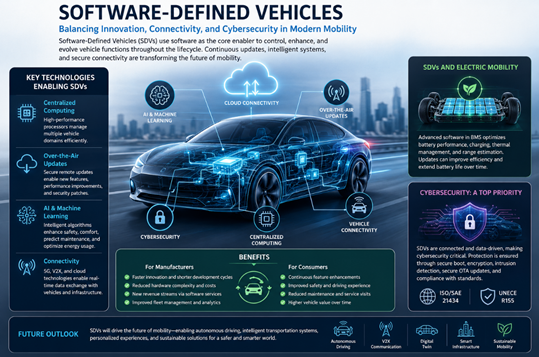
In conventional vehicles that we see now also having different functionalities such as engine control, braking, infotainment, battery management, and driver assistance systems are often managed by separate ECUs. As vehicle complexity increases, managing these systems becomes challenging. Software-Defined Vehicles address this issue by including a centralized computing architecture that integrate multiple vehicle functions into high-performance computing platforms. Instead of relying on dozens of isolated controllers and their software’s, SDVs use software-driven system capable of managing vehicle operations more efficiently and flexibly.
Software plays a critical role in various vehicle domains, including:
- Advanced Driver Assistance Systems (ADAS)
- Infotainment and connectivity
- Powertrain management
- Battery management systems
- Autonomous driving functions
- Energy optimization
- Cybersecurity attack management
This software-centric approach allows manufacturers to introduce new capabilities without requiring hardware modifications or its addition in the system.
Key Technologies Enabling SDVs
Several technological advancements have accelerated the development of Software-Defined Vehicles.
Centralized Computing Architecture
One of the defining features of SDVs is its transition from distributed ECUs to a centralized system. High-performance processors are used in the vehicle that can manage multiple vehicle functions simultaneously hence reducing the hardware complexity and improving system integration. Centralized architectures also simplify software deployment and its maintenance, making it easier to implement any new updates within a system.
Over-the-Air Updates
Over-the-Air (OTA) updates are among the most significant benefits of SDVs. Through secure wireless communication channels like Bluetooth or cloud computing, manufacturers can remotely update the software, fix any error, improve performance, and deploy cybersecurity patches.OTA updates reduce the need of the user to visit service centre while ensuring vehicles remain up to date with the latest functionalities and security improvements.
Artificial Intelligence and Machine Learning
Artificial Intelligence (AI) and Machine Learning (ML) are becoming increasingly important in modern vehicles. These technologies enable intelligent decision-making by analysing previous data from sensors, cameras, radar systems, and connected infrastructure then making decisions according to the data.
AI applications in SDVs include:
- Driver behaviour analysis
- Predictive maintenance
- Traffic prediction
- Autonomous navigation
- Energy management
- Battery health estimation
- Any cyberattack
By continuously learning from its operational data, AI systems can improve vehicle efficiency, safety, and reliability.
Vehicle Connectivity
Connectivity is another fundamental component of SDVs. Technologies such as 5G networks, cloud computing, Vehicle-to-Everything (V2X) communication, and edge computing facilitate real-time data exchange between vehicles, infrastructure, and cloud services. Connected vehicles can access navigation updates, traffic information, remote diagnostics, and intelligent transportation services, enhancing both safety and convenience.
Software-Defined Vehicles and Electric Mobility
The rapid growth of Electric Vehicles (EVs) and Hybrid Ev’s that has significantly accelerated SDV adoption in the market. Modern EVs rely heavily on software to manage battery performance, charging processes, and energy consumption.
For Example, Battery Management Systems (BMS) uses software algorithms to monitor cell voltages, temperatures and overall battery health. These systems help to maximize battery lifespan while ensuring safe operation of the vehicle. Software updates in the BMS can improve charging efficiency, optimize thermal management, and enhance range estimation to decrease the user anxiety. As a result, vehicle performance can continue to improve even after purchase, providing long-term value to customers.
Cybersecurity: A Critical Challenge
While SDVs offer numerous advantages, they also introduce new cybersecurity challenges. Increased connectivity creates additional entry points for potential cyberattacks.
Possible threats include:
- Unauthorized remote access
- Malware injection
- GPS spoofing attacks
- Vehicle communication manipulation
- Data theft
- Denial-of-Service attacks
A successful cyberattack on a connected vehicle could impact not only data security but also operational safety. To mitigate these risks, manufacturers are implementing comprehensive cybersecurity frameworks that include:
- Secure boot mechanisms
- Encryption and authentication protocols
- Hardware security modules
- Intrusion detection systems
- Secure OTA update frameworks
- Continuous security monitoring
International standards such as ISO/SAE 21434 and UNECE R155 provide guidelines for managing cybersecurity risks throughout the vehicle lifecycle. As vehicles become increasingly software-dependent, cybersecurity will remain a critical pillar of SDV development.
Benefits for Industry and Consumers
Software-Defined Vehicles provide significant benefits to both manufacturers and end users. For manufacturers, SDVs enable faster innovation cycles, less complexity, lower maintenance costs as the hardware is reduced, and new revenue opportunities through software-enabled services and feature subscriptions.
For consumers, SDVs offer continuous feature enhancements, improved safety, better connectivity, and reduced service requirements. Vehicle owners can benefit from software improvements long after purchasing the vehicle, as they are updated with the technology Additionally, software-based diagnostics can identify potential issues before failures occur, improving reliability and reducing maintenance expenses.
Future Outlook
The future of the automotive industry will increasingly be shaped by software as RnD is going on in reducing hardware complexity. Emerging technologies such as autonomous driving, intelligent transportation systems, digital twins, cloud-native automotive platforms, and AI-powered mobility services will further expand the role of software within vehicles to help user for great driving experience.
Software-Defined Vehicles will also serve as the foundation for next-generation mobility ecosystems where vehicles communicate seamlessly with infrastructure as V2X, cloud platforms, and other road users to reduce accident. These capabilities will support safer transportation, improved traffic management, enhanced energy efficiency, and more personalized user experiences. As automakers continue investing in centralized computing architectures, cybersecurity solutions, and connected services, SDVs will become the standard rather than the exception.
Conclusion
Software-Defined Vehicles represent a transformative shift in automotive industry. By moving intelligence from hardware to software, they enable continuous innovation, enhanced connectivity, improved safety, and greater operational efficiency. While challenges related to cybersecurity, software complexity, and functional safety remain, advancements in computing, AI, and connectivity are accelerating SDV adoption across the industry.The vehicle of the future will not simply transport passengers from one location to another. It will function as an intelligent, connected, and continuously evolving digital platform capable of adapting to user needs, improving performance over time, and supporting the broader vision of smart and sustainable mobility.