
The era of tangled cables and connector fatigue is transforming toward a seamless, contactless future. Wireless Power Transfer (WPT) is the technology that enables devices and vehicles to charge without physical connectors. WPT is no longer a futuristic novelty. It has become one of the most consequential enablers of modern consumer electronics and electric vehicle (EV) ecosystems. The technology is quietly reshaping how the world thinks about energy, convenience, and design. From smartphone charging pads and wireless earbuds to EVs drawing power through embedded ground coils, the use of WPT is expanding in everyday life. WPT enables energy traveling invisibly, efficiently, and contactlessly from source to device.
WPT Market Overview: A Multi-Billion Dollar Trajectory
The global wireless charging market is experiencing robust growth. The market is underpinned by a convergence of technology trends, shifting consumer expectations, and surging EV adoption. According to Polaris Market Research, the global wireless charging market was valued at USD 10.15 billion in 2025 and is projected to grow from USD 12.28 billion in 2026 to USD 57.16 billion by 2034. The market is expected to register a CAGR of 21.2% during 2026–2034.
Receivers and transmitters are the two core components of wireless charging system. With expanding device ecosystems, demand for miniaturized, high-efficiency receiver ICs and intelligent transmitter pads is accelerating. It is expected to create lucrative growth opportunities for semiconductor manufacturers and component suppliers alike. Rising demand for cable-free, user-friendly charging solutions drives the wireless charging market growth. The growth is also driven by quick progress in inductive and resonant power transfer technology.
The rise of IoT-connected devices and the rapid shift to EVs worldwide propel the requirement for wireless chargers. The use of wireless charging with smart home systems and IoT ecosystems is especially significant. Wireless chargers are being increasingly combined with remote monitoring and energy management platforms. It helps align with the demand for smarter, more sustainable living environments.
What are Three Pillars of WPT?
The wireless power transfer ecosystem is built on three core technology approaches. Each approach is suited to different power levels, distances, and use cases:
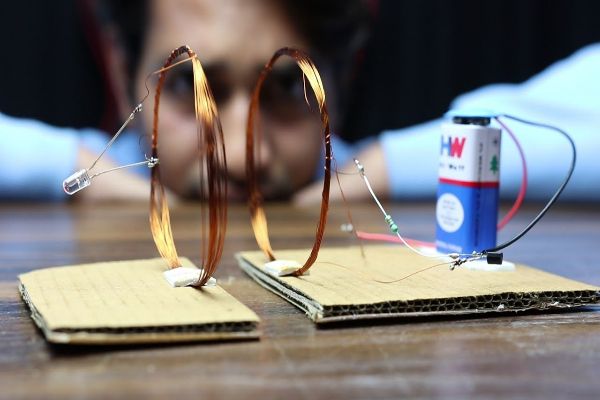
- Inductive Charging: It is the most widely deployed technology in the majority of consumer wireless charging applications. Electromagnetic induction between tightly coupled coils enables efficient energy transfer at short ranges. This makes it ideal for smartphone pads, wearable chargers, and EV ground-pad systems.
- Resonant Charging: It is more advanced type than basic inductive methods. Resonant charging allows energy transfer over slightly greater distances. In EV charging, precise vehicle alignment over a pad is difficult to guarantee consistently. Thus, resonant systems are particularly promising for EV charging.
- Radio Frequency (RF) Transmission: It is suited for low-power applications such as RFID systems, IoT sensors, and medical implants. RF-based WPT can transmit energy over greater distances but at lower power levels. As IoT device densities rise, RF charging is gaining renewed interest for ambient, always-on power delivery in logistics environments and smart building.
Why is Demand for Wireless Chargers Rising in Consumer Electronics Industry?
As per the study by Polaris Market Research, the consumer electronics segment is expected to register the highest CAGR of 22.3% in the wireless charging market during the forecast period. The growth is attributed to the rising consumer preference for cable-free charging solutions across smartphones, tablets, wearables, and other portable electronics. Wireless charging comprises various features, such as straightforward design, cost-effectiveness, and proven integration across the consumer electronics ecosystem. Such benefits propel its adoption across the consumer electronics industry.
The integration of wireless charging with IoT ecosystems is emerging as an emerging trend. Smart home hubs, wearable health monitors, wireless earbuds, and connected home appliances increasingly rely on wireless power. The number of interconnected devices in homes and offices is growing, especially in urban areas. Thus, there is a growing demand for convenient, always-on wireless charging surfaces, right from desk pads and kitchen countertops to furniture-embedded chargers.
Apple Inc.; Samsung; Qualcomm Technologies, Inc.; Texas Instruments Incorporated; MediaTek Inc.; Murata Manufacturing Co., Ltd.; Renesas Electronics Corporation; Powermat; and Mojo Mobility Inc., are a few key global players driving the consumer electronics segment.
Why is Automotive Industry the Next Frontier for Wireless Power?
The automotive segment is expected to witness rapid growth in the coming years. The automotive sector spans two distinct applications: in-cabin wireless charging and wireless EV charging. In-cabin wireless charging is used for smartphones and devices. However, wireless EV charging is preferred for vehicle battery replenishment. These applications are gaining significant momentum.
For in-cabin applications, automakers embed Qi-compatible wireless charging pads directly into center consoles, dashboards, and armrests. They eliminate cable clutter. This option aligns well with consumers’ expectations of seamless digital integration in modern vehicles. This has become a standard feature in mid-range and premium vehicle segments globally.
Wireless EV charging infrastructure is expected to create numerous opportunities in the sector. The wireless chargers can charge an EV’s battery by parking over a ground-mounted charging pad. It requires no physical connection or driver intervention. According to Polaris Market Research study, the growing requirement for fast and wireless charging is supporting the EV charging station market growth. Also, automakers are actively investing in this capability.
The EV charging ecosystem is also benefiting from advances in Vehicle-to-Grid (V2G) technology. The technology allows EVs to feed energy back into the grid during peak demand. Wireless charging infrastructure with V2G capability transforms parked EVs into distributed energy assets.
What is the Future of Wireless Power Transfer for Automotive and Consumer Electronics Market?
Wireless power transfer has crossed a decisive inflection point, from a premium feature to a cross-industry platform technology with measurable infrastructure implications. In consumer electronics, wireless charging is becoming a baseline expectation. In the automotive industry, SAE J2954 standardization and increasing EV adoption are positioning wireless power as the foundational charging architecture for future mobility.
According to Polaris Market Research, rising investments in technological advancements and high emphasis on regulatory compliance will boost the global wireless charging market growth. For investors, OEMs, technology developers, and policymakers, the message is clear: wireless power is not the future; it is the present, accelerating rapidly.